

Sleep Startle in Dogs: Why Some Dogs Growl, Snap or Bite When Woken
Sleep Aggression in Dogs: Understanding the Startle Response
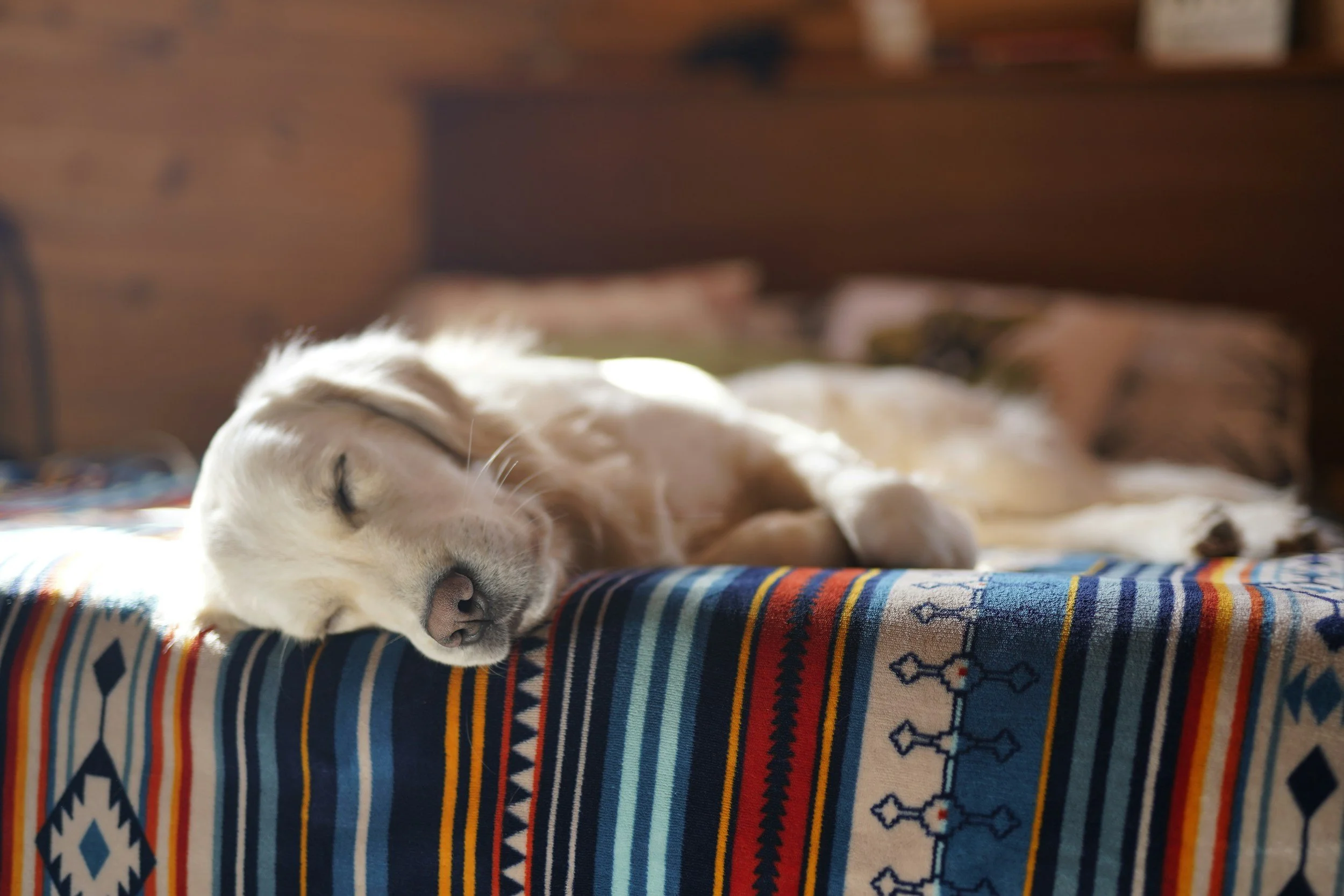
Your dog is sound asleep beside you. You reach over to touch him and, before he even seems fully awake, he growls, snaps or comes up with teeth. A few seconds later he recognizes you and looks completely normal again.
That can be incredibly unsettling, especially when it comes from a dog who is affectionate and comfortable with touch when awake. What you may be seeing is a sleep startle response: the dog is startled abruptly out of sleep and reacts defensively before the brain has fully caught up with what is happening.
That does not automatically mean your dog has a generalized aggression problem, hates being touched or has suddenly become a dangerous dog in every part of life. But I also do not dismiss a dog who snaps or bites when awakened as harmless. A reflexive bite still has teeth behind it, and the setup around that dog has to take the risk seriously.
The Dog May React Before Fully Understanding What Woke Them
We all have some version of a startle response. Wake a human suddenly from deep sleep and they may gasp, jerk, yell or momentarily have no idea where they are. Dogs can experience that abrupt transition too, and in some dogs the first defensive response is much stronger.
A dog may jerk awake, growl, bark, snap or bite when touched unexpectedly. The response may happen extremely quickly and then disappear just as quickly once the dog is fully awake and recognizes the person or environment.
That pattern is one reason sleep startle should not automatically be interpreted the same way as resource guarding, territorial aggression or a dog who is consciously threatening someone while fully awake. The context is different.
But context does not erase consequence. If a sleeping dog puts teeth into a face, hand or child who startled them, the injury is just as real.
Sleep Startle Can Range From Mild to Serious
Not every dog with sleep startle comes up biting. Some dogs simply jerk awake, lift the head abruptly or give a startled bark. Others growl or air-snap, and some make actual contact before they are fully oriented. What matters is the pattern, the intensity and who has access to the dog while the dog is sleeping.
- Jerking or jumping awake when touched.
- Growling immediately upon waking.
- Snapping toward the person who touched or moved the dog.
- Biting before appearing fully awake or oriented.
- Looking briefly confused after waking.
- Settling quickly once the dog recognizes the person and surroundings.
- Becoming more reactive when deeply asleep, physically uncomfortable or sleeping in particular locations.
The details matter. A dog who gives one startled growl when an adult accidentally bumps the bed is a different management picture from a dog who has repeatedly bitten hard enough to puncture skin when approached during sleep.
Sometimes the Startle Response Changes Because the Dog Changes
Some dogs appear naturally more prone to startling from sleep, but when a sleep-related behavior develops or becomes more intense, I want to look at the whole dog rather than simply labeling the dog aggressive.
Pain is high on that list. A dog with arthritis, back pain, an orthopedic injury or another source of discomfort may sleep differently and may react much more strongly when a sleeping body is bumped, moved or touched. Suddenly waking into pain can create a very different response from simply waking up.
Hearing and vision changes can also alter how a dog experiences being awakened. A dog who once heard you approach may no longer have that warning. A dog with reduced vision may wake without immediately understanding who or what is beside them. Senior dogs may also experience changes in sleep, cognition and orientation that make nighttime or waking behavior different from what the family has known for years.
Dogs who are chronically stressed, hypervigilant or sleeping lightly may also have a different relationship with rest. That does not mean every sleep-startle dog has anxiety or trauma, but if the dog seems unable to fully rest even when awake, there may be a larger behavior picture worth exploring.
If that sounds familiar, read When Dogs Don't Know How to Be Dogs and Your Dog Has Anxiety .
A Behavior Change Can Be a Health Clue
If your dog has slept beside you for eight years without an issue and suddenly begins growling, snapping or startling violently when touched, I would not assume the dog simply developed an attitude.
A new behavior deserves a look at what else may have changed. Is the dog slower getting up? Reluctant on stairs? More sensitive around the back, hips, neck or ears? Sleeping more deeply? Hearing less? Seeing less well at night? Seeming confused after waking? Pacing at unusual times?
Those details are worth discussing with your veterinarian. Pain, sensory decline, neurologic changes and age-related cognitive changes can all affect behavior, and training around a symptom does not resolve a medical problem underneath it.
This Is Where I Want Zero Guessing
If your dog has growled, snapped or bitten when awakened, children should not have access to that dog while the dog is sleeping. Period.
A young child is exactly the person most likely to crawl onto a sleeping dog, hug the dog, put a face near the dog's face, fall onto the dog, grab a paw or wake the dog suddenly because they want to play. They are also the person whose face is often at exactly the wrong height if the dog comes awake with teeth.
Do not make a child responsible for remembering that the dog is sleeping. Make the environment responsible. Give the dog a sleeping area where the child cannot reach them, using gates, doors, crates or another physical separation setup appropriate for your home.
And do not test this by telling a child to “be careful” around a sleeping dog who already has a known startle response. Known bite risk requires adult management, not optimism.
For more on preventing bites before they happen, read Dog Bite Prevention Safety Tips .
Sometimes the Sleeping Arrangement Has to Change
I know people love sleeping with their dogs. I have shared my own bed with dogs too. This is not a philosophical argument about whether dogs belong on furniture.
It is a safety question.
If your dog has a meaningful sleep-startle response, your bed may be a terrible place for that dog to sleep. Humans move, roll over, kick, reach for blankets and touch dogs without waking up themselves. A dog sleeping inches from your face does not have much room to create distance when startled.
If there has already been a snap or bite, particularly one directed toward a face, I would rather give the dog a comfortable sleeping space beside the bed than keep repeating a setup where accidental contact is inevitable.
Management is not punishment. The dog is not being banished because they did something wrong. You are simply changing the environment so everyone can sleep without relying on perfect behavior while unconscious.
Use a Predictable Wake-Up Routine
If your dog has a history of sleep startle, stop reaching down and touching the dog as the first method of waking them. Give the brain a chance to come online before your hands enter the picture.
From a little distance, say the dog's name or make a normal household sound the dog recognizes. You might move around the room, gently tap your foot on the floor or make another predictable cue that allows the dog to wake and orient before you approach.
Once the dog is awake, give them a second to look at you and understand what is happening. If you need the dog to move, invite the dog up rather than physically dragging, pushing or rolling a half-asleep dog out of the way.
For a dog with hearing loss, the strategy may need to change because your voice no longer provides much warning. Environmental vibration, visible movement from a safe distance or another consistently conditioned cue may work better. The goal is the same: avoid making unexpected physical contact the first information the sleeping dog receives.
Correcting a Half-Asleep Dog Does Not Solve This
If a dog growls after being startled out of deep sleep, I am not interested in correcting the growl to prove that growling at people is unacceptable. I want to know why the dog startled, how much risk the response creates and how we prevent unnecessary repetitions.
Punishing the dog after the fact can also create an ugly association: waking suddenly was already startling, and now waking also predicts conflict with the human.
That does not mean I ignore biting. If the dog bites, I take the bite very seriously. But taking a bite seriously and punishing a startled reflex are not the same thing.
Change the setup. Protect sleep. Investigate physical contributors. Wake the dog predictably. Then look at whether there is a larger aggression, anxiety or nervous-system picture that needs work.
Your Dog Needs a Place Where Nobody Bothers Them
I want every dog to have the ability to sleep deeply without being repeatedly climbed on, nudged, moved, hugged or asked to interact. For a dog with sleep startle, that becomes even more important.
Look at where the dog sleeps. Is the bed in the middle of household traffic? Do children run past it? Do other dogs bump into the sleeping dog? Is the dog constantly being moved off furniture? Does the dog have a quiet place to go where everyone in the family understands that sleeping dogs are left alone?
Sometimes a better sleep location does more than another training exercise. A dog who can actually reach deep, uninterrupted rest may function differently during the day too.
That broader ability to switch off and simply exist is something I talk about in When Dogs Don't Know How to Be Dogs .
Not Necessarily — But Look at the Dog When Awake Too
A dog whose only defensive behavior occurs during abrupt waking is a different case from a dog who also guards resting places, threatens family members while fully awake, bites when moved off furniture, guards people, reacts aggressively to handling or has a broader bite history.
Sometimes families call all of those behaviors “sleep startle” because they happen near a bed or sofa. But if the dog is awake, watching you approach and deliberately warning you not to move them, that may be a different behavior problem.
Context matters. So does bite history.
If the dog has aggression outside of sleep, repeated bites, escalating bite severity or behavior that makes normal household handling unsafe, read Living With an Aggressive Dog and get professional help rather than treating every incident as a harmless startle reflex.
Sleep Startle Can Be One Piece of a Bigger Picture
The behavior side tells us what happens around sleep and how to make that situation safer. The whole-dog side asks what may be affecting sleep, comfort and the dog's ability to recover in the first place.
Pain, inflammation, physical tension, nutrition, digestive discomfort, age-related changes, anxiety and overall nervous-system state can overlap with behavior. That does not mean every sleep-startle dog needs a cabinet full of supplements, and it certainly does not mean one herb or essential oil fixes biting.
It means I am willing to look beyond a training label when the dog gives me reason to.
The deeper nutrition, remedies and complementary-wellness side of that work lives at The Well Oiled K9 . K9Coach stays focused on the behavior, management and safety piece.
Some Sleep Startle Is Manageable. Some Requires a Bigger Evaluation.
I would take the next step if the behavior appeared suddenly, is becoming more intense, involves actual bites, happens while the dog is fully awake, is accompanied by confusion or unusual nighttime behavior, or makes it difficult to safely live with children or other animals in the home.
I would also want a medical evaluation when pain, hearing loss, vision changes, cognitive changes or another physical contributor may be part of the picture.
And if your dog has bitten, tell the professional exactly what happened. Do not turn “he bit me in the face and left two punctures” into “he gets a little grumpy when he's sleepy.” Bite severity changes the safety plan.
Understanding the Reflex Should Make Us Smarter About the Setup
Sleep startle does not automatically mean you have a dog who is broadly aggressive or unsafe in every part of life. Some dogs simply react strongly when abruptly pulled out of sleep, and once everyone understands the pattern, changing the environment can prevent most of those situations from occurring.
Give the dog protected sleep. Stop waking by touch when you already know touch is the trigger. Keep children away from sleeping dogs. Change bed-sharing arrangements when accidental contact creates an obvious bite risk. Investigate pain or sensory changes when the behavior is new, and look beyond sleep startle if aggression is showing up while the dog is fully awake too.
The goal is not to make a sleeping dog prove that they can tolerate being startled.
The goal is to create a household where they do not have to.
Preventing Dog Bites
Learn how environment, children, visitors, management and early warning signs affect bite risk in Dog Bite Prevention Safety Tips .
When the Dog Is Always On
If your dog also sleeps lightly, follows every movement, scans the environment and struggles to simply be present, read When Dogs Don't Know How to Be Dogs .
Need Help? Sometimes you need a coach and experienced pro to put the plan together for you Let me help you figure out what to do next. Behavior * Nutrition * Training * Natural Wellness * Recovery
Complete the Questionnaire For A Callback →