

Dog Aggression Training: What Else Should You Be Looking At?
Before You Hire an Aggressive Dog Trainer, There Are a Few Things I Want You to Know
If your dog has growled, snapped, lunged, guarded, redirected onto you or actually bitten someone, you are probably searching for an aggressive dog trainer because you need this behavior to change.
Training may absolutely be part of the answer.
But before you choose a trainer, I want you to understand that aggression can involve much more than whether your dog obeys commands. Fear, frustration, over-arousal, pain, physical discomfort, sleep, nutrition, environment, previous experiences, household dynamics, chronic stress and the dog's ability to recover can all influence the picture we are looking at.
That is why a behavior consultation with me can be useful before training begins, while you are already working with a trainer, or after training when you are staring at your dog thinking, “We did all that work. Why are we still here?”
Aggression Is a Safety Issue Before It Is a Training Project
If your dog has already bitten, is threatening children, redirects aggression onto you, seriously attacks other dogs, escapes containment or would likely make contact if the leash, gate or crate disappeared, I want you treating that risk seriously now.
A bite can change everything. It can affect housing, insurance, relationships, veterinary care, legal liability and, in the worst cases, whether the dog remains in the home or survives the consequences of another incident.
Do not keep testing the dog to see whether they are “better yet.”
Use gates. Use doors. Use crates appropriately. Prevent access to visitors when necessary. Keep children out of unsafe situations. Use secure equipment. Consider proper basket-muzzle conditioning when bite risk warrants it.
Management is not admitting defeat. It prevents the next incident while you figure out what needs to change.
Read: Living With an Aggressive Dog and Dog Bite Prevention .
You Searched for a Dog Trainer Because Nobody Told You There Might Be Other Pieces
That makes complete sense.
Your dog behaves aggressively, so you search “dog aggression training,” “aggressive dog trainer near me,” “reactive dog training,” or “how do I stop my dog from biting.”
You expect the solution to be training because that is where most dog parents are told to start.
And again — training can be extremely important.
Your dog may need clearer communication, better leash skills, Place, duration work, recall, disengagement, household structure and much safer ways to move through difficult situations.
But I want you asking another question too:
What is making this dog so prepared to use aggression in the first place?
Sometimes we know. Sometimes we do not.
There may be fear. Frustration. Resource guarding. Territorial behavior. Pain. Chronic stress. Over-arousal. A previous traumatic experience. Conflict with another dog. Handling sensitivity. A dog who has learned that aggression successfully creates distance.
Usually I am looking for patterns rather than one convenient explanation.
I Get It If You Are Not Ready for the “Whole-Dog Stuff” Yet
You may have landed on this page looking for an aggressive dog trainer, and now I am talking about nutrition, gut health, physical wellness, TCVM, herbs, essential oils and other things that may sound completely unrelated to the problem you came here to solve.
You may brush right past some of it.
I did too.
For a long time, I was a trainer first. I looked at behavior through the lens I had been taught to use: training, handling, exercise, structure, communication and what the dog had learned. Those things worked for a lot of dogs, and they are still valuable tools I use today.
Then I began getting dogs I could not completely explain that way.
Dogs who knew the work but were still anxious. Dogs who were obedient but remained hypervigilant. Dogs whose reactions seemed bigger than the situation in front of them. Dogs where we could improve control, but something underneath the behavior still did not feel resolved.
Eventually I had cases where I had to make a choice: decide I had run out of answers, or go looking for information I had not been taught yet.
I was not willing to give up on the dog simply because I had reached the edge of what I knew.
So I started following some of the seeds that had been planted along the way. Nutrition. The gut and brain connection. Pain and inflammation. Traditional Chinese Veterinary Medicine. Herbs. Essential oils. Stress physiology. The nervous system. The possibility that what was happening emotionally and behaviorally might be connected to what was happening physically.
That search changed the way I looked at dogs, and eventually it changed the direction of my career.
It did not make me stop believing in training.
It made me stop believing training had to explain everything.
So if you read something on this page about food, liver support, TCVM or another holistic approach and think, “Yeah, Dana, I am not there,” that is okay. Keep working with the trainer you trust. Keep building the skills your dog needs. Keep your dog and the people around them safe.
But remember the idea.
Because six months from now, or a year from now, if your dog is much better trained and you are still looking at them thinking, “Something is missing,” you may remember that somebody once suggested there were other places to look.
Sometimes that is all a seed needs to do.
It does not have to convince you today.
A Behavior Consultation Does Not Have to Replace Your Training
One of the biggest misconceptions is that you have to choose one person who handles every part of your dog's behavior.
You don't.
A consultation with me can make sense at several different points in the process.
Before You Choose a Trainer
We can talk through the behavior, bite history, triggers, household, previous experiences and risk before you commit to a program.
I can help you understand what questions to ask, what type of help your dog appears to need and whether there are physical, nutritional, environmental or emotional pieces that deserve attention alongside training.
While Training Is Going Well
Your dog may be learning beautifully and you may like your trainer very much — but something still feels unfinished.
Maybe the obedience is improving but the dog's baseline anxiety is not. Maybe Place works, but your dog remains rigid and hypervigilant. Maybe leash control is improving, but recovery after a trigger still takes forever.
That is an excellent time for another perspective.
When Training Seems to Have Hit a Wall
If your trainer is saying, “I don't understand why we're not getting farther,” I want to look at what else may be influencing the dog.
That does not automatically mean the training is wrong. It may mean the training has addressed the piece it was capable of addressing and another layer is now more visible.
After Training When You Feel Like It Didn't Work
This is where I want to separate two questions.
Did your dog learn?
And:
Did your dog's emotional and physical state actually change?
A dog can learn Sit, Heel, Place and recall very well and still remain fearful, defensive, hypervigilant or prepared to bite under the same circumstances.
I May Be a Complement to the Work You Are Already Doing
If you have a trainer who is doing good practical work with your dog, I am not automatically going to tell you to stop.
Your trainer may be exactly the right person to teach handling, leash skills, reliable Place, recall, boundaries and other behaviors your dog needs.
My role may be different.
I may be looking at why your dog cannot settle after the exercise ends.
I may notice that your dog is technically compliant but chronically tense.
I may want to know what happens at home three hours after the lesson, what the dog eats, how the dog sleeps, whether there is chronic itching or digestive trouble, whether behavior changed after pain or illness, and how long it takes your dog to recover after stress.
I may watch video of you working your dog and notice the moment your dog stops processing information even though they are still technically performing the command.
Those observations do not invalidate your trainer's work. They can make the entire plan more complete.
I Want to See More Than the Moment Your Dog Explodes
Video review is one of my favorite tools because we can slow down something that happened in seconds.
I do not need you to create aggression for the camera. Please do not deliberately provoke your dog, invite someone into an unsafe situation or move closer to a trigger just because you want footage for me.
If you already have safely recorded video, security-camera footage or clips of you working with your dog, there is a tremendous amount we can learn.
Before the Reaction
Where did your dog first notice the trigger?
Did the mouth close? Did breathing change? Did movement stop? Did staring begin? Did your dog start scanning or shift weight forward?
Your Handling
What happens to the leash? Do you tighten before your dog reacts? Are you moving, stopping, correcting, cueing repeatedly or unintentionally trapping the dog in pressure?
The Training Itself
Does your dog understand the exercise?
Are they actually becoming calmer or simply holding position? Is the dog able to look away from the trigger, think and make choices?
Distance & Threshold
At what point can the dog still process information, and at what point have we already asked too much?
Recovery
This is a big one for me.
When the trigger disappears, can your dog move on — or are they still pacing, scanning, panting, vigilant or primed for another explosion ten minutes later?
The reaction gets everybody's attention. The few minutes before and after it often tell me much more.
Learn more about online behavior consultations and video review .
Control and Resolution Are Not Always the Same Thing
I absolutely use practical skills in behavior work.
I love Place and duration work because, when used thoughtfully, they can give a dog opportunities to observe the world, remain at a workable distance and learn how to settle instead of constantly participating in everything around them.
But I care about how the dog is doing the exercise.
A Dog Under Control
The dog stays on Place because they understand the command.
But their body is rigid. Their eyes remain locked on the trigger. They are panting, trembling or waiting for the opportunity to react.
The behavior is contained.
The underlying state may not have changed very much.
A Dog Learning to Regulate
The dog notices the trigger.
They can look away. Their body softens. Breathing changes. They disengage. They become increasingly able to remain present without believing they need to control what is happening around them.
That is the direction I want the work moving.
This distinction becomes especially important when aggressive behavior is rooted in fear, insecurity, frustration or chronic hypervigilance.
Your Dog's Body Comes to Every Training Session Too
When I work with aggression, I want to know about the whole dog.
I want to know what they eat. How they sleep. Whether they itch. Whether their digestion is normal. Whether they are painful. What medications and preventives they receive. Whether there has been a sudden behavior change. Whether they recover well after stress. Whether there are seasonal patterns or physical symptoms showing up alongside the behavior.
This does not mean that nutrition causes every case of aggression.
It means physical state can influence how much tolerance a dog brings into a difficult situation.
Nutrition is one of the first foundations I want pet parents to understand.
I look at food quality, protein and ingredient patterns, digestion, gut health, hydration and whether there are obvious opportunities to improve the nutritional foundation.
A food change is not a substitute for appropriate behavior work or safety management.
But if the dog is physically uncomfortable, nutritionally unsupported or carrying additional stress from digestive or inflammatory problems, I do not want us pretending none of that exists while we concentrate exclusively on commands.
Read more: How Nutrition Impacts Dog Behavior .
TCVM, the Wood Element, Liver Patterns & the “Red-Hot” Dog
This is one of those things many dog parents have never heard discussed in a training conversation.
Traditional Chinese Veterinary Medicine gives us another framework for looking at patterns involving the body, behavior and environment.
Within Five Element Theory, the Liver and Gallbladder are associated with the Wood element. Wood patterns can include frustration, tension, irritability and a hot, explosive quality — the dog who seems to go from zero to one hundred very quickly.
You may also see physical pieces such as seasonal sensitivity, itching, red skin, inflammation, digestive patterns or difficulty transitioning from stimulation back to calm.
This does not mean an aggressive dog has liver disease.
It also does not mean every aggressive dog needs a “detox.”
It means that when the pattern fits, I may want us looking at nutrition, environmental and medication exposures, inflammation, digestion and appropriate liver-supportive wellness strategies alongside the behavior plan.
For some dogs, that becomes one more useful piece of the puzzle. For others, it may not be the relevant pattern at all.
Read more about the TCVM Wood Element, Liver patterns and behavior on WellOiledK9.
Things You Can Start Doing Today
You do not need to wait until your first appointment to begin making the situation safer and gathering useful information.
Stop Giving the Dog Opportunities to Rehearse Aggression
If visitors are a trigger, your dog does not need another experimental greeting. If dogs on narrow sidewalks are a trigger, choose another route or create more distance. Management buys us time to work.
Start Keeping Notes
Write down what happened before an incident, who was present, where the dog was, what the dog had been doing earlier, how intense the reaction was and how long recovery took. Patterns are much easier to see when we stop relying on memory.
Save Existing Video
If your security camera, doorbell camera or phone has already captured useful behavior, save it. Do not recreate a dangerous situation just to film it.
Pay Attention to Physical Changes
If aggression appeared suddenly, worsened quickly, occurs around touch or handling, or arrived with mobility, appetite, neurological or other physical changes, talk with your veterinarian. Pain and illness belong on the differential list.
Know What Is Going Into Your Dog
Make a simple list of food, treats, supplements, medications, flea and tick products and anything else given routinely. We cannot evaluate the whole dog if nobody knows what the whole dog is receiving.
Protect Sleep and Downtime
A dog who is constantly stimulated, repeatedly triggered or never truly settles does not need more chaos added to the schedule. Appropriate exercise is important, but so is the ability to come back down.
Use Distance
You do not earn bonus points for getting closer to the trigger. If your dog can think at fifty feet and loses control at twenty, fifty feet is where useful work begins.
Why a Consultation Can Be Useful Even If You Never Hire Me to Train Your Dog
This is an important distinction.
You may have excellent local training available.
You may already be enrolled in a program.
You may live hundreds of miles away from me.
I can still help you look at the behavior differently.
We can review your dog's history, your trainer's current exercises, videos of you working together, videos of normal life, management practices, diet, wellness, environmental stress and the questions that have not been answered yet.
I can help you identify what seems to be improving and what is simply being controlled.
I can help you develop questions for your trainer or veterinarian.
I can help you recognize when your dog's body language says an exercise is too difficult even though the dog technically completes it.
I can help you decide whether you need more practical training, more state-of-mind work, more management, a health investigation or simply a different way of putting the pieces together.
You do not have to fire a good trainer to add another professional perspective to a complicated dog.
A consultation and video review can be done through Zoom. Read Online Dog Behavior Consultations to see how that works.
“We Already Did Training and It Didn't Work.”
I hear some version of this often.
Before deciding the training was a failure, I want to know what actually changed.
Did your dog learn useful skills?
Did you become a better handler?
Did incidents become easier to manage?
Did your dog gain better impulse control?
If yes, those things have value.
But perhaps the fear remained. Perhaps the dog's threshold never changed much. Perhaps the dog still cannot recover. Perhaps the behavior is controlled until one variable changes and then everything falls apart again.
That does not necessarily mean you start from zero with another trainer.
Sometimes the next step is not more training. It is figuring out what the training successfully changed — and what it never reached.
Read Dog Behavior Modification for more on the difference between teaching skills and changing the larger behavior picture.
I Am Not Anti-Training. I Am Anti-Pretending It Is Always the Entire Answer.
Some aggressive dogs absolutely need better practical skills.
The pet parent may need help handling the leash. The dog may need reliable communication, duration, Place, disengagement, safer routines or clearer expectations.
Sometimes I can coach those pieces remotely.
Sometimes your existing trainer is already doing them very well.
Sometimes hands-on work is warranted.
And for some complicated cases, concentrated in-person work may make more sense than dragging a difficult case through disconnected weekly appointments.
The point is not to decide in advance that every aggressive dog needs the same training program.
The point is to figure out what this dog needs.
Dog Aggression Training, Consultations & Whole-Dog Support
Do I need a dog trainer or a behaviorist for an aggressive dog?
You may need both. A trainer can be extremely useful for practical skills and handling. Behavior consultation can help examine fear, arousal, triggers, recovery, environment, history, physical wellness and why the aggressive response may still be happening despite improved obedience.
Can I consult with you while I am working with another dog trainer?
Yes. You do not have to stop useful training in order to have me review the larger behavior picture. I can review video, discuss what you are seeing between lessons and help identify areas to discuss with your current trainer or veterinarian.
Can you review video of my aggressive dog?
Yes, when the video already exists or can be captured safely. I do not want you provoking aggression for the purpose of recording it. Normal footage, security-camera clips and videos of you working your dog can all provide useful information.
Can nutrition affect dog aggression?
Nutrition is one part of the whole-dog picture. Food does not explain every case of aggression, but digestion, nutritional status, physical comfort and overall wellness may influence stress tolerance and behavior. I consider nutrition alongside appropriate training, management and veterinary care rather than treating it as a replacement for them.
What does TCVM have to do with aggressive behavior?
Traditional Chinese Veterinary Medicine provides an additional framework for noticing patterns involving behavior and physical health. In Five Element Theory, Wood/Liver patterns can include tension, frustration and hot, explosive behavior. This is not the same as diagnosing liver disease, and it is not applicable to every aggressive dog.
What if dog aggression training did not work?
First determine what did improve. Your dog may have learned valuable skills without changing the fear, hypervigilance, frustration or physical factors contributing to the aggressive response. That distinction can tell us much more about what to try next.
Can aggression behavior help be done online?
Much of the assessment, video review, pet-parent coaching, management planning and state-of-mind work can be done remotely. If the case later requires hands-on work, that can be evaluated separately rather than assuming every dog needs in-person training from the beginning.
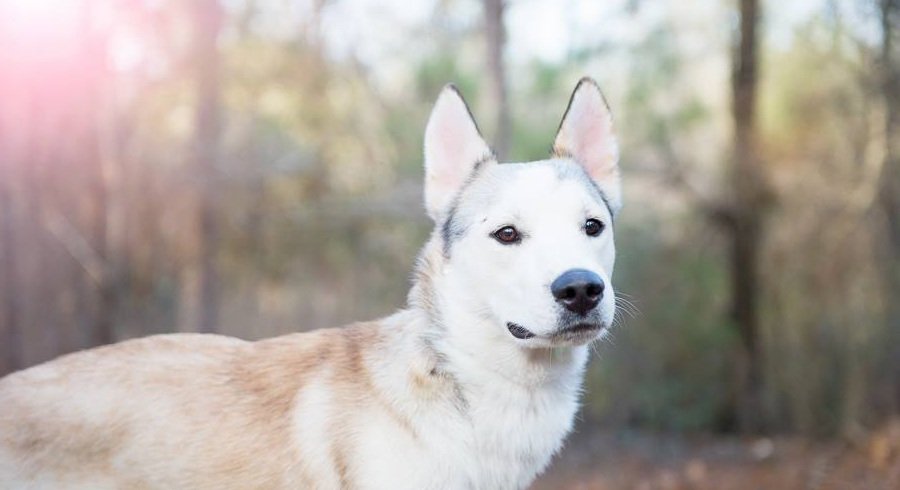
Life with an aggressive dog is beyond stressful. I have lived it myself, as well as helped countless clients resolve their dog's behavioral issues.
Our
holistic dog aggression program includes much more than dog training!