
Kids • Dogs • Bite Prevention • Supervision • Household Safety
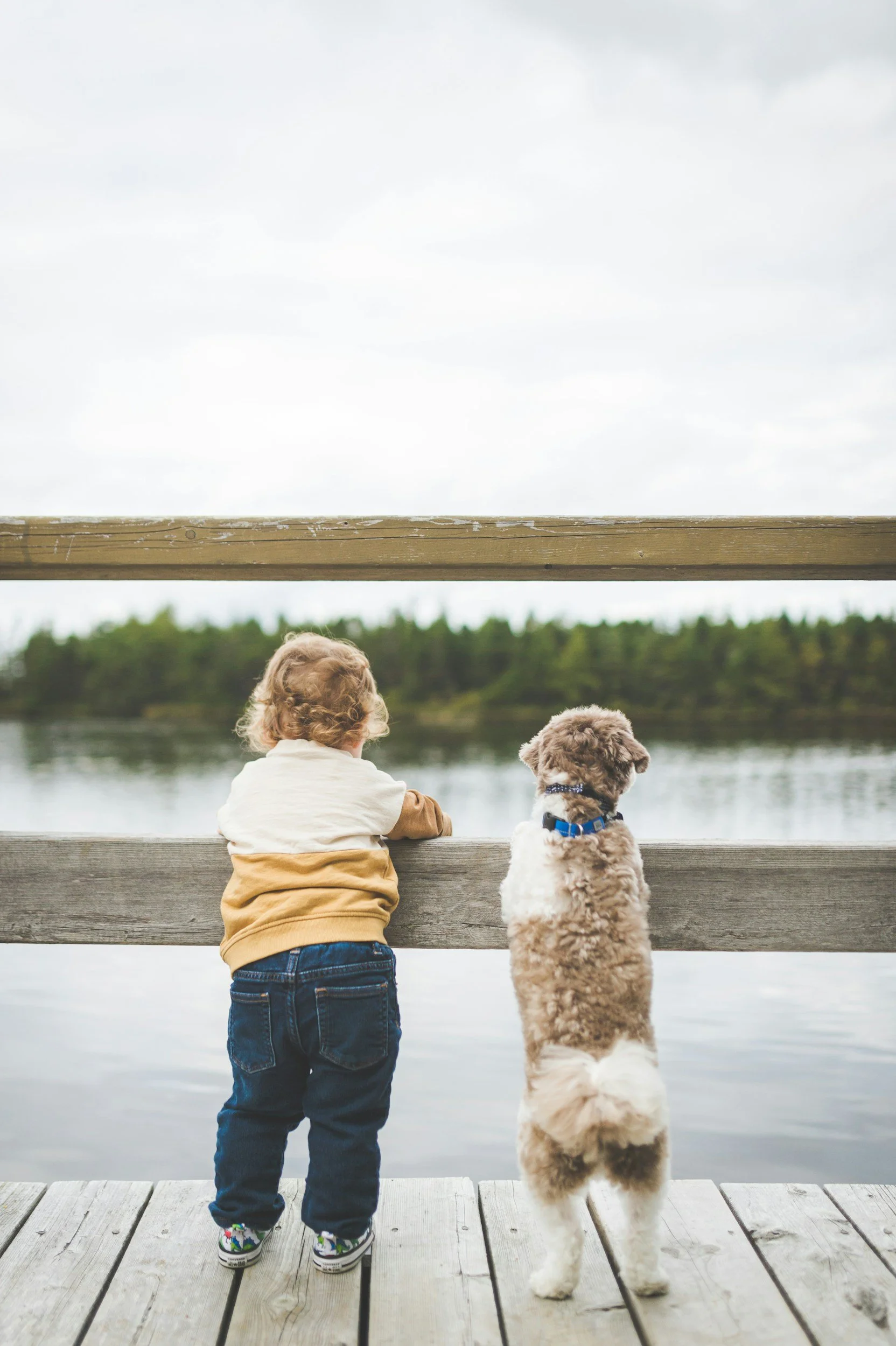
If you spend any time online, you have probably seen the videos: a toddler hugging a dog around the neck, climbing onto the dog's back, reaching into the food bowl or following a dog who is very clearly trying to get away.
Then the comments begin. Some people blame the parents. Some blame the dog. Others point out that if the dog finally bites, the dog may be the one who pays the highest price.
The problem is that this is not a question of whether we should teach the child or train the dog.
We need to do both.
Children need rules for living safely with dogs. Dogs need training, boundaries and opportunities to learn how to function around normal family life. And the adult in the house is responsible for creating an environment where neither the child nor the dog is repeatedly put in a situation they are not equipped to handle.
The Household Rule
Safety Cannot Depend on the Child or the Dog Making the Perfect Decision
Young children have poor impulse control. They fall, grab, squeal, run, forget rules and become excited.
Dogs also have limits. They can become tired, startled, uncomfortable, protective of resources or overwhelmed by repeated interaction.
That means the safety plan has to be bigger than “my child knows better” or “my dog would never bite.”
Good households use training, child education, active supervision and physical management together.
Yes, Children Need to Be Taught How to Treat Dogs
Children should not be expected to instinctively understand canine body language or know what makes a dog uncomfortable. Those skills have to be taught, repeated and supervised just like every other household safety rule.
Children should learn not to:
- climb or sit on dogs;
- pull ears, tails, legs or fur;
- hug unfamiliar dogs around the neck;
- chase a dog who is trying to leave;
- corner a dog;
- disturb a sleeping dog;
- reach into food bowls;
- take bones, toys or chews from the dog;
- crawl into crates or dog beds;
- put their face directly into a dog's face; or
- assume every dog wants to be touched.
One of the most useful habits you can teach a child is to allow the dog to choose whether to approach rather than chasing, grabbing or cornering the dog for affection.
But Kids Will Still Make Mistakes
Toddlers fall. Children run through the house. Someone drops a toy. A friend comes over who has never been taught dog manners. A child may reach suddenly or trip over the dog even in a well-managed home.
We cannot train children into perfect predictability, which is why I also want our dogs learning how to handle reasonable household life without immediately falling apart.
Dogs Need Skills for Living With Children Too
This does not mean allowing children to annoy the dog in the name of “desensitization.” It means preparing the dog for normal family life in a controlled way.
Useful skills include:
- Place and meaningful duration;
- Leave It and Out;
- recall away from the child;
- settling while children move around;
- walking away rather than becoming involved in every activity;
- comfort behind a gate or in a crate;
- appropriate response to normal household noises; and
- the ability to accept reasonable handling without becoming immediately defensive.
Those skills give parents options. They also give the dog clear answers when the house becomes busy.
Build Resilience Without Deliberately Annoying the Dog
A dog living with children will probably hear squealing, see sudden movement and occasionally experience an accidental bump. Thoughtful exposure can help a dog become more comfortable with ordinary family activity.
You might work at a comfortable distance from children playing, reward calm behavior around movement or practice gentle cooperative handling in a quiet setting.
What I do not want is someone deliberately pulling ears, grabbing feet or climbing on the dog because “he needs to learn to tolerate kids.”
There is a difference between building resilience and repeatedly violating the dog's boundaries.
Your Dog Needs a Place the Children Do Not Follow
Every dog living with children should have access to a protected resting area. That might be a crate, gated room, dog bed behind a barrier or another quiet place appropriate for the home.
The important part is that the child does not follow the dog there.
If the dog leaves interaction and goes to the safe area, that choice should be respected.
A dog who is trying to disengage should not have to escalate simply because nobody will let them leave.
Supervision Means Active Supervision
Being somewhere in the house is not the same thing as supervising a child and dog together.
If your attention is going to the stove, another child, a phone call, a shower or anything else that prevents you from watching the interaction, use physical separation.
That can mean:
- a baby gate;
- a crate;
- a closed door;
- a separate room; or
- another secure setup appropriate for that dog and household.
Management is not evidence that you distrust your dog. It is how adults prevent predictable mistakes.
One Phrase I Do Not Trust
“My Dog Is Great With Kids” Is Not a Safety Plan
Your dog may genuinely adore your children.
That still does not mean the dog should tolerate being climbed on, startled awake, cornered, bothered while eating or repeatedly pushed past the point of comfort.
Good temperament gives you an advantage.
It does not replace parenting, training or supervision.
Your Child's Friends Are Different From Your Own Children
A dog who lives beautifully with your children may not feel the same way about their friends.
Your kids know the household rules. They may know not to approach the dog while sleeping, grab a toy, crowd the dog bed or rush through a particular doorway.
Visiting children do not necessarily know any of that. They may run, wrestle, squeal, leave doors open, reach for the dog or forget your instructions five minutes after you give them.
If your dog is uncomfortable with unfamiliar children, highly excitable, reactive or has any aggression history, secure separation during playdates may simply be the safest answer.
There is no prize for proving your dog can tolerate a house full of kids.
A crate, closed room or secure gate can prevent a completely predictable problem.
A Real-Life Example
The Herding Dog at the Pool
Years ago I trained a herding dog owned by a professional football player. The dog loved the children, the children loved the dog, and on the surface everybody was having a great time.
The problem was what happened around the pool.
As the kids ran, jumped and splashed, the dog's herding instincts kicked in. He would chase them around the pool trying to control the movement.
Nobody thought the dog was being aggressive. He was doing what came very naturally to him.
But natural does not mean safe.
Around a swimming pool, one badly timed body check, ankle nip, collision or startled child could have resulted in somebody falling into the water, hitting the concrete or getting hurt.
And once children are involved, we also have to think about liability. It does not matter very much after an accident whether the dog was “just herding” or whether everybody had been laughing five minutes earlier.
So we made the rule simple:
- When children were actively using the pool, the dog was on Place.
- He could still be outside and part of family life.
- He simply was not allowed to participate in the running, chasing and splashing around the pool.
There were very limited exceptions, but those required two adults: one adult responsible for supervising the children and one adult responsible for supervising the dog.
Two jobs required two adults.
That is the part people sometimes miss. The dog did not need to be banished inside because he was a bad dog, and the children did not need to stop enjoying the pool because the dog had herding instincts.
We simply gave the dog a clear job that removed him from an unsafe one.
Place allowed him to remain included without being allowed to rehearse behavior that could eventually hurt somebody.
Food, Chews and Toys Need Rules
Children and high-value dog resources are a combination I manage very carefully.
Young children drop food constantly and often do not understand possession or canine warning signals. Dogs may also become more protective of resources when someone repeatedly reaches toward them.
Simple household rules help:
- Feed the dog where children cannot interfere.
- Give high-value chews in a protected area.
- Do not ask children to take toys or bones away from the dog.
- Teach the dog Leave It and Out.
- Do not allow children to crawl toward a dog who is eating.
- Address existing resource guarding rather than hoping the dog will tolerate the child.
If guarding is already part of the picture, read Resource Guarding in Dogs .
Teach Children What “No Thanks” Looks Like
Children often think a dog says no only when the dog growls.
I want them learning that dogs communicate much earlier than that.
Depending on the dog, discomfort may look like:
- turning the head away;
- moving away;
- hiding;
- stiffening;
- freezing;
- lip licking;
- repeated yawning;
- ears shifting back;
- hard staring;
- showing the whites of the eyes; or
- repeated attempts to leave the interaction.
You do not need to turn a young child into a canine behavior specialist. The simpler lesson is: if the dog moves away, let the dog go.
Adults Need to Learn the Dog's Body Language Too
The adult is the one who must notice patterns and intervene early. If the dog repeatedly leaves when the toddler approaches, stiffens around the child's food or becomes tense when a particular child hugs them, do not wait for a growl before changing the setup.
A large part of bite prevention is acting on the small information before the dog feels the need to give you large information.
Do Not Punish the Growl and Ignore Everything That Came Before It
A growl is communication.
That does not mean I allow threatening or unsafe behavior to continue. It means I want to understand why the dog felt the need to escalate.
Ask what happened immediately before the growl:
- Was the dog sleeping?
- Was food involved?
- Was the child climbing on the dog?
- Was the dog cornered?
- Was the dog guarding a person, toy or resting place?
- Had the dog repeatedly tried to move away?
Remove the child, secure the dog and change the situation. Then address the behavior rather than simply punishing the warning sound.
For more on growling, read Why Is My Dog Growling? What the Warning Means & What to Do Next .
Do Not Let Children Correct the Dog
Children should know household rules, but they should not become the dog's disciplinarian.
Adults handle corrections, conflict and behavior problems.
A child should not be grabbing collars, physically moving an unwilling dog, taking guarded objects or trying to correct growling or aggression.
Give the child simple skills such as calling the dog, asking for Sit or participating in appropriate training when an adult is supervising. Leave conflict to the grown-ups.
Place Is Extremely Useful in Homes With Children
Place gives the dog somewhere to be while family life continues. It is useful during meals, visitors, homework, playtime and the thousand moments when you need the dog present but not under everyone's feet.
The important piece is duration. The dog should not think Place means lying down for twelve seconds until something interesting happens.
If duration is weak, read Duration Work for Dogs: Teaching Calm, Patience & an Off-Switch .
Children Should Not Be Responsible for Preventing a Bite
Teaching children is important, but the final responsibility remains with the adult.
A four-year-old cannot be expected to consistently evaluate canine body language, remember every resource-guarding rule and make the right choice during an exciting moment.
We teach the child because it improves safety. We train the dog because it improves safety. And we manage the environment because neither one is perfect.
Some Dogs Need More Space From Children
Not every dog loves children, and that does not automatically make the dog bad.
Some dogs are sensitive to fast movement and noise. Some have limited experience with children. Some are older or painful. Others simply prefer more personal space.
You can respect that without giving up household rules.
A dog who does not enjoy children may need more separation, structured exposure or professional behavior work rather than repeated forced interaction.
Pain and Health Can Change a Dog's Tolerance
A dog who previously tolerated a child's touch may become less tolerant if the dog develops arthritis, back pain, ear pain, dental pain, skin irritation or another physical problem.
If your dog's behavior toward the children suddenly changes, do not assume the dog has become mean.
Look at the behavior and the body.
Read Why Did My Dog's Behavior Suddenly Change? if this is new behavior.
If Your Dog Has Already Snapped at or Bitten a Child
Do not recreate the situation to see whether it happens again.
Use physical separation immediately and document what occurred. Think about what the dog was doing, what the child was doing, whether food or toys were present, whether the dog was resting and what warnings may have happened before the incident.
Bite history involving a child deserves qualified behavior assessment.
You can also review Dog Bite Prevention: Warning Signs, Safety & What to Watch .
Everyday Household Rules
My Basic Safety Rules for Kids and Dogs
- Young children and dogs are not left together without active supervision.
- The dog has a child-free resting area.
- Children do not bother a dog who is eating or sleeping.
- Children do not take food, bones or toys from the dog.
- The dog is allowed to walk away.
- Children do not climb on, ride or corner the dog.
- Visiting children follow the same rules as household children.
- Adults manage gates, crates, resources and high-risk situations.
- The dog has useful obedience skills such as Place, Out, Leave It and recall.
- Growling, snapping, guarding or sudden behavior change is addressed rather than ignored.
Different Situation? Start With the Right Page
- Bringing a new dog home to children? Start with How to Safely Introduce a New Dog to Kids .
- Pregnant and preparing your current dog for a baby? Read How to Prepare Your Dog for a New Baby .
- Already raising children and dogs together? Stay here. This page is about the everyday rules, supervision and training that keep that relationship safe over time.
Questions Parents Are Searching
Kids and Dogs Safety Q&A
Can I leave my dog alone with my child if the dog has never bitten?
Young children and dogs should not be left together without active supervision. A lack of previous bites does not mean every future interaction is automatically safe. If you cannot supervise, use a gate, crate, closed door or another physical barrier.
How do I teach my child to be safe around dogs?
Teach simple, repeatable rules: do not climb on dogs, disturb them while eating or sleeping, take food or toys, follow a dog who is walking away or assume every dog wants to be touched. Adults still remain responsible for supervision and management.
Should children hug dogs?
Many dogs do not enjoy being restrained around the neck, especially by unfamiliar children. Teach children to use less restrictive forms of affection and to allow the dog to move away.
What are signs a dog is uncomfortable with a child?
Signs may include moving away, turning the head, stiffening, freezing, lip licking, repeated yawning, hiding, hard staring or repeatedly trying to leave. Body language varies by dog, so look for changes from that dog's normal behavior.
What should I do if my dog growls at my child?
Separate the dog and child safely and determine what led to the growl. Do not simply punish the warning sound and recreate the situation. Food, sleep, guarding, pain, crowding and repeated unwanted interaction should all be considered.
What should I do if my dog snaps at my child?
Prevent another incident immediately with physical separation and get qualified behavior help. Document what happened before the snap, including resources, handling, sleep, movement and any earlier warning signs.
Why does my dog like my kids but not their friends?
Familiar children and unfamiliar children can be very different to a dog. Visiting children may move, sound and interact differently and may not know your household rules. Some dogs are safest separated during playdates.
Should my dog have a safe space away from my children?
Yes. A crate, gated room, dog bed behind a barrier or other protected area gives the dog somewhere to rest without being followed or disturbed.
Can children take a toy or bone away from a dog?
Children should not be responsible for removing valued resources from a dog. Adults should manage food and chews and teach commands such as Out and Leave It.
What if my dog suddenly becomes less tolerant of my child?
Sudden behavior changes can involve pain, illness, aging, stress or changes in the environment. Increase management immediately and consider both behavioral and physical contributors.
Can a dog be trained to tolerate children?
Dogs can learn useful skills and become more comfortable with normal family activity, but training should not be used to force a dog to tolerate harassment or repeated unwanted handling. Some dogs require more distance and management around children.
Should my child correct the dog?
Children should not be responsible for physical corrections, guarding conflicts or aggressive behavior. Adults should handle those situations. Children can participate in simple, appropriate training under adult supervision.
Bringing Home a New Dog?
The first introduction between a new dog and your children deserves its own slower plan.
Introduce a New Dog to KidsBaby on the Way?
Change routines, build useful skills and prepare the dog before the newborn comes home.
Prepare Your Dog for a BabyGrowling, Guarding or Bite Risk?
Serious behavior around children needs a deliberate safety plan, not repeated testing.
Start With Aggression SafetyNeed Help With Your Household?
If you are worried about how your dog is behaving around your children, review the behavior before another incident happens.
Schedule a Behavior ConsultationTeach the Child. Train the Dog. Manage the Environment.
Safe Kids-and-Dogs Homes Require All Three
Children need to learn that dogs have boundaries. Dogs need useful skills for living in a busy household. And adults need to supervise and manage situations that neither the child nor the dog should be expected to handle perfectly.
The goal is not to create a dog who tolerates absolutely anything a child does. It is also not to place the entire responsibility for safety on a young child.
We teach both sides, watch the small signals and step in before the dog feels the need to make the message bigger.
Get Help With Kids & Dog Safety