How to Teach Watch Me

Watch Me is one of the simplest commands I teach and one of the most useful. I am teaching the dog that when I say Watch Me, I want him to take his attention off whatever currently has it and bring that attention back to me.

Sometimes that is easy. We are standing in the kitchen and nothing particularly exciting is happening. Sometimes the dog is staring at his food bowl, waiting for dinner. Eventually it might be another dog across the street, somebody walking toward the house, a squirrel moving through the yard or something else that has begun pulling his brain away from our conversation.

Watch Me gives me a way to interrupt that fixation before I ask for something else. I may follow it with a U-turn, Recall, Sit, Place or simply movement away from what the dog was watching. The eye contact itself is useful, but the bigger purpose is that I have successfully gotten the dog to disengage and reconnect with me.

Watch Me means: take your attention off that for a moment and give it back to me so I can tell you what comes next.

I Am Not Teaching My Dog to Stare at Me All Day

I want to get this distinction out of the way early because I don't want people turning a perfectly useful attention cue into a requirement that the dog spend an entire walk staring at the side of their face.

Dogs should look at the world. They should sniff. They should notice people, dogs, birds, cars, sounds and changes in the environment. I don't want a dog who has been taught that the safest possible response is to avoid ever looking at anything.

What I want is the ability to get his attention back when I need it.

He can see the dog across the street. The problem isn't that he looked. The question is whether he can disengage from that dog when I ask, or whether looking immediately turns into staring, leaning forward, loading, whining, barking or lunging while the rest of the world disappears.

Watch Me gives us a practiced interruption between noticing and becoming completely consumed by what he noticed.

Teach Watch Me Before You Need Watch Me

This belongs directly beside Training for Muscle Memory. I don't want the first meaningful use of Watch Me to happen while your reactive dog is already staring down another dog from twenty feet away.

Teach it in the house. Rehearse it in the kitchen. Practice outside when the street is empty. Use it during meals and around ordinary distractions. Let the dog build hundreds of easy repetitions where hearing Watch Me and moving his eyes back to you is simple.

Then, when I eventually use the command around something more important, I am reaching for a response that already exists rather than trying to teach eye contact in the exact moment when the dog is least capable of learning it.

Low-distraction practice is not the finished skill. It is where we build the response we intend to use later when the distraction actually matters.

For Puppies, Make This Ridiculously Easy

Watch Me is a great puppy exercise because there is almost no conflict in it. The puppy looks at you and something good happens. He starts learning that paying attention to the human is worthwhile, and you start building a simple language before the puppy has developed six months of habits around ignoring you.

With a friendly, comfortable puppy, I may sit on the floor or work fairly close to his level. Have a handful of small treats ready and keep the session short. Five or six good repetitions can be plenty before everybody goes back to normal life.

I am not trying to hold a puppy's stare for thirty seconds. I want the very first lesson to be incredibly obvious: that movement of your eyes toward my face is what earned the reward.

With an Adult Dog, Especially a Behavior Dog, Give Him Space

The old version of this article said I often began sitting on the floor eye-to-eye with the dog. That can be perfectly fine with a puppy or social dog I know well. It is absolutely not how I would tell somebody to begin with an unfamiliar adult dog who has fear, handling sensitivity, guarding behavior or a bite history.

Direct eye contact can feel socially intense to some dogs, and putting your face at the dog's face level removes your margin for error. You do not need to lean over a dog, stare directly into his eyes or put your nose twelve inches from his mouth to teach Watch Me.

Stand or sit at a comfortable distance, keep your body reasonably relaxed and teach the dog to orient his eyes toward your face. If the dog finds sustained direct eye contact uncomfortable, I am perfectly happy initially rewarding a clear check-in toward my face rather than demanding a prolonged stare.

Do Not Put Your Face in a Bite-Risk Dog's Face

If a dog has a history of growling, snapping or biting when stared at, leaned over or approached closely, do not turn Watch Me into an eye-contact confrontation. Work from a safe position and address the larger behavior problem appropriately.

Attention training should improve communication. It should not put your face inside a predictable bite zone.

How I Teach Watch Me

The basic exercise is easy, but there is a progression. I want the dog to understand that the cue refers to his attention coming to me, not simply following a cookie that happens to be stuck beside my eyeball.

Start With the Treat Near Your Face

Let the dog know you have a treat, then move that hand toward the temple or side of your eye as you say “Watch Me.” The moment the dog's eyes move toward your face, mark it with “Good” or your normal marker and reward him.

I often give the reward from the opposite hand. That small detail helps prevent the dog from thinking the lesson is simply to stare at the exact hand that moved toward my face.

Move the Treat Away From Your Face

Once the dog is easily following the first setup, hold the treat several inches off to one side instead of directly beside your eye. Say Watch Me and wait.

At first the dog may stare straight at the treat. Don't keep repeating the cue. Give him a moment to solve it. Eventually most dogs flick their eyes toward the human as if to say, Are you planning to give me that or what?

That tiny eye movement is exactly what I want. Mark it immediately and reward.

Switch Sides

Move the treat to the other hand and repeat. I don't want Watch Me becoming a visual trick that only works when food is held beside the right side of my head.

Changing hands starts teaching the dog that the location of the food is irrelevant. The answer is still my face.

Put Food in Both Hands

Now hold a treat in each hand with your hands apart. Give the cue and wait for the dog to stop bouncing his eyes between the food and finally look at you.

Mark the eye contact the instant it happens. Again, I am teaching him that even when valuable things exist somewhere else, checking in with me is the behavior that completes the exercise.

Move Your Hands Farther Away

Gradually increase the temptation. Move your hands farther to the sides, lower them, raise one slightly, or make a small movement with the food. The dog learns that movement of the reward does not change what Watch Me means.

You do not need to wave food wildly around and deliberately make the exercise impossible. Add difficulty progressively.

Fade the Food Prompt

Once the dog clearly understands the cue, say Watch Me without first showing him a treat or moving food toward your face. When he looks at you, mark and then reach for the reward.

This is an important step. I want the word to create the response, not the sight of a cookie already positioned beside my eye.

Don't Repeat “Watch Me, Watch Me, Watch Me”

Say the cue once and give the dog a chance to respond. If you are standing in your kitchen and he knows the exercise, I don't want Watch Me becoming background noise because you repeat it six times before anything happens.

If the dog does not respond during the teaching phase, make the picture easier. Reduce the distraction, help him with the hand movement again or move to a location where he can succeed. Then build back up.

Later, if the dog has been thoroughly taught and you know he understands the cue under that level of distraction, your expectations can appropriately increase. But during teaching, confusion is information. Repeating the word louder does not provide the missing information.

How Much Eye Contact Do I Want?

Initially, one clean flick of the eyes toward me is enough. I want the dog to understand what earns the marker before I start asking for duration.

Once that response is easy, I can wait for a little more. One second of eye contact becomes two. Maybe I work toward three or five seconds in an easy environment. There is rarely a reason I need a family dog drilling me with an unbroken thirty-second stare every time I say Watch Me.

Remember the purpose. I want the ability to interrupt attention and reconnect. In real life, I often only need enough eye contact to know the dog's brain came back to me before I give the next piece of information.

I care much more about how quickly the dog can disengage and find me than how long I can make him stare into my eyes.

Then Stop Practicing Only in the Kitchen

Once Watch Me is quick and easy indoors, start moving the exercise into normal life. Practice in another room. Try it while the dog is standing instead of sitting. Practice while you are moving. Go into the driveway or backyard. Use it on a quiet walk.

This is the same proofing process we use with every other useful skill. A dog who responds beautifully while standing three feet from you in the kitchen may need repetitions before the cue carries the same meaning while he is sniffing grass outside.

That doesn't mean he forgot the command. The environment changed.

Practice at a level where the dog can succeed, then gradually give him more meaningful things to disengage from.

Use the Food Bowl to Make Watch Me Harder

The Feeding Protocol gives us a wonderful progression because dinner is something the dog actually cares about.

Once the dog understands that the bowl can sit on the floor while he waits for the release cue, ask for Watch Me. Now he has to take his eyes off something extremely valuable, look at you and wait for another piece of information before he gets access.

That is considerably harder than looking at you while you are standing in an empty room holding a piece of food.

I mark the check-in and release the dog to eat. The food itself becomes the reward for disengaging from the food long enough to listen.

That is exactly why I like embedding these skills into real life. We stop practicing eye contact as an isolated trick and begin teaching the dog that checking in with me is useful when something he wants is already competing for his attention.

Use It Around Doors and Crate Exits Too

Once your dog understands Wait around doors, add a brief Watch Me before release. The front door is open. Outside is right there. Instead of staring through the opening and mentally leaving before his body does, the dog turns his attention back to you for a moment.

Then you release him.

The same thing can happen at a crate door, gate or vehicle exit. Again, I do not need a fifteen-second staring contest. I want the dog demonstrating that the opportunity in front of him has not become so powerful that he can no longer hear me.

This connects naturally to Impulse Control. The dog sees what he wants, pauses, checks in and waits for permission rather than allowing the environment to make the decision for him.

Reward the Check-Ins You Didn't Ask For

One of my favorite progressions happens when the dog starts offering attention before I say anything.

You are walking and he notices something, then looks back at you. Good. Reward it.

He hears a noise at the front window, looks toward it and then checks in instead of immediately barking. Good dog.

He sees somebody walking across the parking lot and glances up at you before deciding what to do. I want him knowing that was a very good choice.

Eventually I don't want to have to verbally interrupt every distraction. I want the dog developing a habit of checking in all by himself when something changes.

The finished skill isn't only “look at me when I tell you.” I love when the dog begins thinking, “Something changed — I should probably check in.”

Watch Me Is Very Useful for Leash Reactivity — If You Use It Early Enough

I use Watch Me frequently with dogs who fixate on people, dogs or other things in the environment. But timing and distance matter enormously.

If your dog notices another dog across the street and is still capable of thinking, I may ask for Watch Me, reward the disengagement and then move. Sometimes I will use the check-in before an “Uh-oh, U-turn.” Sometimes I just want to break the stare and continue forward. The exact next step depends on the dog and the situation.

If your dog is already lunging, barking, screaming at the end of the leash and completely over threshold, standing there saying “Watch Me” repeatedly while holding cheese near your forehead is probably not the answer. At that point I am much more interested in creating distance and helping the dog recover.

Then we can practice at a better distance next time.

Watch Me Does Not Mean “Pretend the Trigger Doesn't Exist”

I am not trying to trick a fearful or reactive dog into believing there isn't another dog across the street simply because he is looking at my face. He knows the dog is there. I know the dog is there.

The skill gives us a moment of communication inside that awareness.

He can notice the environment without becoming trapped in the stare. He can turn away. He can hear another cue. We can change direction, create distance or continue moving rather than standing still while his arousal keeps climbing.

This distinction is important because I don't want pet parents demanding eye contact while forcing a dog to remain much too close to something he is genuinely afraid of. Watch Me is not a magic shield against fear, and it is not a substitute for respecting threshold.

Do Not Turn Watch Me Into a Staring Contest With an Aggressive Dog

Direct staring has social meaning for dogs, and context matters. A dog who is comfortable with you may happily make eye contact all day. A dog who is frightened, defensive or suspicious may experience intense direct staring very differently.

That is why my goal is functional attention, not dominance by eyeball.

If I am working with an aggressive dog, I am especially careful about body position, distance and how much social pressure I am adding. I want the dog learning to orient toward the handler when cued. I don't need the human looming forward and insisting on prolonged eye contact to prove who is in charge.

We can establish very clear leadership and very clear expectations without creating unnecessary confrontation.

Watch Me Can Help Break Fixation at Home Too

This isn't only a walking skill. I use Watch Me around windows, doors, fences and household activity because fixation often happens long before the barking or chasing starts.

Your dog sees the delivery truck through the front window. His ears go forward and his body becomes still. If I wait until he is slamming into the glass and barking, I now have a much bigger behavior to interrupt.

If I can say Watch Me while he is still in that earlier stage, bring his attention back, then Recall him away from the window or send him to Place, I have interrupted the sequence sooner.

The same thing can happen when a dog becomes intensely interested in another dog moving through the house, a child running across the room or activity outside the fence. Watch Me gives me a clean first step: stop staring at that and find me.

But Don't Spend the Day Interrupting Everything the Dog Looks At

The flip side is equally important. If your dog looks out the window without barking, he doesn't necessarily need a command. If he notices another dog and calmly continues sniffing, leave him alone. If he watches the neighbor walk by and decides independently that nothing needs to happen, that is exactly the kind of behavior I want.

I don't want Watch Me becoming a nervous human tic where every environmental change results in “Watch me! Watch me! Watch me!”

Use it when attention needs to come back to you. Reward voluntary check-ins. And also let your dog demonstrate that he can process perfectly ordinary things without your help.

The Skill Should Eventually Work Without Food in Your Hand

Food is extremely useful when I teach this because I am literally teaching the dog what movement of his attention earns reinforcement. But the finished behavior cannot depend on seeing the food first.

Once Watch Me is established, the cue should create the response whether or not your hand is already inside a treat pouch. Then I can reward afterward.

As the skill gets stronger, rewards can vary too. Sometimes I use food. Sometimes praise is enough for an easy repetition. Sometimes access to the thing the dog wants becomes the reward. Watch Me at the door, then release outside. Watch Me before dinner, then Eat. Watch Me before I throw the toy, then the game begins.

The dog learns that checking in with me is often how he gets information about what happens next.

Practice While You Are Moving

One common mistake is teaching Watch Me only with the dog sitting directly in front of the person. That is a fine beginning, but many of the situations where I actually need the skill happen while both of us are moving.

Once the cue is solid, practice while walking around the house. Say Watch Me while moving across the yard. Ask for a quick check-in on a quiet walk without stopping your feet.

Eventually I want to be able to turn, move and communicate at the same time. That becomes especially useful when Watch Me is part of changing direction or moving away from something in the environment.

Pair It With Movement Instead of Freezing in Front of the Trigger

This is a big one for reactive dogs. Sometimes people successfully get eye contact and then just stand there. The dog looks at them for two seconds, then looks back at the trigger, and everybody repeats the same process while the trigger gets closer.

If I asked for Watch Me because I needed to interrupt fixation, I often want to do something with that interruption.

Move. Turn. Create distance. Cross the street. Continue walking. Give the dog another familiar assignment.

Watch Me opens the door to communication. Walk through the door.

Watch Me Is Not the Whole Behavior Plan

A dog can have an excellent Watch Me and still be fearful, reactive, hypervigilant or aggressive. The command gives us a useful piece of communication. It does not explain why the dog is reacting, change every emotional association or erase a bite history.

If the dog's threshold is extremely low, if he cannot disengage even at significant distance, if he redirects onto the leash or handler, or if physical restraint is the only thing preventing him from reaching and injuring another dog or person, I want a broader behavior and safety plan.

Eye Contact Is Not Physical Containment

If your dog could seriously bite another dog or person if the leash failed, treat that as genuine risk. Use appropriate leashes, barriers, distance, muzzles or other management based on the individual situation.

A dog looking at you for three seconds has not stopped being a dog with a serious aggression history.

How I Know Watch Me Is Becoming Useful

I don't judge this skill only by whether the dog can stare at me while I hold food beside my face. I look at what happens when attention is actually competing with something.

The Response Is Quick

You say Watch Me once and the dog turns his attention toward you without spending ten seconds debating whether the environment is more important.

The Food Can Be Hidden

The cue works before the reward appears instead of only when the dog can already see the treat beside your face.

It Works While Moving

The dog can check in while walking rather than needing the exact sitting-in-the-kitchen picture where the exercise began.

It Works Around Real Distractions

The dog can disengage from food, movement, another dog or another manageable distraction and bring his brain back to you.

The Dog Starts Offering It

Something changes in the environment and the dog begins checking in with you without needing the verbal cue every time.

You Know What Comes Next

You aren't asking for eye contact just to collect eye contact. You use the reconnection to move, turn, release, redirect or give the next useful instruction.

Make Watch Me Part of Real Life

Once the dog knows the cue, I don't need a formal ten-minute Watch Me session every day. I use little repetitions where they make sense.

Ask for it before releasing the food bowl. Use it at an open door before going outside. Practice once or twice on a walk when nothing interesting is happening. Ask for it around a manageable distraction, reward and continue on. Notice and reward the dog when he offers a check-in without being asked.

Those little repetitions are what turn the cue from a puppy trick into a piece of language you can actually use.

And just like Recall, U-turns, Down-Stay and the other skills I talked about in Training for Muscle Memory, I want enough practice behind Watch Me that the response is already familiar before the day I really need it.

Watch Me is not about making your dog ignore the world. It teaches him that he can notice the world, disengage from it when asked, and come back to the conversation with you.

WATCH ME QUESTIONS

Watch Me FAQ

The mechanics are simple. Making the skill genuinely useful comes from how you build and use it after the dog understands the first lesson.

How young can I teach Watch Me?

You can begin with a young puppy. Keep the lesson short, easy and rewarding. A quick glance toward your face is plenty in the beginning. The goal is simply to teach the puppy that paying attention to you is worthwhile.

Does Watch Me mean prolonged eye contact?

Not for me. I may build a few seconds of eye contact, but the functional skill is rapid disengagement from something else and reconnection with the handler. I care more about how quickly the dog can find me than how long I can make him stare.

What if my dog keeps staring at the treat?

Wait. Don't keep repeating Watch Me. Eventually most dogs flick their eyes toward the human as if asking why the food hasn't arrived yet. Mark that eye movement immediately. As the dog understands, switch hands, move the food farther away and eventually hide it completely before giving the cue.

When should I stop holding food beside my face?

As soon as the dog begins understanding what the cue means, start fading that prompt. Moving the treat toward your face helps explain the first lesson; it should not become part of the permanent command.

Should my dog watch me during the entire walk?

No. I want dogs looking at and smelling their environment. Watch Me is a cue I use when I need attention back, not a requirement that the dog ignore the world for the entire walk.

Can I use Watch Me when another dog appears?

Yes, if your dog is still at a distance where he can think and respond. Ask early, reward the disengagement and then use the attention to move, turn or create distance when appropriate. If the dog is already exploding at the end of the leash, prioritize getting out of the situation rather than repeatedly demanding eye contact.

Why does my dog know Watch Me inside but ignore it outside?

The outside environment is much harder. Your dog may understand the cue perfectly in the house but still need the behavior proofed around smells, movement, dogs, people and other distractions. Start outside somewhere easier and build rather than jumping directly to the hardest situation.

Should I reward my dog when he looks at me without being asked?

Absolutely, especially while I am trying to build better check-ins. If your dog notices something in the environment and voluntarily looks back at you rather than becoming fixated, that is exactly the kind of choice I want to strengthen.

What if eye contact makes my dog uncomfortable?

Do not force a prolonged stare. Work at a comfortable distance and initially reward the dog for orienting toward your face or checking in. Fearful, defensive or bite-risk dogs need thoughtful handling; there is no benefit to turning the exercise into a confrontation.

Can Watch Me fix leash reactivity?

It can be an extremely useful tool for interrupting fixation and reconnecting with your dog, but it does not by itself resolve the underlying reason for reactivity. Threshold, distance, state of mind, handling, history and the rest of the behavior picture still matter.

Read: Leash Reactivity in Dogs →

When Watch Me Isn't Enough

If your dog cannot disengage even at meaningful distance, escalates quickly into barking or lunging, redirects onto the person holding the leash, has a bite history or remains hypervigilant even when obvious triggers are gone, I don't assume the solution is simply more eye-contact repetitions. Watch Me gives us communication. Sometimes the larger behavior still needs to be understood.

View K9 Coach Behavior Services →

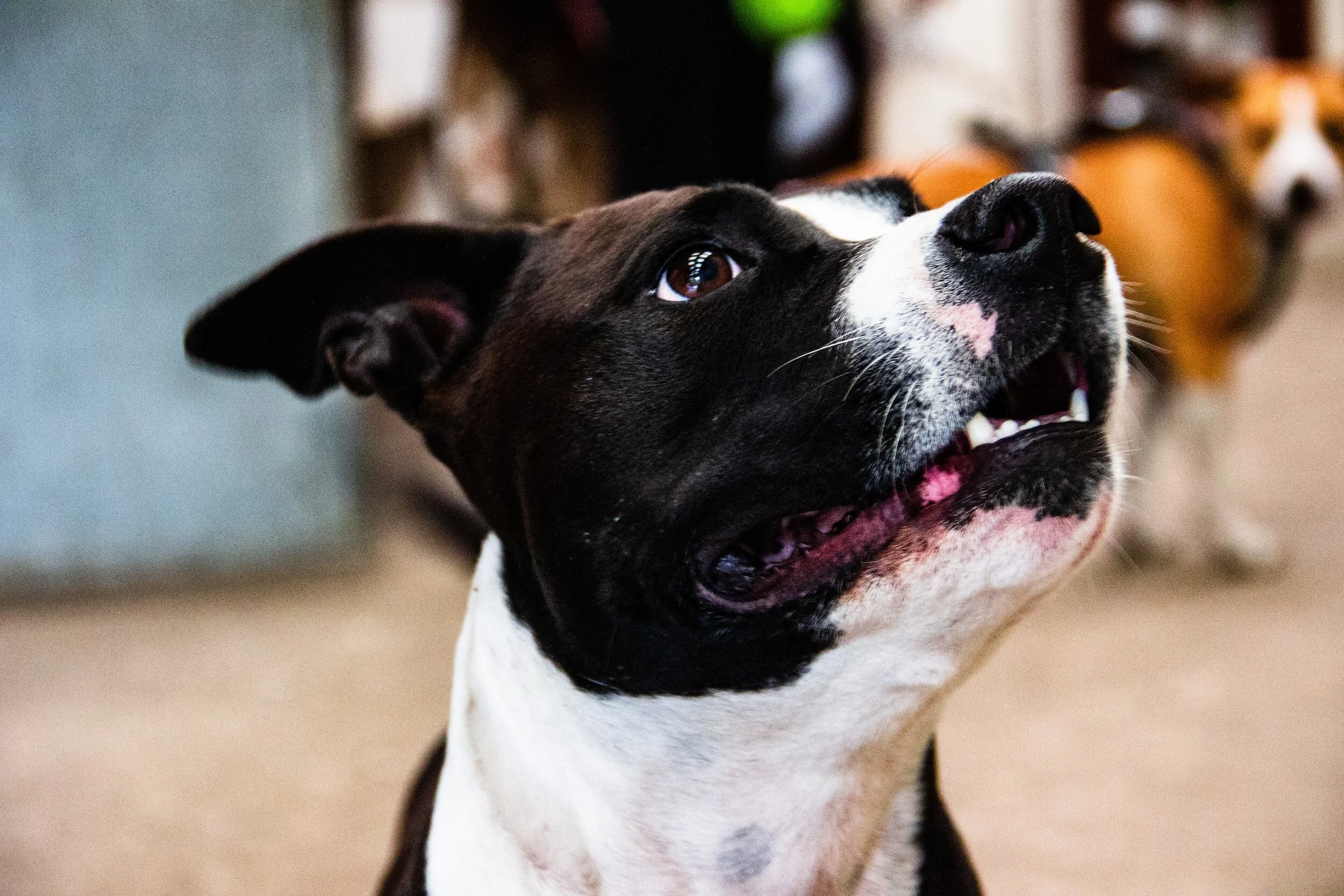
Dog Watching Owner
Previous
Previous

Practice Dog Training Before You Need It | Recall & Real-Life Rehearsals

Next
Next

How to Teach Out