

Dogs Fighting in the Same Home: Dog-to-Dog Aggression & What to Do
Dogs Fighting at Home • Household Aggression • Safety
When two dogs who live together start fighting, life can become stressful very quickly.
You start watching the food bowls. The couch. Doorways. Toys. Who walked too close to whom. Which dog is staring. Whether everybody can go into the backyard together. You may feel like you are constantly moving one dog while trying not to upset the other.
And after a serious fight, it is very easy to become afraid of the next one.
Sometimes pet parents tell me, “They used to love each other. I don't understand what happened.”
Sometimes they tell me the dogs have never been completely comfortable together, but the tension has finally escalated into a real fight.
Either way, once injuries or serious intent are part of the picture, this is no longer something I want you testing by simply putting the dogs back together and hoping for a better outcome.
First: Stop the Next Fight
Before we work on rebuilding the relationship, we need to stop giving the dogs opportunities to rehearse the conflict.
Repeated fights can increase tension, create new triggers and cause increasingly serious injuries. People can also be badly injured trying to separate fighting dogs.
If children live in the home, the safety conversation becomes even more important. A child does not need to be the target of aggression to be injured during a dog fight.
Why Are My Dogs Suddenly Fighting?
I want to know what was happening before the fight, not only what happened once teeth appeared.
Was there food? A bone? A toy? A person? A doorway? A favorite sleeping spot?
Had the dogs just become highly excited at the window or front door? Did one dog repeatedly crowd the other? Did somebody intervene physically? Is one dog reaching social maturity? Has an older dog become less tolerant of a younger dog's behavior?
And importantly: has anything changed physically?
Pain, illness, sensory changes, mobility problems, digestive discomfort, medication changes, aging and cognitive changes can alter how dogs respond to pressure and to each other.
Household aggression can involve one issue or several stacked together.
Resource Conflict
Food, bones, toys, furniture, sleeping spaces, doorways and access to a person can all become sources of conflict.
Over-Arousal
Doorbells, fence running, rough play, visitors or excitement can push dogs into a state where conflict becomes much easier to trigger.
Social Pressure
Staring, crowding, body blocking, repeatedly climbing on another dog or ignoring attempts to disengage can slowly build resentment.
Pain or Physical Change
A dog who hurts may become less tolerant of being bumped, jumped on, crowded or displaced from a resting area.
Changing Relationships
Maturity, aging, household changes and new dogs can alter relationships that once appeared completely stable.
Learned Conflict
Once dogs have repeatedly practiced staring, rushing, guarding or fighting, the pattern itself can begin to become easier to trigger.
Do Not Let Them “Work It Out”
I do not recommend allowing dogs who are already injuring each other to continue fighting until somebody supposedly establishes the relationship.
Another fight does not give us useful information that was worth the injury.
If dogs have demonstrated that they cannot currently share space safely, we manage them as though we believe them.
Crate-and-Rotate May Be Necessary for a While
Crate-and-rotate is exactly what it sounds like: one dog is safely secured while the other has access to the household, and then they switch.
It is not glamorous. It is not especially convenient. And no, most families do not want to live that way forever.
But when the alternative is another dog fight, crate-and-rotate can give everyone enough safety and breathing room to build an actual plan.
Each dog still needs appropriate exercise, interaction and one-on-one time. This should not become one dog spending all day loose while the other dog lives forgotten in a crate.
Use More Than One Layer of Management
Management always eventually meets human error.
Somebody opens the wrong door. A child forgets which dog is loose. A gate does not latch. One dog is released while the other is coming inside.
For higher-risk households, I prefer redundant safety:
- secure crates;
- closed doors;
- fixed gates;
- door or gate latches where appropriate;
- leashes during transitions;
- clear household routines;
- removal of predictable guardable resources; and
- a properly conditioned basket muzzle when appropriate.
The goal is not to create a prison. The goal is to keep one forgotten latch from becoming the next emergency.
Remove the Obvious Resources
If your dogs fight over bones, stop leaving bones on the floor.
If meals create tension, feed separately.
If toys repeatedly start conflict, shared free-for-all toy access is not appropriate right now.
Pick food bowls up when meals are finished.
Do not leave a valuable object sitting in an empty crate where the other dog can approach it.
Removing a predictable trigger is not failing to train the dogs. It is refusing to manufacture another fight while we work on the bigger problem.
If guarding is a major part of the conflict, read Resource Guarding in Dogs: Food, Toys, People & Bite Risk .
Immediately After a Fight
Do Not Rush the Dogs Back Together
After a serious fight, both dogs need an opportunity to come down.
Check both dogs carefully for injuries. Punctures can hide under fur, and injuries that look small from the outside can be more significant underneath.
Depending on the severity of the fight, veterinary care may be needed.
Once the dogs are secure, do not immediately put them nose-to-nose to see whether they are “over it.”
I want a deliberate plan for the next few hours and days rather than repeated emotional testing.
I have an After the Fight Guide for exactly this situation. You can find it, along with current and upcoming behavior resources, in the K9Coach guide library.
A Basket Muzzle May Be Part of Reintroduction
A properly fitted basket muzzle can be an important safety layer for the dog presenting the greater bite risk during early structured reintroduction.
It must be conditioned before the stressful interaction. It also needs to allow normal panting, appropriate exercise, drinking and reward delivery.
A muzzle is not permission to throw the dogs together.
It simply reduces one element of risk while we work.
Train the Dogs Individually Before Asking Them to Work Together
Each dog needs useful communication with the human independently.
Depending on the dogs, that may include:
- recall away;
- Place;
- down-stay;
- leash handling;
- waiting at thresholds;
- OUT and LEAVE IT;
- disengagement;
- settling; and
- moving away from another dog when asked.
I want those skills familiar before we ask the dog to perform them while staring at the dog they recently fought.
Then We Work on Coexistence — Not Friendship
Pet parents understandably want their dogs to go back to sleeping in a pile together.
That may happen.
But it should not be the first measure of success.
I would much rather see two dogs learn to exist in the same environment without staring, posturing, crowding, guarding or constantly monitoring each other.
Neutral can be beautiful.
Parallel Movement Can Be Useful
When appropriate for the individual dogs, parallel walks can let them share an activity without requiring close social interaction.
Start with enough distance that both dogs can function.
I am watching for softer bodies, the ability to sniff and disengage, responsiveness to the handler and recovery if one dog notices the other.
Distance is your friend. We can decrease it when the dogs show us they are ready.
Shared Indoor Work Comes Later
Eventually, appropriate dogs may work in the same larger space with distance, leashes, Place work, barriers or other safety layers.
The dog presenting the greater bite risk may still be muzzled.
Nobody is loose together simply because one parallel walk went well.
The first goal is boring coexistence.
Learn the Signs Before the Fight
Most dog fights do not truly begin with the first bite.
Watch for:
- hard staring;
- a suddenly closed mouth;
- freezing;
- body blocking;
- standing over another dog;
- hovering near resources;
- persistent following;
- stiff posture;
- crowding;
- one dog repeatedly trying to disengage;
- growling;
- lip lifting; and
- inability to settle while the other dog is present.
I would much rather interrupt the hard stare than separate the fight that comes three minutes later.
What Does Progress Look Like?
Progress is not simply “they haven't fought this week.”
I am looking for:
- looser, more neutral body language;
- less fixation on the other dog;
- no persistent hard staring or posturing;
- reliable response to known obedience around the other dog;
- the ability to move away when asked;
- the ability to rest without monitoring the other dog;
- less competition around people and space;
- faster recovery from excitement;
- spontaneous disengagement; and
- eventually, dogs who can check themselves before the handler has to.
Freedom is earned from what the dogs demonstrate, not from how badly the humans want life to feel normal again.
Do Not Forget Individual Time
Dogs in a conflict-heavy household can begin spending every waking minute monitoring each other.
Give each dog time to walk, train, play, rest and interact with you without the other dog becoming part of every experience.
That can lower social pressure and gives you a much clearer picture of each dog as an individual.
What If They Are Fighting Over You?
Access to a person can become part of the conflict.
You may notice one dog squeezing between you and the other dog, blocking access, hard-staring when the other approaches, rushing toward you when the other dog receives attention or escalating when both dogs crowd your space.
Do not dismiss threatening behavior as, “She's just jealous,” or, “He's protecting me.”
The pattern still deserves structure and evaluation.
Could Health Be Changing Their Relationship?
If dogs who previously lived together comfortably begin fighting, I want physical health included in the investigation.
Pain can make a dog less tolerant. Vision or hearing changes can alter communication. Cognitive change may affect senior dogs. Digestive discomfort, neurological changes, medications and other physical issues may also influence behavior.
That does not mean every household fight is caused by illness.
It means behavior happens in a body, and a sudden change deserves a wider look.
Start with The Whole-Dog Behavior Connection .
Some Dogs Cannot Safely Live Together Again
I wish every household aggression case ended with both dogs happily loose together.
Some do.
Some dogs achieve peaceful coexistence with specific management still in place.
And some dogs simply cannot safely share unrestricted access to the same household again.
Severity of injuries, predictability, size differences, frequency of fights, triggers, household limitations and each dog's quality of life all matter.
The goal is not to prove the dogs can live together at any cost.
The goal is a safe, sustainable life for everybody involved.
Know What You Will Do If Another Fight Happens
A household with dogs who have seriously fought needs an emergency plan before the next incident.
Know where barriers and leashes are. Know which dog can be safely secured where. Make sure all adults understand the plan.
Do not automatically reach between fighting dogs or grab collars near mouths. People are commonly injured while attempting to separate dogs.
Keep a canine first-aid kit available and know where your nearest emergency veterinary hospital is.
Questions Dog Parents Ask When Their Dogs Are Fighting
Why are my dogs suddenly fighting after getting along for years?
Look for changes in resources, household routines, excitement, relationships and maturity, but also consider pain, aging, sensory changes, medications and other health changes. A new conflict deserves a fresh investigation rather than assuming one dog suddenly became “bad.”
Should I let my dogs fight it out?
No. When dogs are already causing injury or showing serious intent, allowing another fight risks escalation and gives both dogs another opportunity to practice the conflict.
How long should I separate my dogs after a fight?
There is no universal number of hours or days. Severity of the fight, injuries, trigger, recovery and the individual dogs all matter. I want safe decompression followed by a deliberate reintroduction plan rather than a countdown to putting them back together.
Can dogs live together again after a serious fight?
Sometimes. Some dogs return to comfortable coexistence, some live successfully with ongoing management, and some cannot safely regain unrestricted access to each other. The answer depends on history, injuries, triggers, predictability and the dogs themselves.
Should I remove all toys if my dogs are fighting?
If toys, chews or other items have been part of the conflict, remove them from shared access while you evaluate the larger problem. Known trigger items should not remain scattered around simply to test whether the dogs can handle them today.
Should one of my dogs wear a muzzle during reintroduction?
A properly fitted and conditioned basket muzzle may be appropriate for the dog presenting the greater bite risk during structured reintroduction. It is one safety layer and does not replace distance, leashes, supervision or an appropriate behavior plan.
What if my dogs only fight over food or bones?
That strongly suggests resource conflict needs attention. Feed separately, remove high-value shared resources and stop giving the dogs opportunities to repeat the fight. If injuries or repeated fights have already occurred, the issue has moved beyond simple food management.
When do I need professional help for dogs fighting at home?
Get individual help when fights cause injuries, fights are escalating, you cannot identify the trigger, children are in the home, one dog is living in fear, resource guarding is involved, or you are unsure how to safely begin reintroduction.
Need a Plan in Front of You?
The K9Coach guide library includes my After the Fight resource and other behavior and household-safety guides. A more detailed Resource Guarding Guide is also in development.
Browse Guides & ProtocolsIs Resource Guarding Part of the Fighting?
If food, toys, chews, furniture, space or access to a person is driving conflict, start with the dedicated Resource Guarding article.
Explore Resource GuardingWhen Crate-and-Rotate Is Becoming Your Entire Life
You Need More Than “Keep Them Separated”
Separation may be exactly what keeps everybody safe today.
But if you are trying to determine whether your dogs can safely work toward coexistence again, I want to understand both dogs, what happened, what triggers the conflict, what the household can realistically manage and whether health or resource issues are contributing.
Existing video is extremely useful. You do not need to recreate a fight so I can see the problem.
Explore Individual Behavior Support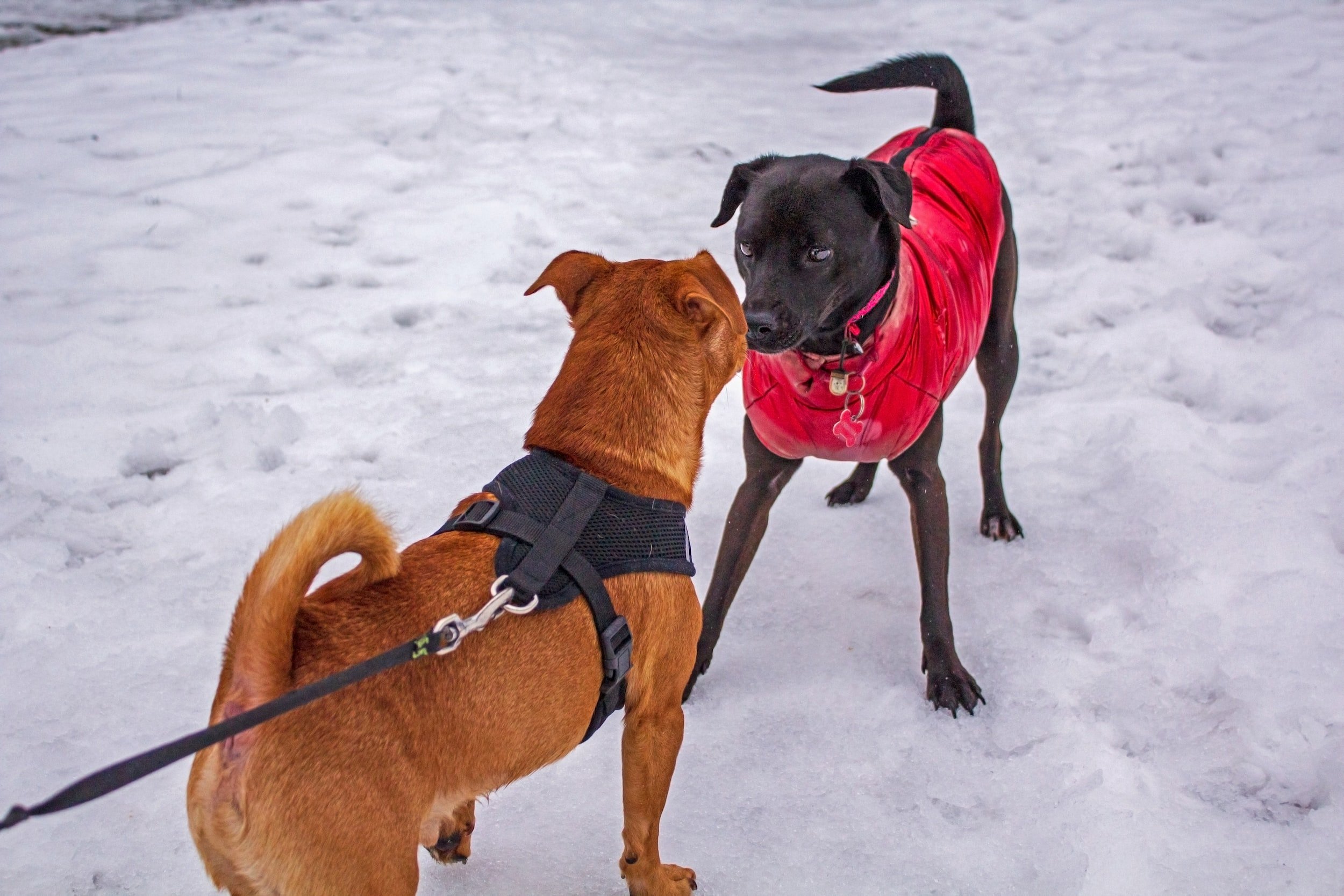
Two dogs that don’t get along in your home is a very stressful thing. It can be managed, but crate and rotate is not fun or easy for anyone. And you still have risks.
Need Help? Sometimes you need a coach and experienced pro to put the plan together for you Let me help you figure out what to do next. Behavior * Nutrition * Training * Natural Wellness * Recovery
Complete the Questionnaire For A Callback →