Duration Work for Dogs: Teaching a Calm State of Mind
One of the things I look for when I am working with a dog is not simply whether he can follow commands. I want to know whether he can actually become calm, because there is a huge difference between a dog whose body is obeying and a dog whose mind has finally stopped working.
A dog can know Sit, Down, Place, Heel and Come and still spend most of his waking life mentally “on.” He may lie on Place while watching every movement in the room. He may hold a Down while tracking another dog with his eyes. He may stay exactly where you put him while his entire body remains ready to spring back into action the second something changes.
That dog may be very obedient. He may even be beautifully trained. He is not necessarily relaxed.
Duration work, the way I use it, is about changing that state of mind. Time matters because some dogs need quite a lot of it before they finally let go, but the clock itself is not the goal.
The goal is not “stay there longer.” The goal is for the dog to become completely calm and restful while realizing that everything happening around him does not automatically require his attention, his opinion or his participation.
The Dog Who Thinks Everything Is His Job
A lot of the dogs I work with do not have nearly as much of an obedience problem as they have a participation problem. Everything concerns them. You get out of your chair and they get up. You walk toward the kitchen and they follow. The other dog leaves the room and they need to know where he is going. A car door closes outside and they head for the window. Someone approaches the front door and their whole state changes before anyone even knocks.
Some dogs spend most of the day moving mentally from one little event to another. They monitor the humans, the doors, the windows, the other dogs and every sound outside. Even if the body occasionally stops moving, the mind is still working.
For some dogs, that way of living has been rehearsed for so long that they almost never truly turn off unless they are asleep.
That is what duration work is meant to change.
I want a dog who can notice the world without feeling responsible for it.
One Dog Taught Me Exactly What This Means
I wish I could remember this dog's name, because I remember the lesson he taught me very clearly.
He had been a working dog, and his handler had died. Now the dog no longer had his person and he no longer had his job. The handler's wife and son desperately wanted to keep him, but the dog was quickly becoming very difficult to live with.
That makes sense to me when I look back at him now. This was a dog whose life had revolved around work, direction, anticipation and being useful. Then suddenly the structure he understood disappeared.
One of the first skills I teach most dogs is Place because it is such a simple, conflict-free way to establish a boundary. The rule is easy: get on the mat and stay there until I release you. If you step off, I calmly get up and put you back. If you step off again, I put you back again. I will do that every single time until the dog understands that leaving the mat is not one of the available choices.
This dog understood Place very quickly.
That was not the problem.
On Place, I do not care whether a dog stands, sits, lies down, rolls onto his side, sits back up or changes position twenty times. He can make himself physically comfortable however he wants. The only rule is that he cannot leave the mat until he hears the release word.
This dog stayed on the mat, but he sat upright and tense, waiting. It was almost as though he was saying, Okay. I am here. What is the next command?
There wasn't one.
I had already taught the behavior. My intuition was telling me that the next thing this dog needed was not another command at all. He needed me to convince him that he was allowed to stop working.
So I Waited
I decided I was going to wait for him to lie down and genuinely relax before we ended that session. Normally, once a dog gives me that shift, I might praise, reward, release and begin another repetition. Repetition often helps the next transition happen faster because the dog begins to recognize the path into that calmer state.
But first I had to get this dog there.
I watched television. I read. I stayed on the couch and left him alone on his cot. He remained upright for hours, so tired that he would begin to doze sitting up. His head would slowly droop, and just when it looked as though he might finally give in to sleep, he would snap himself back to attention.
He almost vibrated with the effort of remaining ready.
Nothing was happening. Nobody was asking him to work. There was no next command coming. But his mind did not know how to believe that yet.
So I kept waiting.
One hour became two. Two became three. It was long past my bedtime, but I knew this needed to happen. If I released him while he was still sitting upright waiting for his next assignment, he would have successfully completed Place, but we would not have accomplished the thing I was really trying to teach.
It took about four hours.
Four hours for a dog who already understood the command to finally understand that there was no next command.
And Then He Finally Let Go
Eventually, he lay down. Not because I forced him into a Down, not because I issued another command and not because staying upright had somehow become physically impossible.
He finally stopped waiting.
And when he did, I changed my plan.
Normally, that moment would have been a beautiful place to praise, reward and eventually release so we could come back and repeat the exercise. But this dog had spent four hours fighting sleep because some part of him still believed he needed to remain ready for work.
I wasn't waking him up.
I let him sleep. He slept on that cot all night, and I stayed on the couch because we needed that breakthrough more than I needed my bed.
After that night, we never had another problem with that skill. He understood Place, of course, but more importantly he understood something he had not understood when we started:
He was allowed to turn his mind off.
Sometimes You Have to Wait for the Breakthrough
This is exactly what I mean when I talk about waiting long enough for the dog's state of mind to actually change rather than stopping when the dog has merely complied with the command.
Sometimes Your Dog Doesn't Need More Obedience Training
That dog is also one of the clearest examples I can think of for something I say often now: sometimes your dog doesn't need more obedience training.
He already knew how to listen. He understood the command. He understood the boundary. He was willing to stay exactly where I put him for four hours. Teaching him another command would not have solved what I was seeing.
The change came from how I used a skill he already knew.
Place gave me a way to communicate, You don't have another job right now. You don't need to figure out what comes next. I will tell you when this is over, and until then you are allowed to rest.
That's an important distinction in behavior work. Obedience gives us a language, but simply collecting more commands does not necessarily change the dog. Sometimes the breakthrough comes from using familiar skills differently—more clearly, more consistently and with a completely different purpose.
A Sit can be a trick the dog performs for a cookie, or it can become impulse control at the front door. Place can be four feet on a cot, or it can become the place where a hypervigilant dog finally learns that the rest of the household is none of his business. Come can be a recall exercise, or it can become communication that breaks fixation and brings a reactive dog mentally back to his handler.
The skill is only part of the conversation. How we use it—and what we communicate through it—is where behavior can begin to change.
That Dog May Have Been Over-Trained Too
Looking back, I think about that dog differently than I did when I was a younger trainer. He was a former working dog who had been taught to pay attention, wait for information and remain ready. Those are wonderful qualities in a working dog, but he had lost the context in which those qualities made sense.
His handler was gone. His job was gone. Nobody needed him standing at attention waiting for the next assignment, yet he did not seem to know another way to be.
That is one reason I talk so much now about dogs who are technically trained but emotionally still cannot settle. More obedience is not always the missing piece. Sometimes the dog already knows how to work very well.
What he does not know is how not to work.
This Happened Long Before Essential Oils and Bitch Balm
That dog came into my life long before my work expanded deeply into essential oils, trauma recovery and the other whole-dog tools I use today. Back then, I approached the problem primarily as a trainer: establish the boundary, remove the need for another decision and wait until the dog discovers the calmer state for himself.
I still believe completely in that behavioral work.
Today, however, I would also be looking at the whole picture of a dog like him. He had lost his person, his work, his routine and much of the identity his life had been built around. I would still teach Place and I would still wait for the mind to come down, but I might also consider whether appropriately selected essential oils or other support could help the dog with grounding, emotional recovery and the stress surrounding such a major life transition.
That does not replace the breakthrough. The dog still needs to learn that he can let go. It simply means I have more tools today for helping the whole dog get there than I had when I sat on that couch all night.
Duration Is About State of Mind, Not a Stopwatch
That dog's four hours are exactly why I do not define duration work by a timer. Four hours would be ridiculous as a generic assignment for every dog. Plenty of dogs will soften and settle much sooner. Others may need a very gradual progression rather than one marathon session.
The point of the story is not that everyone should put a dog on Place for four hours tonight.
The point is that I was not waiting for a number. I was waiting for a change.
I can put a dog in a Down for an hour and still have a dog who never mentally settles. He can spend the entire hour watching me, scanning the room, tracking sounds, anticipating the release and waiting for the next thing to happen. Technically, that dog gave me an hour of duration. Mentally, he may have spent every minute of it working.
I want the dog to move from anticipation into genuine rest. At first his head may be high, his eyes active and his body ready to spring up. As the state changes, I see the hip roll over, the head lower, the eyes soften and the breathing slow. Someone can move through the room and the dog notices without reloading his whole body.
That transition is the work.
Why Time Still Matters
Time matters because a dog may need enough of it to discover that nothing else is coming. If I ask for Place for one minute, release the dog, ask for another command, reward it, start another exercise and continually keep the interaction moving, I may accidentally keep the dog in exactly the state I am trying to change.
He is still waiting for what happens next.
Duration gives him the opportunity to stop asking. He watches me, but nothing happens. Someone walks through the room, but it does not involve him. Another dog gets up, but nobody sends him to investigate. He hears something outside and realizes that nobody needs his help with it.
Eventually all of those little invitations to participate lose their importance.
That is why duration may be ten minutes for one stage of training and an hour or more for another. I am not chasing the number. I am giving the dog's mind enough time to reach the state I want to practice.
“That Has Nothing to Do With You”
If I could reduce much of duration work to a sentence, this might be it: that has nothing to do with you.
The neighbor walked past the house. You noticed; it has nothing to do with you. The other dog went into the kitchen; you do not need to follow. I got off the couch; that was not a command for you to get up too. A visitor stood up; you are not required to supervise where they are going. Another dog received attention; you do not have to insert yourself into the interaction.
I do not need the dog to become unaware of the world. I expect him to hear noises and notice movement. What I am changing is the belief that noticing something automatically requires action.
The dog learns to process the world differently: I heard that. I saw that. Nothing is required of me.
That's neutrality. That's calm. And that is very different from simply holding a Down while mentally participating in everything around you.
Place Gives Me a Conflict-Free Way to Get There
Place is often one of the first things I teach because the rule is beautifully simple. The dog does not have to hold one rigid position. He can stand, sit, lie down, turn around, roll onto his side, sit back up and reposition himself as often as he wants. He simply cannot leave the defined Place surface until he hears the release cue.
That makes it incredibly useful for state-of-mind work. I do not need to physically force the dog into relaxation. I establish the boundary, make the rule clear and then give the dog enough time to find relaxation himself.
If he steps off, I calmly return him. If he steps off again, I return him again. There is no need for a fight. I just have to be more consistent than the dog is persistent.
Once the dog realizes that leaving the mat is not part of the exercise, the question changes from How do I get out of this? to What am I supposed to do while I'm here?
Eventually, the best answer becomes rest.
The Long Down Is Another Exercise, Not the Same Exercise
The Long Down, sometimes called “Sit on the Dog,” is another tool I use to help a dog discover this calmer state. The dog remains beside the handler on a limited amount of leash while the human reads, watches television or otherwise does something boring. There is nowhere the dog needs to go and no constant entertainment coming from the human.
Long Down supports duration work, but the two terms are not interchangeable.
Long Down is a specific exercise. Place is a specific exercise. Duration Work is the broader practice of changing the dog's relationship with time, stillness and the environment until he can genuinely rest while the world continues around him.
Calm Is Not the Same as Tired
One of the most common answers for a busy dog is simply more activity. Walk farther. Run harder. Throw the ball longer. Add daycare. Buy another puzzle. Find another enrichment game.
Sometimes the dog genuinely does need more appropriate physical or mental activity. Dogs need movement, sniffing, play, learning and meaningful things to do.
But there are also dogs who can exercise for hours and come home every bit as mentally busy as they were before they left.
You may have tired the body without teaching the brain how to stop.
I want dogs who can work, play, hike, train and enjoy being fully engaged with life. I also want them able to transition out of that state without requiring complete physical exhaustion before they can rest.
A dog who can only relax after his tank has been completely emptied does not necessarily have an off-switch yet.
I Don't Constantly Entertain the Dog During Duration Work
If I am trying to teach that nothing happening is okay, I cannot make the entire exercise consist of something happening every fifteen seconds.
I use food in training. I use praise and rewards. But during true duration work, I do not necessarily want to stand over a dog constantly dropping treats between his paws because that can create another kind of anticipation. Instead of watching the rest of the room, the dog begins waiting for the next treat.
Likewise, I do not immediately hand him a chew or toy because he looks bored. I like enrichment. I use chews. They simply serve a different purpose.
During duration work, I sometimes want the dog to experience the absence of entertainment long enough to realize that boredom does not need to be fixed. There is nothing wrong, there is nothing he needs, and there is simply nothing happening right now.
He can rest.
The Human Has to Stop Participating Too
This can be surprisingly difficult for dog parents. The dog sighs and we ask whether he's okay. He looks at us and we pet him. He shifts around and we offer a toy. He follows us and we start talking to him. He seems restless and we decide he must need another walk.
Pretty soon, every little attempt the dog makes to restart activity succeeds.
During duration work, I want the human to become boring enough for the dog to stop looking to us for the next event. Read your book. Watch television. Work. Make dinner. Have a conversation.
Your dog is safe. His physical needs have been met. He has had an appropriate opportunity to potty and move his body. You do not need to fix every moment of boredom.
You are not responsible for entertaining your dog every waking minute. Part of living comfortably with humans is learning how to rest while humans do things that do not involve the dog.
Duration Builds Frustration Tolerance
Part of reaching a restful state is learning that wanting to do something does not mean the dog has to act on the feeling. He may want to follow you when you stand up. He may want to investigate the noise outside. He may want to see where the other dog is going. He may simply want off the mat because he would rather choose his own activity.
Sometimes the answer is no.
I am comfortable with ordinary frustration. A dog who sighs, shifts, briefly whines or tests the edge of Place is not automatically being traumatized by a boundary. Frustration tolerance is part of living in a world where not every desire receives immediate action.
In fact, the calmer state may not appear until the dog stops repeatedly trying to make something else happen.
But Frustration and Panic Are Different
I do not turn this into “the dog has to work through everything.” We still have to read the dog in front of us.
If a dog becomes progressively frantic, desperately attempts to escape, redirects aggressively, cannot recover, injures himself or moves farther and farther away from a regulated state, I am not going to call that a successful duration session simply because his feet remain on the mat.
The exercise is supposed to move the dog toward calm. If it consistently moves him in the opposite direction, the environment may be too difficult, the starting point may be wrong, or something else may be happening underneath the behavior.
Hypervigilant Dogs Need to Learn That Awareness Is Not Responsibility
Some dogs appear to appoint themselves head of household security. They monitor the windows, the doors, every human, every other dog and everything happening outside. Even while they are technically resting, they never seem to fully let the job go.
Duration work can help a dog understand that awareness does not have to become responsibility. He can hear the sound outside without patrolling the window. He can notice another dog move without following. He can see the visitor stand up without assuming he needs to manage what happens next.
I do not need to make him oblivious. I want him to realize somebody else has the job.
Duration Can Change the Velcro Dog
Some dogs follow their person because of genuine anxiety or separation-related distress, and Duration Work does not replace appropriate treatment for those dogs. But plenty of dogs follow simply because they have rehearsed it thousands of times.
I stand up, so the dog gets up. I go to the kitchen, so he follows. I walk to the bathroom, apparently requiring a canine escort. I cross the room to throw something away and the dog relocates again.
Duration lets us interrupt that pattern without continually telling the dog what to do. The dog is settled. I stand up and he remains there. I walk away. Nothing happens to him. I return. Life continues.
Eventually my movement stops predicting anything important enough for him to abandon rest.
Multi-Dog Homes Can Change Dramatically
One dog's movement often becomes everybody's movement. One dog gets up and suddenly everyone gets up. One dog heads toward the back door and everybody forms a parade. One dog receives affection and everyone crowds into the interaction. One dog barks and now the entire household joins neighborhood watch.
Duration allows each dog to learn that another dog's decision does not automatically require his participation. Dog A can walk through the room while Dog B remains resting. Dog C can receive affection without Dog D inserting himself. One dog can go outside while the others remain where they are.
When every dog's state stops controlling every other dog's state, the entire household becomes quieter.
Visitors Are Where You Can Really See the State of Mind
Visitors are a perfect example of the difference between physical compliance and genuine duration work.
A dog can technically remain on Place while staring holes through every visitor. His body is on the cot, but mentally he is following the person around the room.
Initially, the physical boundary is useful because it prevents rushing, jumping, pacing and crowding. But I don't want to stop there.
As the exercise develops, the visitor should become less relevant. The person stands up and the dog may glance over without getting up. The visitor walks toward the kitchen and the dog's body stays soft. Someone laughs, moves a bag or opens the door and the dog notices without needing to join.
That's when Place becomes more than a containment exercise. The dog's relationship with the environment has changed.
Aggression Still Requires a Safety Plan
If your dog has real aggression toward visitors, other dogs or people moving around the home, Duration Work can be useful, but it cannot be the only thing preventing another bite.
An aggressive dog may become excellent at Place and still be capable of causing serious injury if the exercise fails, somebody approaches unexpectedly or the dog is released into a situation he cannot handle.
Obedience Is Not Containment
If your dog has bitten visitors, lunged at people entering the home, redirected onto a handler or seriously attacked another dog, use physical safety measures appropriate to the risk. That may include secure doors, gates, crates, leashes, carefully managed transitions or a properly conditioned muzzle.
A dog remaining on Place is not enough of a safety plan when a mistake could result in a serious bite.
Duration Can Support Reactivity Without Becoming Flooding
Part of greater stability for a reactive dog is learning that noticing something does not automatically require engaging with it. The dog sees another dog and eventually becomes capable of thinking, I saw that, and I can remain here.
Duration and neutrality work can support that skill, but I am not putting a highly reactive dog ten feet from a major trigger and holding him there until he gives up reacting. Distance and intensity still matter. The dog needs to be capable of moving toward calm in the environment where I am asking him to practice it.
If the dog is becoming increasingly loaded, the state of mind is going the wrong direction.
How I Begin Duration Work
I start with a stationary behavior the dog understands well enough that we are not spending the whole session teaching where his body belongs. Place is often my first choice because the physical boundary is very clear, although Down or Long Down may also be appropriate.
I begin somewhere the dog can reasonably succeed. A hypervigilant dog does not need his first serious duration session to happen while six people arrive for Thanksgiving dinner. Once the basic boundary is clear, I stop creating constant activity and give the dog enough quiet time for his internal state to begin changing.
I Watch the Dog More Than the Clock
I am looking for less scanning, less anticipation and fewer attempts to participate. I want the dog settling faster, softening physically, reacting less dramatically to ordinary movement and recovering more quickly when something briefly gets his attention.
The timer can tell me we worked for forty minutes. The dog tells me whether those forty minutes accomplished anything useful.
Then Normal Life Starts Happening Around Him
Once the dog can genuinely settle in a quieter environment, I let ordinary life back into the exercise. Someone walks through the room. Another dog changes beds. I stand up and get coffee. A family member opens the refrigerator. Someone enters quietly.
I am not trying to continually test the dog until he fails. I am letting him practice the realization that calm is still available even though the environment is not perfectly still.
As that becomes easy, I can gradually add harder situations. But if more distraction sends the dog immediately back into intense monitoring and anticipation, I have increased difficulty faster than the dog's state can handle.
I make it easier again. There is no prize for technically keeping the dog in position while his brain is completely somewhere else.
Duration, Distance and Distraction Still Matter
The Three Ds are still useful, but I use them in service of the state I want rather than simply making obedience harder.
Duration gives the dog enough time to deepen the calmer state. Distance teaches him that I can move away without requiring him to follow. Distraction teaches him that changes in the environment do not automatically require involvement.
I don't necessarily increase all three at once. If I add a major distraction, I may stay closer. If I begin moving farther away, I may initially keep the environment quieter.
My goal is to expand the conditions under which the dog can remain genuinely settled, not continually push him out of the state I am trying to create.
The Release Word Matters, but I Don't Want the Dog Waiting for It
The dog should understand that I end the exercise with a release cue. He does not decide that he has been there long enough and leave simply because he feels like it.
But I also don't want him spending the entire session staring at me waiting desperately for the magic word. If he remains on Place for forty minutes thinking, Is it now? Is it now? Is it now?, I have duration on paper but not the restful mind I am trying to build.
With repetition, the release becomes predictable enough that the dog stops worrying about when it will happen. It will happen. He doesn't need to manage it.
I Don't Release at the Peak of Demanding Behavior
Once the dog understands the exercise, barking, whining, pawing, repeatedly stepping off or escalating demand should not become the thing that earns freedom. If the dog becomes restless, I calmly put him back into the exercise and give him another chance to settle before I eventually release him.
Otherwise, I may accidentally teach the exact opposite of what I want: If I become activated enough, the calm exercise ends.
I want him learning something far more useful: I became restless, and I know how to come back down.
This Changes What You Can Do With Your Dog
A dog who can truly settle becomes much easier to include in everyday life. You can sit on a patio without him needing to greet every person who passes. You can wait at the veterinarian without constant pacing. You can stop during a walk and talk to someone without your dog inventing another activity. You can travel and ask him to rest while unfamiliar life happens around him.
I don't need hard eye contact or a formal military Down-Stay the whole time. I want a dog who can look around, take in the environment and eventually decide, Apparently we're sitting here for a while. Fine.
That's an incredibly useful state of mind.
Puppies Need to Learn an Off-Switch Too
Puppies need play, movement, exploration, socialization and learning. They also need a tremendous amount of sleep and practice transitioning out of stimulation. One of the easiest ways to create an overtired little land shark is to respond to every burst of wild behavior by adding more activity.
Sometimes the puppy doesn't need another game. He needs to come down.
I keep duration developmentally appropriate. A young puppy has limited bladder capacity, normal immature impulse control and a very different nervous system from a mature dog. I am not expecting an infant to give me an adult dog's hour-long Place.
But the rhythm can be taught early: we do things, and then things stop. Rest is part of life too.
Senior Dogs Need Comfort First
Senior dogs can benefit from calm state-of-mind work too, but physical comfort comes first. If arthritis makes the floor uncomfortable, give the dog an appropriate bed or Place surface. If IVDD, spinal disease or another physical condition changes which positions feel good, accommodate the body.
The goal is genuine rest. I do not need to make an aging dog physically uncomfortable in order to prove that he understands duration.
If a Dog Suddenly Cannot Settle, Look Deeper
Duration work can teach relaxation, but it should not become the automatic answer to every restless dog. If a dog who previously settled easily suddenly begins pacing, panting while resting, repeatedly changing position, waking throughout the night or acting as though he cannot get comfortable, I want to know what changed.
Pain, digestive discomfort, itching, urinary urgency, medication effects, cognitive changes and other physical problems can all show up as an inability to rest.
Behavior happens in a body. If the dog's ability to settle suddenly changes, training may not be the first thing that needs attention.
How Do You Know Duration Work Is Working?
I look for changes outside the formal exercise. Does the dog remain resting when you stand up instead of automatically following? Can another dog move without triggering everyone else to move? Does he notice a sound outside without racing to the window? Can visitors move around your house without his state changing every time somebody stands up?
I also watch recovery. After exercise, play or excitement, does the dog come back down more easily? If something briefly catches his attention, can he let it go instead of remaining mentally activated for the next twenty minutes?
Those things tell me far more than whether a stopwatch says the dog held Place for sixty minutes.
The Dog Eventually Stops Asking What Happens Next
This may be my favorite part of duration work.
At first, the dog is waiting for everything. He is waiting for the release, another command, somebody to move, someone to arrive, a sound outside or some indication that it is time to work again.
Then, little by little, he stops asking.
His body softens. His head comes down. Someone walks through the room and he lets them. Another dog gets up and he doesn't care enough to follow. You stand up and he realizes he can remain exactly where he is.
The world keeps moving, and he lets it.
That is Duration Work to me: not a dog trapped in a command, but a dog who has learned how to become completely calm and restful while life happens around him without needing to participate in all of it.
The Off-Switch Is a Skill
Some dogs seem to arrive with a natural off-switch. They can play hard, come inside and sleep. They hear a sound, notice it and move on. They can watch the household function without feeling obligated to supervise everybody.
Other dogs need us to teach that state, and sometimes the dog who needs it most is the one who already knows how to work extremely well.
That is why I use Duration Work. Not because I need to say my dog stayed on a cot for two hours. Not because I want him frozen in one place, and certainly not because I want less drive, less personality or less dog.
I want him to have access to both sides of himself.
When there is something worth doing, turn on. Work, play, run, sniff, train and participate fully.
And when nothing requires him?
Let the world go by.
Build the Calm Side of the Dog
Your Dog Doesn't Need More Training →
When Your Dog Knows the Training but Still Cannot Come Down
If your dog can perform the commands but remains hypervigilant, reactive, restless or mentally “on” most of the day, another obedience exercise may not be the whole answer. Sometimes we need to change how we are using the skills the dog already has, how we are communicating through them, and what state of mind we are actually asking the dog to practice.
If something still isn't adding up, that's when I want to look at the training, state of mind, environment, relationship, routine and the physical dog together.
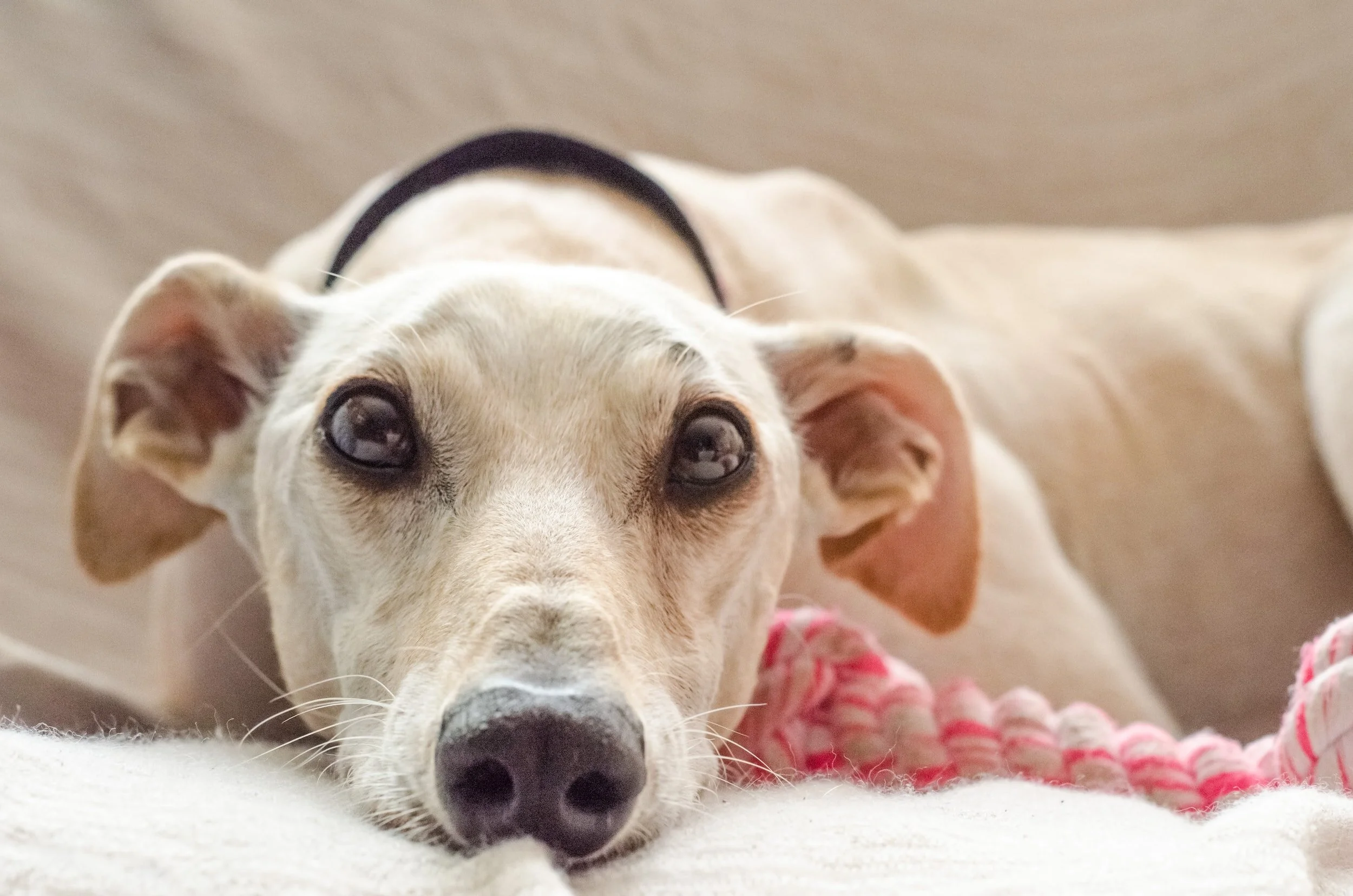
Teach your Dog to Relax under distractions or just because it’s time to do so. There is great power in duration work to calm the state of mind.
Need Help? Sometimes you need a coach and experienced pro to put the plan together for you Let me help you figure out what to do next. Behavior * Nutrition * Training * Natural Wellness * Recovery
Complete the Questionnaire For A Callback →