Resistance From Your Dog During Training
Resistance is a normal part of changing behavior, especially when what I am asking a dog to do conflicts with something he has been doing successfully for months or years. That does not automatically make the dog stubborn, defiant or disobedient. Very often, I am changing an expectation that has never existed before, and the dog is trying to understand whether this new rule is actually going to stick.
A young dog who has always spent the evening curled under the blanket beside Mom while she watches television may resist learning to remain on Place during that same time. He knows where the couch is. He knows the routine. He knows that climbing under the blanket has produced warmth, affection and closeness every night of his life. Nobody has ever told him that sometimes Mom is going to sit on the couch while he stays on a cot across the room.
Another dog may already know Down-Stay perfectly well, but you take him into the guest room, put him in a Down, leave the room and expect him to stay there for thirty minutes. He knows the command, but you have changed the context, the distance, the duration and perhaps the entire reason he thinks he is doing it. That is not necessarily disobedience either. It may simply be a skill that has not been proofed under those conditions yet.
Resistance is often what we see while the dog is learning that an old habit has changed or that a familiar skill now applies in a bigger way than it did before.
I do not use resistance and disobedience as interchangeable words. Resistance can happen while a dog is learning new expectations, working through an old habit or discovering that a command still applies when duration, distance, distraction or location changes. Disobedience is a different level: the dog clearly understands what is being asked, understands that it applies in this situation, has demonstrated that he can do it, and chooses not to.
Dogs Bring Their Old Habits Into New Training
Dogs do what has worked for them before. That is one of the simplest things to remember when you begin changing rules in the house. If getting on the couch has always been allowed, following you from room to room has always been allowed, rushing the door has always gotten the dog outside faster, or barking long enough has historically caused somebody to give in, there is already a strong history behind those behaviors.
Then one day we decide things are going to work differently. We teach Place. We ask the dog to Wait at the door. We decide he does not need to follow us every time we walk into another room. We ask for a longer Down-Stay or expect him to remain settled while another dog receives attention. From our perspective, we have introduced a perfectly reasonable new rule. From the dog's perspective, something that has worked extremely well for a long time suddenly stopped working.
Of course he may test it.
That is where persistence often shows up. The dog does not necessarily think, I understand this command and have decided to challenge your authority. He may simply think, This has always worked before. I'm going to try it again.
The Couch Dog Is a Perfect Example
Imagine a young dog who has always been allowed to lie beside you on the couch while you read or watch television. Now you are working on Place, and for the first time you put him on his cot while you sit in his usual spot on the couch.
Five minutes later, he gets up and comes over to you. You return him to Place. He stays for another few minutes and tries again. You return him again. He may stare at you, sigh, fidget, inch toward the edge or try the especially pathetic face that has successfully melted you before.
I don't immediately call that disobedience. The dog is working through the fact that an old expectation has changed. For his entire history, Mom on couch has meant I am beside Mom on couch. Now I am teaching him that those two things no longer have to happen together.
That does not mean he will never be allowed on the couch again. It does not mean affection is gone or that I am trying to make the relationship colder. Later, I may invite him right back up beside me. But for right now, because I said Place, I expect him to remain on Place until I release him.
That is part of changing the relationship between a dog and his habits. The dog learns that a privilege can still exist without being available every moment he wants it, and that an instruction does not disappear simply because another option looks better.
Persistence Has Probably Worked Before
This is the part humans sometimes accidentally teach very well. The dog gets off Place and we put him back. He does it again and we put him back. He does it four more times, and eventually we are tired, distracted or feeling guilty, so we say, “Fine, come up here.”
The dog has now learned something valuable from his perspective: persistence works. Maybe getting off once isn't enough. Maybe four attempts aren't enough. But if he keeps trying long enough, there is a point where the human changes the rule.
The same thing happens when whining eventually opens a crate, pulling eventually reaches the interesting smell, demanding eventually produces affection, or repeated barking finally causes someone to throw the ball. When persistence has paid before, I expect the dog to try persistence when I begin changing the pattern.
That is why early resistance can sometimes look stronger before it gets easier. The dog is checking the old system. My job is not to take that personally. My job is to make the new system clear enough and consistent enough that he eventually stops needing to ask whether I mean it.
If persistence has made you change your mind before, expect your dog to be persistent when you first stop changing your mind.
This Is Where Leadership Belongs in the Conversation
I still use the word leadership, but I am not talking about strutting around the house trying to prove that you are the alpha. Leadership, to me, means taking responsibility for the decisions that belong to the human, setting reasonable expectations and being consistent enough that the dog doesn't have to keep guessing which rules apply today.
Sometimes leadership means changing an old household pattern. The dog may have been allowed to follow you everywhere, choose every resting spot, rush through every doorway, demand attention whenever he wants it or decide for himself when a Stay is finished. If that arrangement is creating problems, I may begin changing some of those expectations.
The dog is allowed to have an opinion about that change. What he does not get is final authority over whether the new expectation exists.
If I have decided that Place is the appropriate place for him while I am doing something else, I am willing to return him to Place as many times as necessary while he learns the new expectation. If I tell him Wait before a door opens, I am willing to close the door when he rushes through the cue. I do not need to be angry about either one.
Leadership is not about winning a battle with the dog. It is about being clear enough and consistent enough that the dog no longer has to run the household experiment of “Do you really mean it this time?”
Then There Is Proofing — Which Is Different Again
Now let's take a different dog. This dog already knows Down-Stay. He can lie beside your chair in the living room for twenty or thirty minutes while you read. You know he understands both words, and he has a nice reliable behavior in that familiar setting.
Then you take him into the guest room, ask for Down-Stay, walk out of the room and expect him to remain there for thirty minutes. He gets up and follows you.
Before I decide that the dog deliberately ignored a command he knows, I look at how much of the picture I changed. He is in a different room. You have added distance by walking away. You may be completely out of sight. You have asked for meaningful duration, and the dog may have little or no history of doing that particular exercise without you nearby.
The dog may absolutely know Down-Stay. What he may not know yet is that Down-Stay means exactly the same thing under this new set of conditions.
That is proofing.
The Three Ds Are How a Skill Becomes Reliable
When I teach a behavior, I eventually need to expand it through Duration, Distance and Distraction. A command that only works for ten seconds while I stand three feet away in a quiet living room is not the same thing as a command that has been thoroughly generalized to real life.
Duration, Distance & Distraction
Duration asks the dog to maintain the behavior longer. A ten-second Stay becomes one minute, then five, then thirty.
Distance changes how far I can move from the dog while the command remains active. I may take one step away, cross the room, walk around a corner or eventually leave the dog's sight entirely.
Distraction changes what can happen while the dog continues the behavior. People move around, another dog walks through the room, a door opens, somebody knocks, children play or a visitor enters.
I also pay attention to location and context. Dogs can be very good at learning a picture. A skill practiced in one room may need to be deliberately generalized before I assume the dog understands that the same rule travels everywhere.
This is why I do not take a five-minute living-room Stay, move the dog into a completely different room, disappear for half an hour and immediately call him stubborn when he follows me. I may have increased several pieces of difficulty at once.
Instead, I might begin with the familiar Down-Stay in the guest room while I remain nearby. Then I add time. Then I move farther away. Then I step briefly out of sight. Over repeated sessions, the dog learns that the command still means the same thing even though the picture changed.
Place Shows the Same Progression Beautifully
Place begins with an extremely clear physical boundary: stay on this surface until I release you. In the early stages I use the same object, remain relatively close and make it easy for the dog to understand what counts as Place and what counts as leaving it.
Once the dog understands that basic rule, I start proofing it. I move around the room. I sit on the couch. I go into the kitchen. I step out of sight. Another dog moves around. The kids play. Someone knocks. The doorbell rings. Eventually visitors enter and move through the house while the dog continues to understand that none of those events automatically changes his assignment.
Later, I can even change the actual Place surface because the dog understands the concept rather than just one particular cot. But I earn that flexibility by teaching clearly first and expanding the picture afterward.
That is the difference between knowing a command and having a command that has actually been proofed.
Resistance and Proofing Can Happen at the Same Time
Real dogs do not always fit neatly into one box. The couch dog may be dealing with both an old habit and an unfinished skill. He understands the physical Place command, but he has never been asked to hold it for an hour while you sit on the furniture he would rather occupy. That creates a new expectation and adds duration and distraction at the same time.
A dog learning to stay in the guest room may understand the command but resist the distance because following you has been his lifelong habit. A dog working around visitors may understand Place perfectly but still need the visitor's movement, voice and proximity gradually proofed before he can remain genuinely settled.
That is why I do not want to reduce resistance to “the dog knows what to do and refuses.” Sometimes that will eventually be true, but usually there is more information available if we bother to look at the training history.
Resistance to Change
The new expectation conflicts with a familiar habit, privilege or routine. The dog is learning that what has always worked before does not automatically apply now.
Incomplete Proofing
The dog knows the skill, but duration, distance, distraction, location or context has changed enough that the behavior needs more practice under those conditions.
Disobedience
The dog fully understands the command under those conditions, has demonstrated repeatedly that he can perform it there, and deliberately chooses not to comply. That comes after teaching and proofing, not before.
Repetition Is How the New Rule Becomes Normal
People sometimes want to know how many times they should have to put the dog back on Place, close the door when he breaks Wait or return him to a Down-Stay. My answer is usually some version of: as many times as it takes while you are still teaching the new expectation.
That does not mean I want sloppy training where we repeat commands forever. It means I understand that the dog has an existing behavioral history, and I am building a new one. If the couch has paid for two years, three evenings of Place may not erase that history immediately.
But every repetition in which the new rule remains predictable starts tipping that history in another direction. The dog leaves Place and gets returned. Eventually he stops checking. You walk out of the guest room and he remains in the Down. Eventually your movement stops feeling relevant. The doorbell rings and, after enough practice, the dog starts heading toward Place instead of racing toward the front door.
This is one reason consistency creates calmer dogs. Once the dog understands how a situation works, he spends less energy experimenting with every possible alternative.
There Is Nothing Wrong With the Dog Preferring the Old Option
I don't need to pretend the dog loves every new expectation. The couch may be more comfortable than Place. Following me may be more interesting than staying in the guest room. Running to the door may feel considerably more exciting than waiting twenty feet away while I answer it.
The dog can dislike my choice and still learn to do it.
That ability matters because daily life is full of moments when a dog cannot have exactly what he wants exactly when he wants it. He cannot greet every dog, chase every squirrel, follow every child, run through every open doorway or demand every person's attention. The ability to tolerate a reasonable boundary without unraveling is part of impulse control.
That is also why I don't interpret ordinary disappointment as evidence that I have damaged the relationship. The couch will still exist when the exercise is over. Affection is still available. The dog has not been banished from family life. He is simply learning that access and participation can have boundaries.
The Goal Is Not Blind Compliance
There is an important flip side to all of this. I do not want pet parents so focused on “follow through” that they stop looking at the dog in front of them.
If a dog who has always performed Down comfortably suddenly avoids it, I consider whether his body hurts. If an older dog repeatedly leaves a hard surface, I want to know whether the surface is physically uncomfortable. If a dog who has historically settled well suddenly cannot rest, I consider what else has changed instead of automatically assuming I am witnessing a training challenge.
Likewise, mild frustration is not the same thing as panic. The dog who sighs because he wants the couch is not presenting the same problem as the dog who is frantic, attempting to escape, injuring himself or becoming less capable of thinking as the exercise continues.
Leadership does not mean ignoring information because we are afraid that changing the plan looks like giving in. Sometimes the responsible decision is to make the exercise easier, change the surface, reduce the distraction, investigate pain or address the emotional problem that is actually in front of us.
So When Does It Become Disobedience?
I do believe disobedience exists. I just think we earn the right to use that word after we have done the teaching.
If my dog has been thoroughly taught Down-Stay, has practiced it in the guest room many times, can comfortably hold the requested duration, understands that I may leave the room, has been proofed under comparable distractions and has repeatedly demonstrated that he knows exactly what is expected, then one day simply gets up because he would rather follow me, we are having a different conversation than we were on the first day.
At that point I am no longer wondering whether he understands that Down-Stay applies in the guest room. He has already demonstrated that understanding. I can reasonably expect him to comply, and accountability for breaking the command becomes appropriate.
The important part is the sequence: teach first, build the skill, proof the skill, establish the expectation, and then hold the dog accountable for what you genuinely know he understands.
“My dog didn't do what I said” is not automatically disobedience. I want enough training history to know that the dog understands the command, understands that it applies under these conditions and has demonstrated that he can do it before I make that judgment.
The Same Dog Can Move Through Every Stage
This is not about sorting dogs permanently into categories. The same dog can move through resistance, proofing and eventual accountability with the very same behavior.
On the first few nights of Place, the young couch dog may repeatedly try to restore the old routine because the new expectation is unfamiliar. A week later, he may understand an hour of Place beautifully while you remain in the room but still need work when you begin disappearing around the corner. A few weeks after that, he may comfortably hold Place for two hours while you move around, leave the room, other dogs receive attention and visitors come through the door.
By then, the dog is not in the same stage of learning. If he gets up and walks onto the couch simply because he feels like it, I have considerably more information about what he knows than I did during his first evening on the cot.
As the dog's understanding grows, my expectations can grow with it.
This Is Why “My Dog Knows It” Doesn't Tell Me Enough
I hear some version of “But he knows Stay” or “She knows Place” all the time. Maybe she does. My next question is usually: How well, and under what conditions?
Does she know Place while you stand beside the cot, or can she remain there while you leave the room? Does he know Stay for thirty seconds or thirty minutes? Does Wait work at the front door when nothing is happening, or does it still work when a dog is standing outside? Can the dog perform the command in another room, another house or around activity that matters to him?
The dog may not need another obedience command at all. He may need the skills he already has to become broader, stronger and more useful. That is exactly why I talk about dogs who may not need more dog training. Sometimes the problem isn't the absence of skills. It is how those skills are being used, how well they have been proofed and whether the communication around them actually carries into daily life.
Duration Work Can Reveal What Is Really Happening
Duration Work is especially good at showing me the difference between physical obedience and what is happening in the dog's mind. A dog can remain exactly where I put him while mentally waiting for the exercise to end. Another dog may repeatedly try to leave because he believes every movement in the room requires his participation. Another may stay beautifully but struggle to actually relax because he has spent his entire life anticipating the next job.
That does not make all three dogs disobedient. It tells me that I need to look at more than feet and commands.
The same is true of the Long Down. The dog is learning that nothing happening for a while does not create a problem that needs to be solved. Those exercises build patience and frustration tolerance, but they also give us a much clearer picture of how much a dog depends on constant movement, access, entertainment or proximity to a person.
Resistance Can Also Show Me Where My Training Has a Hole
I find resistance useful because it often exposes exactly where the dog stops understanding or where the human stops following through. A dog may hold Place beautifully until you stand up. Great — now we know human movement needs proofing. A dog may stay in the guest room until you disappear from sight. Now distance needs work. A dog may wait at the door perfectly until someone rings the bell. Now distraction needs work.
Maybe the dog performs wonderfully for one person in the house and treats another person's cues as optional. That gives me information too. I want to see how those two people give the cue, whether they follow through the same way and whether the dog's history with each handler is different.
Resistance is not always proof that something is going wrong. Sometimes it is the exact place where the next piece of training needs to happen.
Eventually, I Want the Skill to Travel With the Dog
The goal is not for Place to mean one specific cot, Down-Stay to mean only beside your living-room chair, or Wait to work only at a closed door when nothing interesting is happening.
I teach clearly in an easy picture first because that is how I give the dog the best chance to understand. Then I expand the picture. I add time. I move farther away. I let normal life happen. I change locations. I build real distractions. Eventually the dog understands the concept rather than memorizing one setup.
That's why a well-trained dog can eventually understand Place on a different mat, a hotel bed, a platform outside or even a clearly defined square in the sand at the beach. The object changed. The expectation did not.
That is what proofing is supposed to accomplish.
When Resistance Includes Aggression, the Safety Conversation Changes
There is one area where I do not want anyone casually experimenting with persistence and follow-through. If your dog responds to frustration or a new boundary by hard staring, freezing, growling, snapping, redirecting onto the leash or handler, guarding space or biting, this is no longer an ordinary “put him back on Place again” conversation.
A dog who has learned that aggression makes humans back away can seriously injure someone when a person tries to prove that they mean the command. Expectations may still need to change, and the dog may still need accountability, but the way we get there has to account for the actual bite risk.
Do Not Turn Leadership Into a Bite Contest
If your dog has bitten, attempted to bite, redirected onto a handler or is willing to use aggression when access is denied or a boundary is enforced, protect your hands and face and use management appropriate to the risk. That may include secure leashes, gates, crates, carefully controlled positioning, a properly conditioned muzzle or another setup that allows the dog to be handled without putting someone in bite range.
You do not reclaim leadership by getting bitten. A serious aggression problem needs a serious safety and behavior plan.
How I Decide What Kind of Resistance I'm Looking At
When a dog pushes back against something I have asked, I don't need to immediately label him. I want enough context to understand what stage of learning we are actually in. I look at the dog's history, the specific skill and how much of the picture has changed.
- Is this a new expectation that conflicts with an old habit? I expect some resistance and persistence while the new pattern becomes clear.
- Does the dog know the basic command but struggle when the picture changes? I work on duration, distance, distraction, location and context.
- Did I increase several levels of difficulty at once? I may back up enough to proof the skill more intelligently without abandoning the expectation.
- Is the dog physically uncomfortable or showing genuine distress rather than ordinary frustration? I investigate instead of blindly treating the problem as a training challenge.
- Has the dog been thoroughly taught and proofed under these conditions and clearly knows what is required? Now accountability carries more weight because I know I am dealing with knowledge rather than uncertainty.
- Is resistance escalating into aggression? I change the safety plan before somebody gets hurt.
The Human Has Habits to Change Too
One reason resistance can be difficult is that we are often changing our own routines at the same time. You are used to the dog being under the blanket beside you. You are used to letting him follow you into every room. You are used to opening the door while he is bouncing because you want to get outside. You are used to letting the Stay end because technically it wasn't important enough to get up and put him back.
Then we wonder why the dog keeps checking whether the old rule is still available.
If I want the dog to believe that something has changed, my behavior has to make that change believable. That means I cannot introduce a new expectation Monday, enforce it Tuesday, forget about it Wednesday and decide Friday night that I'm too tired to care.
Dogs notice patterns far better than they understand our intentions. If the pattern says persistence sometimes wins, the dog will keep being persistent.
That Is Where Training Becomes Communication
Teaching a dog the mechanics of Sit, Down or Place is often the easy part. The deeper work comes when those skills begin carrying meaning into real life.
Place can communicate, You can stay included with us without being in the middle of everything. A Down-Stay can communicate, I can move away and you don't need to follow me. Wait can communicate, The open door does not decide when you move; the release does. Duration can communicate, Nothing is required of you right now, and you are allowed to let the world go by.
This is why I don't automatically prescribe more commands when a dog already has plenty of training. Sometimes we need to use the skills differently, proof them better and become clearer about what those skills mean inside the dog's actual life.
Resistance often happens in the space between what the dog has always expected and what we are now teaching him to expect. Proofing teaches him that the skill survives changes in duration, distance, distraction and location. Disobedience is what I call it only after I know those questions have already been answered.
The Goal Is Clarity, Not Constant Correction
I don't want to spend the dog's life putting him back, closing doors, repeating exercises and arguing over every boundary. The point of doing this work consistently in the beginning is that eventually we should need less of it.
The couch dog learns that Place does not mean he has lost affection; it means he stays there until released. The guest-room dog learns that Down-Stay remains active even when I walk away. The dog who used to rush the door learns that an open doorway does not automatically mean go. The dog who believes every family activity needs his participation learns that sometimes he can stay exactly where he is and let everybody else get on with their lives.
As those expectations become predictable, much of the resistance disappears because the dog is no longer wondering which version of the rule applies.
And once I have taught clearly, proofed thoroughly and created that history, then yes, I can hold the dog accountable for a skill I know he understands.
Keep Building the Skills
When You're Not Sure Which Piece Is Missing
If your dog appears to know the commands but everything falls apart when you change locations, walk away, add visitors, increase duration or ask for the skill during real life, I want to look at more than whether the dog technically knows Sit, Down or Place. Sometimes the gap is proofing. Sometimes an old household habit is fighting with a new expectation. Sometimes state of mind, fear, pain or aggression changes the entire picture.
The goal is not to call the dog stubborn. It is to understand exactly what he knows, what has actually been taught and proofed, what expectation has changed, and what kind of follow-through makes sense from there.
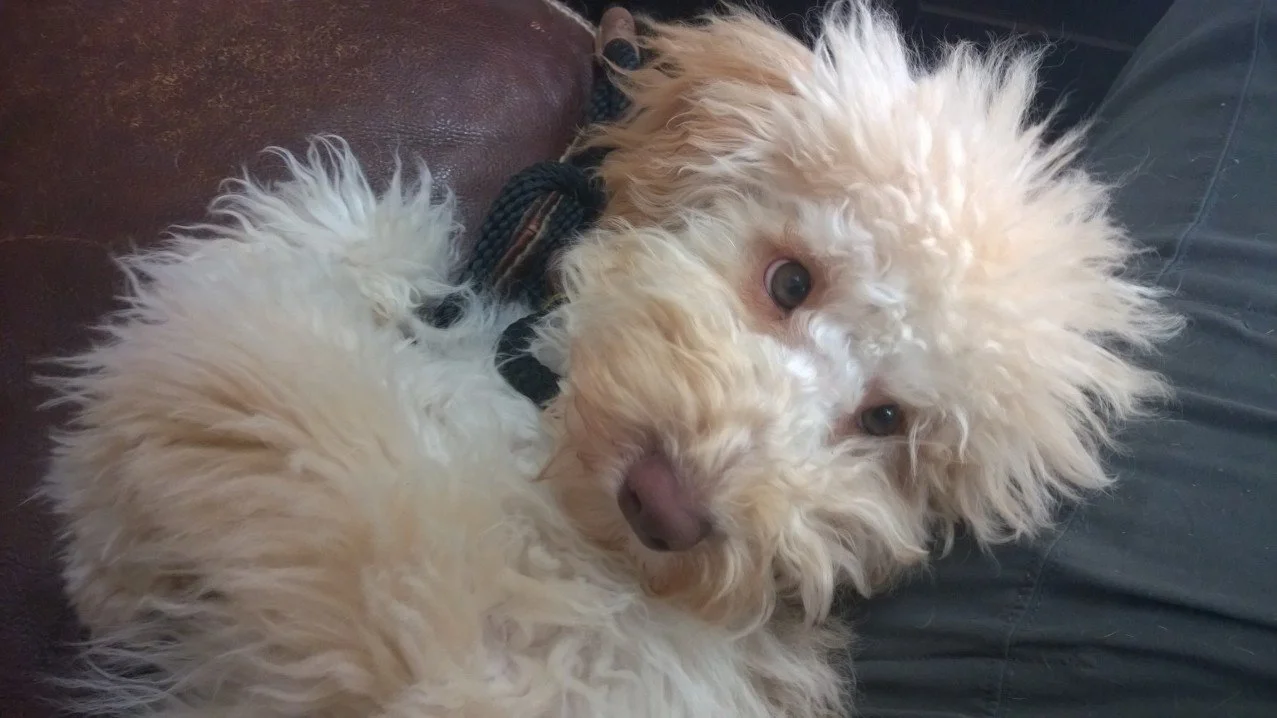
I’m cute and you can’t make me.
Need Help? Sometimes you need a coach and experienced pro to put the plan together for you Let me help you figure out what to do next. Behavior * Nutrition * Training * Natural Wellness * Recovery
Complete the Questionnaire For A Callback →