Dog Leadership: When Your Dog Knows the Commands but Still Won’t Listen
Leadership • Consistency • Obedience • Follow-Through • Boundaries
One of the most frustrating things a dog parent can tell me is, “But he knows the commands.”
He sits beautifully in the kitchen. He graduated from puppy class. He knows Down, Paw and maybe even Place. If you have a treat in your hand, he may look like the star student.
Then the doorbell rings and none of it exists. Another dog appears on the sidewalk and your recall disappears. A visitor walks into the house and your dog decides how the greeting is going to happen. You ask for Down without food in your hand and suddenly your very well-trained dog looks as though they have never heard the word before.
That is the difference between teaching commands and building a relationship where those skills actually mean something in daily life.
I call that leadership.
What I Mean by Leadership
Leadership Is Not a Collection of Commands
Leadership means your dog understands that you provide useful direction, set reasonable boundaries, follow through on what you ask and manage the situations the dog should not be handling alone.
It is not yelling louder. It is not physically dominating the dog. It is not performing some ridiculous ritual because somebody told you your dog is trying to become the alpha of the family.
It is much more practical than that.
If I tell the dog to Wait at the door, I mean Wait. If I say Come, the dog should understand that returning to me is not optional simply because something interesting appeared. If I put the dog on Place while a visitor enters, I do not change the rule because the dog would really prefer to supervise the greeting.
Clear communication, calm follow-through and consistency are far more meaningful to me than talking endlessly about dominance.
Let Me Tell You About Finlay
Finlay is one of the dogs who made this distinction very easy to see.
His family called after several incidents. He had chased down an elderly neighbor, nipped people more than once and lunged at dogs and people during walks. By the time I met them, his family was nearly out of hope.
The frustrating part was that they had already invested in training. Finlay had gone through puppy training and multiple group classes. He had graduated, received the certificates and learned the commands.
So naturally his family wondered what another trainer could possibly add.
When I arrived, the problem became fairly obvious. Finlay had learned behaviors, but those behaviors had never become reliable skills.
Sit worked in easy situations. Down worked under the right circumstances. Go to Mat existed. Food helped tremendously. There was very little duration, very little distraction proofing and almost no expectation that the same skills applied when Finlay wanted something different.
His family had purchased dog training. What they had not been taught was how to take those commands and use them to change daily life.
The Dog Was Making Too Many of the Decisions
On walks, Finlay determined the direction and pace. Around visitors, he decided how greetings would happen. At doors, food and other exciting moments, the humans were often reacting to him rather than giving him a clear job before he made his own decision.
That does not mean Finlay was sitting around plotting a hostile takeover. Dogs repeat patterns that work.
If pulling moves the walk forward, pulling works. If barking makes the food arrive, barking works. If the dog explodes at a guest and everybody starts moving around the dog, talking to the dog and trying to negotiate the situation afterward, then the dog has already been allowed to control a large portion of that interaction.
Leadership changes the order of events. Instead of waiting to see what the dog decides and then reacting, the human begins providing the structure before the dog takes over the situation.
Leadership Without Consistency Is Just a Suggestion
Dogs are incredibly good at learning patterns, including the patterns we never intended to teach. If Sit means Sit on Monday but means “ask me four more times and maybe I'll do it” on Tuesday, the dog notices. If jumping is corrected when company comes over but rewarded with attention the rest of the week, the dog notices that too.
This is why consistency is such a large part of leadership. I do not need you to be harsh, rigid or perfect. I need the dog to be able to predict what your words mean and what happens next.
If you say Wait at the door, follow through on Wait. If the dog is on Place, do not release them simply because they became annoying about wanting off. If jumping does not earn attention today, it should not suddenly become the fastest route to affection tomorrow because everyone is tired.
Inconsistency teaches dogs to keep trying. Sometimes the first answer works. Sometimes persistence works. Sometimes barking works. Sometimes ignoring the command works. From the dog's perspective, testing the boundary becomes a perfectly reasonable strategy because occasionally it pays.
Consistency removes that uncertainty. The dog no longer has to experiment with five different responses to find out which version of the rule applies today.
Consistency Does Not Mean Perfection
Your Dog Does Not Need a House Full of Robots
Real families are not perfectly synchronized. One person may use slightly different words, timing will not always be flawless and occasionally life forces you to manage a situation instead of training through it.
What matters is that the big rules remain recognizable. If the dog is not allowed to drag people through doors, everyone should support that basic expectation. If Place means remain there until released, the dog should not learn that one family member can be worn down by enough whining.
I am looking for consistency in the meaning of the rule, not perfection in every human movement.
Knowing Sit Is Not the Same as Having a Reliable Sit
I make this distinction constantly because pet parents are often told their dog “knows” a command when the dog can perform it under one very specific set of conditions.
If your dog sits in the kitchen when you are holding cheese but cannot Sit outside, cannot Sit when another dog appears and cannot Sit when you have no food visible, we have taught the beginning of Sit. We have not yet built a reliable real-world skill.
That is not an insult to the dog or the previous training. It simply tells us what remains to be done.
Real-life obedience requires proofing through duration, distance and distraction. The command has to survive the situations where you actually need it.
This is why Duration Work is such an important piece of my programs.
Why Does My Dog Only Listen When I Have Treats?
Food is an excellent teaching tool. I use food. I am not interested in pretending rewards are somehow bad simply because I also believe dogs need expectations.
The problem comes when the treat becomes a bribe the dog has to inspect before deciding whether the command is worth performing.
If the dog has learned, “Show me the food and then I will decide whether to Sit,” the sequence needs to change.
Teach with rewards. Reinforce generously while the dog is learning. Then begin asking for skills without advertising the paycheck first. Praise, everyday privileges, play, access and intermittent food rewards can all become part of maintaining behavior after the dog understands it.
I want the dog to understand the command, not simply follow the treat.
Finlay's Feeding Protocol Told Me a Lot
One of the first things we changed with Finlay was how food arrived.
He was highly adrenalized around the meal: barking, dancing and practically spring-loaded while waiting for release. Technically he could perform a command, but mentally he was still exploding forward toward the outcome.
So the lesson was not simply, “Can Finlay Sit?”
We already knew he could.
The question became whether Finlay could hear the human, remain with the expectation and stop using escalating behavior to hurry the process along.
That is a much more useful lesson than another five repetitions of Sit for a cookie.
The Same Problem Showed Up at the Door
Finlay could technically wait, but he was not calm. His body was waiting for the release like a compressed spring.
So we stopped making every open door predict immediate forward motion.
Sometimes the door opened and nothing happened. Sometimes we stepped outside and came back in. Sometimes the dog waited longer than he expected. The point was to break his assumption that every environmental cue meant he already knew what came next.
The human began directing the sequence instead of Finlay anticipating it and pulling everybody along behind him.
This Is Why Leadership and State of Mind Become Connected
A dog can physically obey while mentally remaining completely committed to what they intended to do next.
That is why I care about more than whether the rear end touched the floor. I look at fixation, scanning, anticipation, frustration, recovery and whether the dog remains capable of hearing the human when something meaningful is happening.
Obedience gives me a structure to work inside. Leadership tells the dog that the structure still applies when excitement rises.
Consistency tells the dog that it also applies tomorrow.
Then repetition gives the dog enough experience for the new response to become normal.
The Pushback Often Starts When the Rules Become Real
This is exactly what happened with Finlay.
Once we stopped luring him through every behavior, expected first-time responses to familiar commands, added duration and began following through, another side of the dog appeared.
He became stubborn. Frustrated. Resistant.
He offered Paw when nobody asked for it. He moved away. He barked. He negotiated. He waited to see whether the humans would become uncomfortable enough to give up.
That reaction was useful information. The old system had worked quite well for him, and he did not particularly appreciate the rewrite.
This is also where consistency becomes critical. If the rule disappears the first time the dog protests loudly enough, the dog does not learn that the new expectation is reliable. The dog learns that resistance still works if enough effort is applied.
If your dog pushes back when familiar rules suddenly become consistent, read Resistance From Your Dog During Training .
Do Not Make Resistance Dramatic
Leadership Should Make You Calmer, Not Angrier
If your response to resistance is yelling, jerking the dog around, escalating emotionally or trying to “win” some theatrical battle, we have missed the point.
Finlay's family needed patience more than aggression. If he got up from Place, he went back to Place. If barking made the feeding process stop, dinner simply stopped moving toward him. If pulling did not move the walk forward, the humans waited or changed direction.
The consequence was often very ordinary: the thing he wanted did not happen yet.
Calm follow-through is incredibly powerful because it removes the argument. The rule does not become bigger because the dog challenged it, and it does not disappear because the dog became inconvenient.
That is consistency in practice.
What We Changed for Finlay
Meals Became Practice
Barking, jumping and demanding did not move the meal forward. Calm, responsive behavior did.
Doors Stopped Predicting Launch
Finlay practiced waiting without always knowing whether the door opening meant the family was actually going outside.
Down Meant Down
His humans stopped crouching beside him, pleading, luring and doing half the behavior for a dog who already understood the command.
Place Gained Duration
Instead of touching the Place board and immediately earning release, he practiced remaining there while the family lived around him.
Furniture Became a Privilege
Access to beds and couches was no longer assumed when stronger structure around household behavior was needed.
The Release Cue Became Important
Finlay learned that environmental events did not automatically release him. The human's information did.
Walks Became Training Again
Instead of rehearsing another full walk where Finlay dictated the pace, they worked loose-leash skills, direction changes and connection first.
The Rules Stayed the Same
The family stopped changing expectations according to mood, convenience or how persistently Finlay protested. That consistency made the new patterns easier for him to understand.
Sometimes You Need to Stop Taking the Walk
This surprises people.
If every walk is another hour of the dog dragging the human, deciding where to go, scanning the environment and disconnecting completely from the person holding the leash, I may temporarily care less about mileage and much more about changing how the first five minutes work.
Work in the driveway. Change direction. Practice the U-turn. Walk one house to the right and return. Go left. Stop letting “exercise” become another daily rehearsal of the exact relationship we are trying to change.
That does not mean the dog no longer needs appropriate physical activity. It means training and exercise are not automatically the same activity.
For the actual leash progression, use How to Stop a Dog From Pulling on the Leash .
Leadership Is Especially Important Around Visitors
A lot of dogs have been allowed to make their own decisions at the front door for years.
Somebody knocks. The dog rushes forward, determines the distance, decides whether to bark, jumps on the person or begins investigating while the humans react to whatever unfolds.
For an easy social dog, this may simply create obnoxious greetings. For a dog with fear, guarding tendencies or aggression, allowing the dog to run the arrival can become dangerous.
I would rather give the dog an assignment before the visitor enters. Place, leash, distance, crate, muzzle or another management tool may be part of that plan depending on the dog.
The dog does not need to manage the front door because the humans are managing the front door.
Why Does My Dog Behave Better for the Trainer Than for Me?
People sometimes assume this means the trainer has some magical energy. Usually the explanation is much less mystical.
The trainer is clear, consistent and predictable. The cue means the same thing every time. The trainer's timing is cleaner. The trainer does not repeat the command eight times and then abandon it. The dog quickly learns which patterns work with that person.
Your dog is capable of learning your patterns just as well.
This is why leadership consistency matters so much after the trainer leaves. If I ask for Place and follow through every time, but the family allows the dog to get off whenever persistence becomes inconvenient, the dog quickly learns that the rules depend on who is holding the leash.
My goal has never been to create a dog who behaves beautifully for me and then falls apart when I hand the leash back. I need the family to understand what I am doing, why I am doing it and how to reproduce the same clarity.
Leadership Consistency Has to Extend Across the Household
This does not mean every person has to handle the dog exactly like I do. People have different personalities, timing and physical abilities. The dog can learn those differences.
What becomes confusing is when the meaning of the rules changes completely from person to person.
If Mom requires Wait at the door but Dad laughs while the dog barrels through, we have competing systems. If one person calmly sends the dog back to Place while another releases the dog whenever whining begins, the dog learns which person can be negotiated with.
Dogs are excellent students of human inconsistency.
Before you decide the dog is manipulative or stubborn, make sure the humans are actually teaching the same basic expectations.
Your Dog Should Not Need You to Micromanage Forever
Leadership does not mean controlling every breath the dog takes.
In fact, good leadership should eventually allow much more freedom because the dog understands the boundaries and has developed better habits.
We may begin by explicitly asking for Sit before the leash goes on. With repetition, the dog begins sitting when the leash appears. We may initially walk the dog back to Place every time they leave it. Eventually the dog understands the expectation and remains there without a constant argument.
That progression connects directly to Dogs Make Choices .
Teach clearly first. Follow through consistently. Then give the dog room to use what they learned.
This Is Not the Same as NILF
Leadership is the larger framework. Nothing In Life Is Free is one structured protocol I may use inside that framework when a particular dog needs a stronger reset.
Not every dog needs intensive NILF.
A friendly, happy dog who jumps on visitors and pulls on leash may simply need clearer everyday expectations and better follow-through. A dog who is aggressive, controlling, extremely demanding, pushy or accustomed to running most of the household may benefit from a more deliberate reset in how freedom, attention and valued resources are accessed.
If that sounds more like the dog you are dealing with, read Nothing In Life Is Free .
For Many Dogs, Leadership Eventually Looks Very Ordinary
This is where A New Normal becomes the long-term picture.
The door opens and the dog waits because that is simply what happens. The leash comes out and the dog gives you enough control to put it on. The dog settles during dinner, responds when called and understands that not every desire requires immediate action.
The family is no longer thinking about “leadership exercises” every five minutes. The relationship has enough clarity and consistency that the ordinary routines mostly run themselves.
That is exactly where I want to end up.
Leadership Does Not Mean Ignoring What the Dog Is Telling You
Strong expectations do not give us permission to stop observing the dog.
If a previously reliable dog suddenly resists sitting, I want to consider whether sitting hurts. If the dog suddenly becomes irritable when handled, I want to know what changed. If fear or panic is driving the behavior, I adjust the plan rather than simply insisting that stronger leadership will overpower it.
Respecting a dog's response and sensitivity while still doing what is best for the dog is completely compatible with leadership.
Good leaders pay attention to information.
If your dog's behavior changed suddenly, start with Why Did My Dog's Behavior Suddenly Change? .
Sometimes Training Is Not the Whole Answer
There are dogs who have rules, understand commands and live with consistent humans and still remain intensely reactive, anxious, restless or irritable.
That is when I widen the lens.
Pain, poor sleep, digestive discomfort, itching, medications, endocrine problems, chronic stress and other physical issues can influence the dog we see behaviorally.
Leadership does not mean assuming every problem is a relationship problem.
When training and structure are not explaining enough, continue with The Whole-Dog Behavior Connection .
What Dog Parents Are Searching
Dog Leadership, Consistency & Listening Questions
Why does my dog know commands but won't listen?
The dog may know the beginning of the command without having the skill reliably proofed around duration, distance and distraction. Dogs also learn whether humans consistently follow through. Knowing Sit in the kitchen is different from responding when something more interesting is happening.
Why does my dog only listen when I have treats?
Treats are valuable teaching tools, but the dog can accidentally learn to wait until food is visible before deciding whether to respond. Once the behavior is understood, begin asking without showing the reward first and use praise, everyday privileges, play and intermittent food reinforcement to maintain the behavior.
Why does my dog behave for the trainer but not for me?
Trainers are often very consistent about timing, cues, follow-through and boundaries. Dogs quickly learn those patterns. The goal is for the family to reproduce the same clarity and consistency so the dog understands that the expectations still apply when the trainer leaves.
How important is consistency in dog training?
Consistency helps the dog understand what a cue or household rule actually means. When the same behavior is rewarded one day, discouraged the next and ignored the day after that, the dog has good reason to keep experimenting. Consistency makes the pattern clearer and reduces the need for repeated testing.
Does everyone in the house need to train the dog exactly the same way?
No. People naturally differ in timing, voice and handling style. The important part is that the major expectations remain recognizable. If Wait means wait for one person but charging through the door is allowed with another, the dog is learning two different systems.
Does my dog think they are the boss?
I am less interested in assigning a title than in looking at the behavior pattern. If the dog controls the pace of walks, access to attention, greetings, doors and other daily events because the humans consistently react to the dog, that relationship may benefit from clearer expectations and follow-through.
Is dog leadership the same as being dominant?
Not the way I use the term. Leadership means clear communication, reasonable boundaries, consistent follow-through and taking responsibility for decisions the dog should not be making alone. It does not require intimidation or physically overpowering the dog.
How do I get my dog to listen around distractions?
Proof the skill gradually. Build duration, distance and distraction rather than expecting a command learned in a quiet room to work instantly around dogs, visitors, wildlife or exciting environments. Increase difficulty while preserving enough success for the dog to understand the assignment.
Is my dog stubborn or does my dog not understand?
First determine whether the dog genuinely knows the skill in that context. Confusion, fear, pain and excessive difficulty can look like refusal. Once the command is clearly understood, however, dogs can also resist expectations they would prefer not to follow. Those situations require calm, consistent follow-through rather than endlessly reteaching a behavior the dog already knows.
Do I need to be strict with my dog all the time?
No. The goal is not maximum control forever. As good habits become reliable, most households can loosen structure significantly. Clear, consistent expectations early often create greater freedom later because the dog has learned how daily life works.
Can leadership fix aggression?
Leadership and obedience can be important pieces of an aggression plan, but serious aggression is not resolved simply by proving who is in charge. Bite history, triggers, physical safety, fear, health, management and the specific function of the aggression all need to be considered.
The Breakthrough Often Comes After the Human Changes First
Finlay needed new expectations, but his family had to change before those expectations could mean anything.
They had to stop repeating themselves endlessly. Stop helping him through commands he understood. Stop letting persistence rewrite the rule. Stop allowing every exciting moment to become his decision simply because that was easier in the short term.
They also had to become more consistent with each other and with themselves. A rule that only exists when everybody has plenty of time and patience is not yet much of a rule from the dog's perspective.
They had to learn that resistance did not mean the plan was failing. Sometimes resistance is exactly what happens when an old pattern stops working.
That is why Waiting On Your Dog's Breakthrough is the natural next piece of this conversation.
Dog Pushes Back on New Rules?
Resistance often appears when familiar habits stop producing the same results and the dog discovers the humans actually mean the new expectation.
Understand ResistanceBuild Real Duration
A quick Sit proves the dog knows Sit. Duration teaches the dog to remain with the expectation while time and ordinary life continue.
Build DurationNeed a Stronger Reset?
Very pushy, demanding, aggressive or controlling dogs may benefit from a more deliberate reset in how freedom and valued resources are accessed.
Read About NILFMake It Normal Life
Leadership should eventually feel less like a program and more like a household where everybody understands how ordinary life works.
Create a New NormalCommands Are the Vocabulary — Leadership Is How You Use Them
I Don't Need More Tricks. I Need Skills That Work When Life Happens.
I absolutely teach obedience. Sit, Down, Place, Come, Wait, OUT and leash skills give us a common language, and behavior work becomes much harder without that language.
But knowing the vocabulary is not enough.
I want the dog who can hear Come when the squirrel appears, remain on Place while the guest enters, wait when the door opens and follow the human's direction when the environment becomes more interesting than the living room where the command was first taught.
Leadership is what takes those individual exercises and makes them meaningful in real life. Consistency is what convinces the dog that those expectations are actually dependable.
Be clear. Teach well. Praise success. Follow through calmly and consistently. Your dog should not have to figure out which version of you showed up today or whether enough persistence will eventually make the expectation disappear.
Pay attention to what the dog is telling you, but do not confuse sensitivity with abandoning reasonable expectations. Teach the dog what the words mean, make your rules understandable and remain consistent enough that your dog no longer has to test which version of the rule applies today.
That is not about dominating your dog.
It is about becoming someone your dog can understand, trust and follow.
Work With Dana on Your Dog's Behavior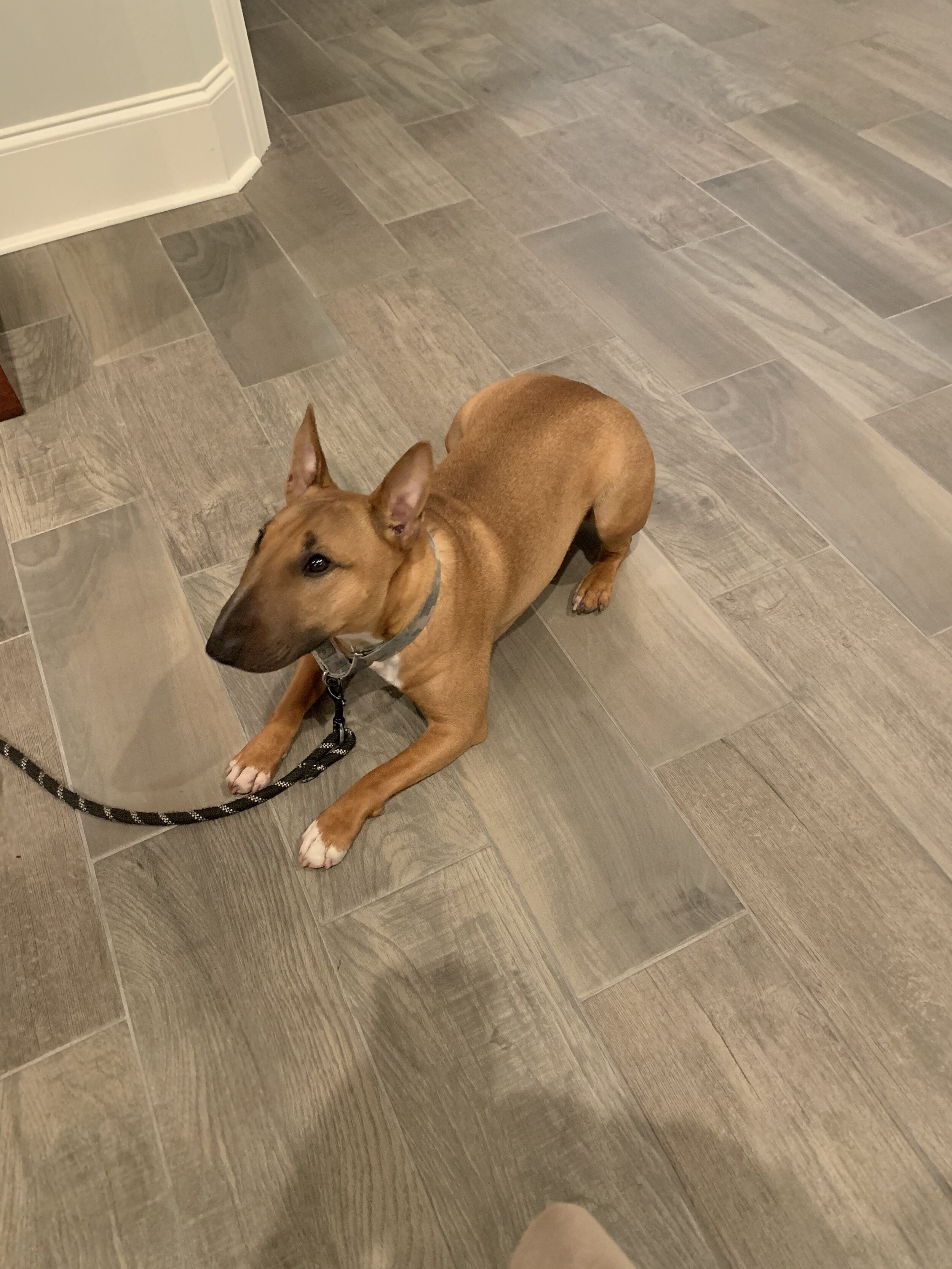
Obedience Training Must Lead To Leadership From You.
Need Help? Sometimes you need a coach and experienced pro to put the plan together for you Let me help you figure out what to do next. Behavior * Nutrition * Training * Natural Wellness * Recovery
Complete the Questionnaire For A Callback →