
Should Your Dog Greet Other Dogs on Leash?
Leash Greetings • Socialization • Impulse Control • Neutrality • Arousal
I want my dog to be able to greet people and other dogs with manners. That does not mean I allow my dog to greet everybody we pass.
In fact, when I am training a dog, I intentionally do the opposite.
We may walk right past the favorite neighbor who carries treats in his pocket for every dog on the street. We may pass the dog's furry best friend coming toward us from down the block. We may stop, work, turn away or continue walking even though the dog desperately wants to go say hello.
Why?
Because the lesson is bigger than the greeting.
I want the dog learning that seeing something exciting does not make the decision. The dog stays responsive to me, keeps anticipation under control and waits for permission.
Calm gets access. Arousal does not make the decision.
My Default Rule
Greeting Is Permission, Not an Expectation
Your dog does not need to greet every dog, every neighbor or every person who says, “It's okay, he's friendly.”
Sometimes I give permission to greet.
Sometimes I simply say, “Let's go,” and we keep walking.
Both answers should be completely normal to the dog.
The problem begins when the dog assumes that seeing another dog or person automatically means access is coming.
Friendly Is Not the Same as Calm
Pet parents often tell me, “He's not aggressive. He just loves everybody.”
That may be true.
But a dog who is dragging you across the sidewalk, whining, spinning, barking, jumping and completely unable to hear you is not in a useful state of mind simply because the motivation is friendly.
Excitement still needs boundaries.
Over-arousal can create just as much chaos as fear when the dog stops thinking and starts reacting to anticipation.
Anticipation Is Often Where Trouble Starts
A lot can happen before the dogs ever touch noses.
The dog spots a friend from half a block away. The body changes. The dog leans into the leash. Whining begins. The leash tightens. The dog stops responding to you because mentally they are already at the other end of the sidewalk.
Then the handler releases the dog into the greeting.
Whether we realize it or not, we may have just reinforced the entire sequence.
The dog learns: see dog → become highly aroused → pull harder → get access.
Repeat that enough times and the sight of another dog itself begins to create anticipation.
Then one day the dog cannot greet.
Now all of that excitement has nowhere to go.
That is one way friendly excitement can begin turning into frustration, barking, lunging and what the owner eventually describes as leash reactivity.
Calm State of Mind Gets the Greeting
If the dog wants access to another dog or person, I want the dog back in a usable state of mind first.
I am looking for:
- a leash that is under control;
- a dog who can respond to the handler;
- no dragging, lunging or frantic pulling;
- no escalating whining or spinning;
- a reasonably calm body; and
- the ability to wait for permission.
Then I may allow the greeting.
If the dog cannot give me that, the greeting does not happen yet.
During Training, I Intentionally Skip Greetings My Dog Wants
This is one of the most useful parts of the exercise.
I do not only practice around strangers the dog does not care about. I also work around the people and dogs the dog genuinely wants to see.
Maybe it is the neighbor with treats.
Maybe it is the dog from three houses down who has been a playmate for years.
Those are valuable training opportunities because now I am asking the dog to control real anticipation.
The dog learns: “I can want something very badly and still remain responsive to my handler.”
Sometimes calm behavior earns permission to greet.
Sometimes calm behavior earns praise and we keep walking anyway.
The dog should not know in advance which answer is coming.
The Dog Does Not Get to Pull You Into the Reward
If the dog has learned that pulling eventually works, stopping the greeting can feel frustrating at first.
But access itself is a powerful reward.
If the dog reaches the neighbor, dog friend, front door, play area or other desired destination while dragging you there, the dog has been rewarded for the exact behavior you probably do not want repeated.
I want access to follow control.
That does not mean the dog has to become robotic or emotionless.
Excitement is fine.
Losing the brain is not.
Puppies Need to Learn This Early
Puppy socialization is often misunderstood as “let the puppy meet everybody.”
I absolutely want puppies having useful, positive experiences with people, dogs and the world.
I also want the puppy learning that most people and dogs can simply pass by without interaction.
A puppy who is allowed to greet every dog may quickly develop the expectation that every dog is available.
Then when leash restrictions, adult-dog selectivity or real-life situations remove that access, frustration can become much harder to manage.
Good socialization includes interaction and neutrality.
Adult Dogs Need the Same Skill
Adult socialization is not about making the dog love everyone either.
I want an adult dog who can notice another dog, remain under control and continue with life.
If you are working with an older or rescue dog, read How to Socialize an Adult Dog or Rescue Dog .
Not Every Dog Wants to Greet
Some dogs enjoy almost every appropriate social interaction.
Others are selective.
Some dogs are comfortable around other dogs but have little interest in direct interaction.
Those are different dogs, and the goal should reflect the individual dog.
There is no rule that says a dog must greet simply because another handler asks.
You Are Allowed to Say No
“Can they say hi?”
You are allowed to say: “Not today, we're training.”
You do not owe a stranger a lengthy explanation.
Even if both dogs are friendly, you may simply be working on impulse control, leash manners or the expectation that every dog does not equal a social event.
I Would Skip the Greeting If...
You do not need to wait for obvious aggression before deciding a greeting is not a good idea.
I would usually skip or delay the greeting if:
- either dog is pulling hard to reach the other;
- either dog is barking, lunging or spinning;
- one dog freezes or hard-stares;
- body tension increases as the dogs get closer;
- one dog is hiding behind the handler;
- one dog is repeatedly trying to move away;
- either handler cannot physically control their dog;
- one owner says the dog “just needs to meet dogs to get used to them”;
- the dogs are trapped in a narrow doorway, hallway or tight sidewalk;
- the size or play-style difference makes you uncomfortable;
- your dog is already too aroused to listen; or
- your own judgment says this is not a good interaction.
You do not have to prove anything.
Leash Tension Changes the Interaction
Dogs greeting on leash have less freedom to move naturally than dogs interacting in open space.
The handler may tighten the leash because they are nervous. The dog may feel restrained. One dog may want to move away but be unable to create distance.
I want enough leash control to keep the situation safe without creating constant tight pressure throughout the interaction.
That requires good leash handling and dogs who are not already dragging their handlers into the greeting.
Face-to-Face Is Not Always the Best Introduction
Two unfamiliar dogs approaching directly on tight leashes can create more pressure than necessary.
Depending on the dogs, parallel movement can be useful. Walking in the same direction with space between them lets both dogs move, sniff and gather information without immediately being forced into a stationary nose-to-nose interaction.
As the dogs relax, distance can change if appropriate.
Keep Leash Greetings Brief
A greeting does not need to turn into an extended leash social session.
Let the dogs gather information, then call your dog away while things are still going well.
Long greetings can give excitement, tension or frustration more time to build.
I would rather end a successful interaction a little early than wait for the dogs to tell me I waited too long.
Recall Away From the Greeting
One of the best tests of whether the dog is still in a useful state of mind is whether the dog can disengage from the interaction.
The dog should be able to hear you, come away and continue walking.
If every greeting ends with you physically dragging the dog away, that is useful information.
The interaction may be too exciting, too long or too frequent.
Greeting Should Not Destroy the Rest of the Walk
Pay attention to what happens after the greeting.
Does the dog simply continue walking?
Or does the dog spend the next twenty minutes scanning every driveway, whining at every dog and pulling toward every person because the greeting increased anticipation?
Sometimes the interaction itself was fine, but what it does to the dog's state of mind afterward tells me we need fewer greetings or tighter criteria for when they happen.
The Bigger Training Goal
I Want the Dog to Be Able to Pass the BFF Too
Passing strangers is relatively easy once the dog understands the walk.
Passing somebody the dog absolutely adores is where we find out whether the dog truly understands impulse control.
The favorite neighbor may say, “But I have his treat!”
That is fine.
Today we may still keep walking.
The furry friend down the street may be ready to play.
Also fine.
My dog still waits for me to decide.
Why This Matters for Leash Reactivity
Not every reactive dog became reactive because of over-greeting.
Fear, genetics, social history, handling, distance and many other factors can be involved.
But frustration absolutely can contribute.
A dog who expects access to every dog may become increasingly frustrated when that access is prevented.
You may see:
- whining;
- pulling;
- barking;
- lunging;
- spinning;
- fixating; or
- a complete loss of responsiveness to the handler.
If that is already happening, the problem is bigger than deciding whether to allow a greeting.
Read Leash Reactivity in Dogs: Why It Happens & How to Help .
What I Want the Walk to Look Like Instead
The goal is simple enough to describe, although it takes repetition to build.
- Your dog notices another dog or favorite person.
- Your dog remains under control.
- Your dog stays responsive to you.
- You decide whether there will be a greeting.
- If you say no, the dog continues with you.
- If you say yes, the dog approaches with manners.
- You can call the dog out of the greeting and continue the walk.
That gives you a socially capable dog without creating a dog who believes everybody on the sidewalk belongs to them.
Use the Greeting as the Reward
If the dog truly wants to greet, you already have a very powerful reward.
You do not necessarily need to manufacture another one.
The dog wants access.
Calm behavior, responsiveness and waiting for permission can earn that access.
This makes the real world part of the training.
What If My Dog Cannot Calm Down?
Increase distance.
If you are standing three feet from the dog's favorite playmate and your dog cannot think, move farther away and ask for something the dog can actually do.
You may need to walk a small circle, change direction, ask for Sit, use Watch Me or simply create enough space for the dog to come back under control.
Then decide whether the dog has earned the opportunity to approach.
Distance is not failure.
It is a training variable.
Do Not Turn the Sidewalk Into a Social Free-for-All
The walk itself needs a purpose.
If every person, dog, smell and driveway gets to interrupt the walk, it becomes very difficult to teach the dog that you are still relevant when exciting things appear.
There can absolutely be sniffing, exploration and social interaction.
I simply want those things happening within a framework the dog understands.
Some Dogs Should Not Be Doing Leash Greetings
There are dogs for whom random leash greetings are simply not useful.
That may include dogs with:
- serious leash reactivity;
- dog-directed aggression;
- a bite history with other dogs;
- very poor recovery after social interaction;
- extreme frustration around dogs;
- significant fear; or
- handlers who cannot safely control the interaction.
Those dogs may need structured behavior work rather than casual sidewalk greetings.
Do Not Confuse Socialization With Access
Your Dog Can Be Socially Capable Without Greeting Every Dog
Socialization means your dog can function appropriately in a world where people, dogs, noises and distractions exist.
It does not mean everybody gets physical access to your dog.
I want my dog capable of greeting politely.
I also want my dog completely capable of walking past.
That second skill is every bit as important as the first.
Before I Allow the Greeting
My Quick Check
- Is my dog still listening to me?
- Is the leash under reasonable control?
- Can my dog pause instead of dragging me forward?
- Does the other dog appear comfortable?
- Can the other handler control their dog?
- Is the space appropriate for a greeting?
- Do I actually want this interaction?
- Can I call my dog away afterward?
If the answer is no, we can simply keep walking.
Questions Dog Moms Are Searching
Leash Greeting Q&A
Should I let my dog greet other dogs on leash?
Sometimes, but not automatically. I want both dogs reasonably calm and under control before allowing an on-leash greeting. Your dog should also be able to walk past dogs without greeting.
Should my dog say hello to every dog on a walk?
No. Allowing every greeting can create an expectation that seeing another dog always means access. During training, intentionally walking past dogs—including familiar friends—can help build impulse control and responsiveness to the handler.
Why does my dog get so excited when seeing another dog?
Anticipation can build when the dog has learned that seeing another dog often leads to greeting or play. Excitement may begin with pulling, whining or fixation and can become harder to control as the dog gets closer.
Why won't my dog listen when another dog is nearby?
The dog may be too aroused or too close to the distraction to remain responsive. Increase distance and work at a level where the dog can still respond before gradually making the exercise more difficult.
Can friendly excitement turn into leash reactivity?
Frustration can contribute to leash-reactive behavior in some dogs, especially when the dog expects access to other dogs and becomes highly aroused when that access is prevented. Reactivity can also have other causes, including fear, genetics and previous experiences.
How do I teach my dog to ignore other dogs on walks?
Practice passing dogs without greeting, use enough distance for your dog to remain under control and reinforce responsiveness to you. Sometimes allow calm greetings and sometimes continue walking so access does not become automatic.
What should I do if my dog pulls to greet another dog?
Do not allow pulling itself to deliver the dog to the greeting. Create enough distance to regain control, ask for calm behavior and decide whether the dog has earned the opportunity to approach.
Is it okay to tell someone my dog cannot say hello?
Absolutely. You can simply say, “Not today, we're training.” Your dog does not owe another dog or person a greeting.
How long should dogs greet on leash?
Brief greetings are often easier to manage than long, stationary interactions. Let the dogs gather information, then call your dog away while the interaction is still going well.
Should dogs meet nose-to-nose on leash?
Direct face-to-face approaches can create more pressure for some dogs. Parallel walking with enough space can be a useful alternative, especially when the dogs are unfamiliar or one dog is unsure.
Should puppies greet every dog for socialization?
No. Puppies benefit from appropriate social experiences, but they also need to learn neutrality. A puppy should be able to see other dogs and continue walking without expecting a greeting every time.
What if my dog only reacts because he wants to play?
Friendly motivation does not make uncontrolled behavior harmless. Pulling, barking, lunging and fixation still need to be addressed so the dog learns to remain responsive even when highly interested in another dog.
What if my dog is dog-selective?
A dog-selective dog does not need to greet unfamiliar dogs casually. Focus on calm neutrality and choose direct social interactions carefully.
When should I avoid leash greetings completely?
Avoid casual leash greetings when there is serious reactivity, dog-directed aggression, bite history, extreme fear, poor recovery or inadequate physical control. Those dogs need a more structured behavior plan.
Dog Is Already Barking or Lunging?
That has moved beyond a simple leash-greeting question and into reactivity work.
Start With Leash ReactivityWorking With an Adult or Rescue Dog?
Build broader neutrality and confidence instead of focusing only on direct greetings.
Adult Dog SocializationDog Gets Overexcited Everywhere?
The issue may be bigger than greetings. Work on settling, duration and an off-switch too.
Teach the Dog to SettleNeed Help With Walks?
If excitement, pulling or reactivity is taking over your walks, a behavior consultation can help identify what needs to change.
Schedule a Behavior ConsultationManners Before Access
My Dog Can Greet — But My Dog Does Not Decide When
I want a dog who can walk up to a person or another dog with appropriate manners.
I also want that same dog to be able to walk right past the favorite neighbor, the furry best friend and the most exciting dog on the street because I said we are continuing the walk.
That is the bigger skill.
The dog can be excited.
The dog can want the interaction.
But the dog still listens, keeps the arousal under control and waits for permission.
Calm gets access. Anticipation does not make the decision.
Get Help With Leash Manners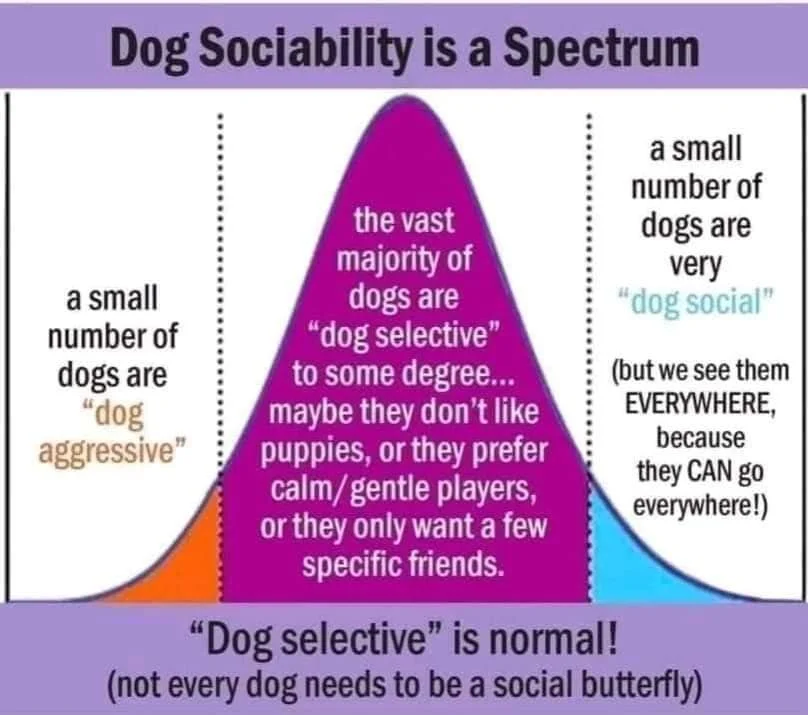
Graphic Designer unknown