Who decided dogs have to eat every meal from a bowl?
We buy beautiful bowls, scoop the food into them, put them on the floor and watch the dog inhale dinner in thirty seconds.
Meanwhile, that exact same meal could have been used to let your dog sniff, forage, problem-solve, train, lick, hunt, build confidence or simply spend ten quiet minutes doing something that feels very naturally dog-like.
I'm not saying you should throw your dog's bowls in the trash.
I'm saying:
Stop assuming the bowl is the only way dinner can happen.
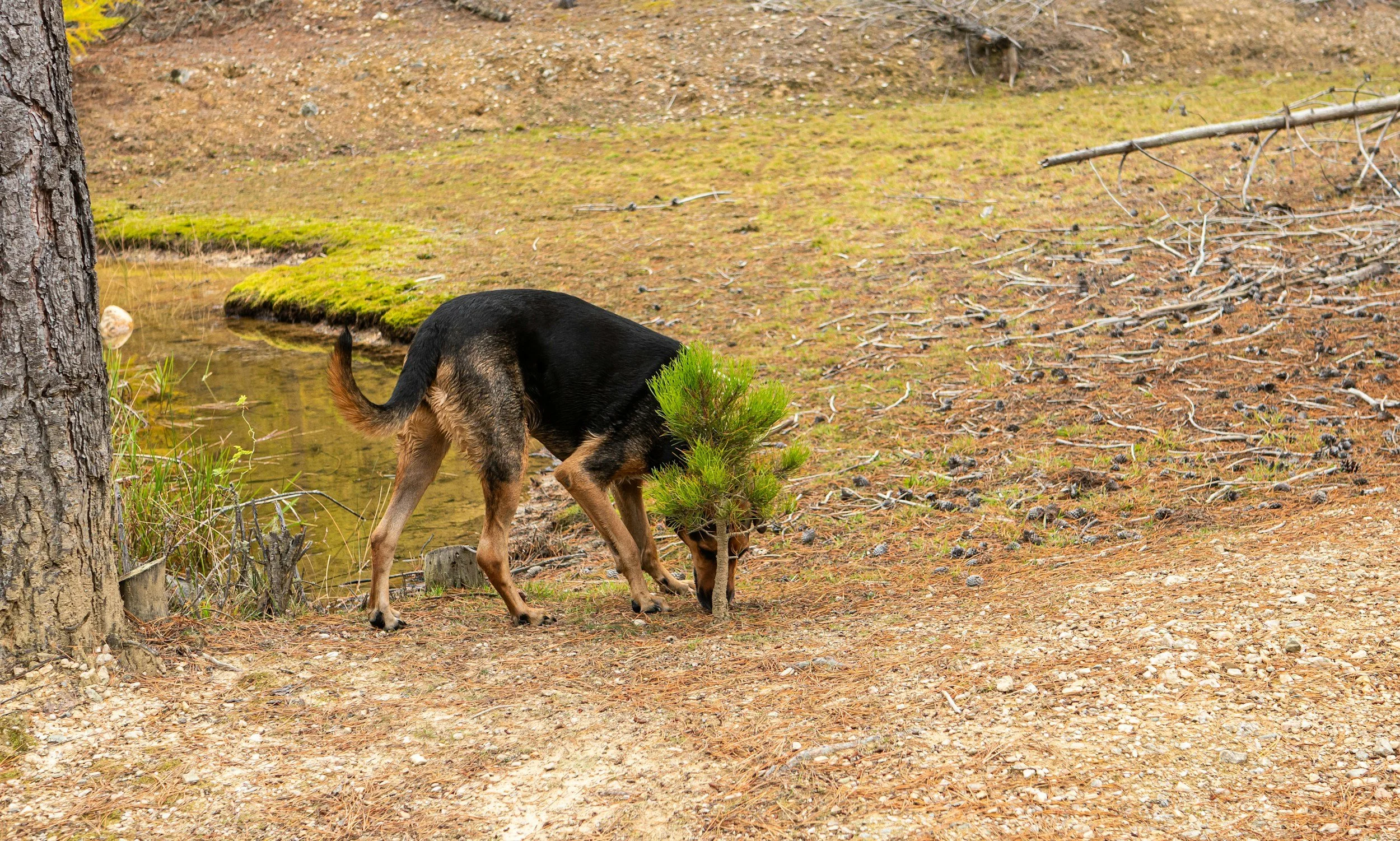
Your Dog Was Built to Use His Nose
A dog's nose is one of his primary ways of gathering information about the world.
Yet many pet dogs spend most of their day in environments where nearly everything is provided for them.
The door opens.
The food appears.
The toy comes out.
The walk happens on our schedule and usually along our route.
There is nothing inherently wrong with making life convenient for our dogs, but I also want to give them opportunities to do dog things.
Searching for food is one of the easiest ways to do that.
I Don't Free Feed
I prefer scheduled meals rather than leaving a bowl of food available all day.
Scheduled meals give us a beginning and an end, help us know whether the dog actually ate, and give us a resource we can use intentionally.
Sometimes I use the meal for manners and impulse control.
Sometimes I use it for training.
Sometimes I use it purely for enrichment.
If you haven't already established calm bowl manners and a release cue, start here:
Dog Feeding Protocol: Calm Bowl Manners, Waiting & Release →
You Can Use the Meal for Training
Part of the dog's normal food can become training rewards.
Instead of feeding dinner and then adding another pile of treats during training, you may be able to use part of the meal while practicing basic skills.
That might include:
- Sit
- Place
- Loose-leash walking
- Heel
- Recall
- Down
- Marker work
- Simple household manners
For a dog who is learning, I can get quite a few useful repetitions out of food the dog was already going to eat.
Then whatever remains can become the actual meal.
If you're working on reducing constant food rewards later, read:
How to Wean Your Dog Off Treats Without Losing Reliability →
Scatter Feeding: Probably the Easiest Enrichment You Can Do
You do not need an expensive puzzle toy.
You need food and somewhere appropriate to scatter it.
I sometimes call this Feed the Chickens.
Take part of the meal and scatter it through:
- the grass,
- a safe section of the yard,
- the patio,
- a snuffle mat,
- or another clean area where the dog can search.
Then let the dog find it.
Instead of inhaling dinner from one spot, the dog has to move, sniff and search.
For some dogs, this becomes ten or fifteen minutes of very satisfying work from a meal that otherwise would have disappeared almost immediately.
Turn Dinner Into Beginner Scent Work
You can take scatter feeding one step further and begin hiding small portions of food.
Start easy.
Let the dog see you place food:
- beside a chair leg,
- behind a box,
- under the edge of a towel,
- around the patio,
- or in another easy hiding place.
Then encourage him to find it.
As he understands the game, you can gradually make the searches more interesting.
This is not the same thing as formal odor detection, but it starts encouraging the dog to use his nose intentionally.
Use a Snuffle Mat
A snuffle mat gives you a contained version of foraging.
Hide food throughout the fabric and let the dog search it out.
I especially like this option when:
- the weather is terrible,
- you don't have a yard,
- you have a puppy who needs something productive to do,
- you have a senior who still enjoys nose work, or
- you simply want dinner to last longer than twenty seconds.
Licking Can Be Its Own Kind of Enrichment
Some meals or portions of meals work well on a licking mat or other appropriate licking surface.
Depending on what your dog eats, you might spread or mash appropriate food onto the mat and offer it fresh, chilled or frozen.
The goal here is not to bury the dog's dinner under a mountain of peanut butter and extra calories.
Use the dog's actual food whenever practical.
If you add anything else, account for it as part of the overall diet.
Stuffed Food Toys Can Make a Meal Last Longer
Stuffable toys can work beautifully for dogs who enjoy licking, chewing and figuring out how to get food out of something.
Depending on the food you're feeding, you may be able to:
- pack part of the meal inside,
- mix textures,
- freeze it for a longer activity, or
- use several toys for a larger meal.
Supervise appropriately, especially with powerful chewers or dogs who may destroy and swallow pieces of toys.
Fast Eater? Change the Geography of Dinner
If your dog's biggest accomplishment at dinner is seeing how fast the food can disappear, you don't necessarily need a fancy feeder.
Depending on the food, you may be able to spread the meal across:
- a muffin tin,
- a large shallow tray,
- a slow-feeding dish,
- a licking mat,
- a snuffle mat,
- several enrichment toys, or
- multiple safe hiding locations.
The point is simple:
Make the dog do something besides put his face in one pile and swallow.
Use Meals in Recall Games
Recall is one behavior I like to reward well.
If your dog is food motivated, part of a meal can be used during beginner Recall Games.
Now dinner may involve:
Come → get paid → release → go have fun again.
You can get useful repetitions without adding an entire bag of treats to the dog's daily intake.
Food Can Also Help Build Confidence
This is one of the pieces from the original version of this article that I absolutely want to keep.
For nervous, fearful or uncertain dogs, food can sometimes be used very deliberately to create safe, predictable experiences around a person.
This is not obedience.
I'm not using food to force interaction.
I'm giving the dog an opportunity to discover:
Being near this person can be safe, predictable and rewarding.
A Simple Trust-Building Food Exercise
Begin in a quiet environment.
Your posture should be relaxed.
Avoid leaning toward the dog, staring at him, reaching for him or turning the exercise into a demand for affection.
Place a piece of food on the floor at a distance the dog is comfortable approaching.
You may calmly say:
“Take It.”
Then let the dog make the choice to approach.
If he takes the food and immediately retreats again, that's okay.
Calmly mark:
“Good.”
Repeat at that successful distance.
Don't Rush to Move the Food Closer
If the dog is comfortable at the current distance, stay there for several successful repetitions or sessions.
Then you can gradually move the food slightly closer.
We're talking inches, not:
He ate one cookie from six feet away, so now I'm going to make him take the next one from my lap.
If the dog becomes hesitant, worried or stops approaching, you've probably progressed too quickly.
Go back to the last distance where he was comfortable.
Eventually the Food May Come From Your Hand
If the dog progresses to taking food from your hand:
- keep the hand still,
- allow the dog to approach it,
- do not grab for the dog,
- do not immediately reach over the dog's head to pet him, and
- do not assume taking food means the dog has invited physical contact.
Let the success simply be:
The dog approached, took the food and felt safe enough to do it.
If a dog has a bite history, severe fear, guarding behavior or becomes trapped or defensive around people, do not use food to lure the dog into a situation he cannot safely leave.
Food can be useful in behavior work, but the setup, distance, leash/tether use and human positioning need to match the dog in front of you.
Resource Guarding Is Not an Enrichment Experiment
There are ways food games can eventually be incorporated into behavior work with dogs who guard resources.
But that does not mean you should take a dog who freezes, growls, snaps, bites or fights around food and casually begin creating more food situations around people or other dogs.
With resource guarding, safety and management come first.
That may mean:
- feeding dogs separately,
- removing other dogs from the area,
- preventing children from approaching during food activities,
- using physical barriers, and
- working through an actual guarding plan instead of improvising.
Enrichment should reduce conflict, not create another opportunity for it.
Multi-Dog Homes Need a Little Common Sense
Scatter feeding five dogs together may sound adorable until three dogs find the same piece of food.
Not every enrichment activity should be a group activity.
If there is:
- food competition,
- resource guarding,
- bullying,
- a major difference in eating speed, or
- one dog constantly invading another dog's space,
separate them.
Each dog can still enjoy enrichment without turning dinner into a competition.
You Don't Need to Make Every Meal Complicated
I don't need you constructing a Pinterest-worthy enrichment project twice a day.
Some mornings, use the bowl.
Another day, scatter breakfast in the yard.
Use part of dinner for training.
Freeze tomorrow's breakfast in an appropriate enrichment toy.
Pull out the snuffle mat when it's raining.
Hide several pieces around the room while your dog waits elsewhere.
Rotate.
The point is not that bowls are evil.
The point is realizing that food is one of the easiest resources you already have for adding useful activity to your dog's day.
Match the Activity to the Dog
Not every enrichment activity is right for every dog.
A young energetic dog may love a more active food search.
A senior dog may prefer a smaller search area or a snuffle mat.
A nervous dog may benefit from predictable confidence-building exercises.
A dog recovering from an injury may need enrichment that doesn't involve racing around the yard.
A dog who destroys toys may need something completely different from a gentle dog who will spend twenty minutes licking a frozen food toy.
Enrichment should fit the dog rather than becoming another box you're trying to check.
And Yes — What You Put in the Activity Still Counts
An enrichment feeder doesn't magically turn poor nutrition into better nutrition.
The delivery method and the food itself are two different conversations.
K9 Coach is where I talk about the behavior, training and fulfillment side.
If you want to dig into fresh food, nutrition, gut health, ingredients and whole-dog wellness, that's the work I do through The Well Oiled K9.
Need Snuffle Mats, Lick Mats or Enrichment Toys?
I've collected dog-training and enrichment products through my K9 Coach Amazon storefront so you can compare options without hunting through random listings.
You can look there for things like:
- snuffle mats,
- lick mats,
- stuffable food toys,
- slow feeders,
- food puzzles,
- treat pouches, and
- other training and enrichment gear.
There Are No Bowls: Common Questions
Is it better for dogs to eat from enrichment toys instead of bowls?
Not necessarily every meal. The benefit is having options. Food can be used for foraging, scent work, training, licking, puzzles and other activities instead of automatically serving every meal in exactly the same way.
Can I scatter my dog's food in the yard?
Yes, when the area is safe and appropriate for your dog and the food you're feeding. Scatter feeding encourages sniffing and foraging and can make the meal take considerably longer than eating from a bowl.
Are snuffle mats good for dogs?
They can be a very simple way to encourage sniffing and foraging, particularly indoors. Supervise dogs who may chew or ingest pieces of the mat rather than simply searching through it.
Can I use my dog's meal for training?
Yes. Part of a scheduled meal can often be used as training rewards, particularly while teaching basic skills. For more difficult work, you may still choose a higher-value reward.
Can feeding enrichment help a fast eater?
It can. Spreading food across a larger area, using a snuffle mat, licking activity, slow feeder or appropriate food toy can require more time and effort than eating one pile of food from a bowl.
Can I use food enrichment with a senior dog?
Absolutely. Nose work and simple food searches can be wonderful for seniors. Adjust the difficulty, surface, search area and physical demands to the individual dog's mobility and stamina.
Can food help a fearful dog build confidence?
It can be one useful tool. I may use carefully placed food to create predictable, positive experiences without forcing physical interaction. With significant fear, aggression or bite risk, the setup needs to be individualized rather than simply luring the dog closer.
Should I use food games with a resource-guarding dog?
Not casually. Resource guarding changes the safety picture. Dogs who freeze, growl, snap, bite or fight around food need appropriate management and a guarding-specific plan before adding food activities that may increase conflict.
Do I have to stop using bowls completely?
No. “There Are No Bowls” is really about changing how you think about meals. Some meals can absolutely come from a bowl. I simply don't want the bowl to be the only idea we ever have.
Your Dog Has to Eat Anyway
That's what makes this so easy to use.
You don't necessarily need another hour for enrichment.
You already have food.
You already have a dog who is going to eat it.
So once in a while, don't put it in the bowl.
Scatter it.
Hide it.
Use it for Recall.
Put it in a snuffle mat.
Turn it into a scent game.
Use it to teach.
Use it to build confidence.
Or give your dog a frozen enrichment toy and enjoy ten quiet minutes while he works on dinner.
The food was already part of the day. You just made the experience of eating it a whole lot more useful.