

 Image 1 of 1
Does your dog bark, lunge, guard the door, react at the window, or struggle when visitors come into your home?
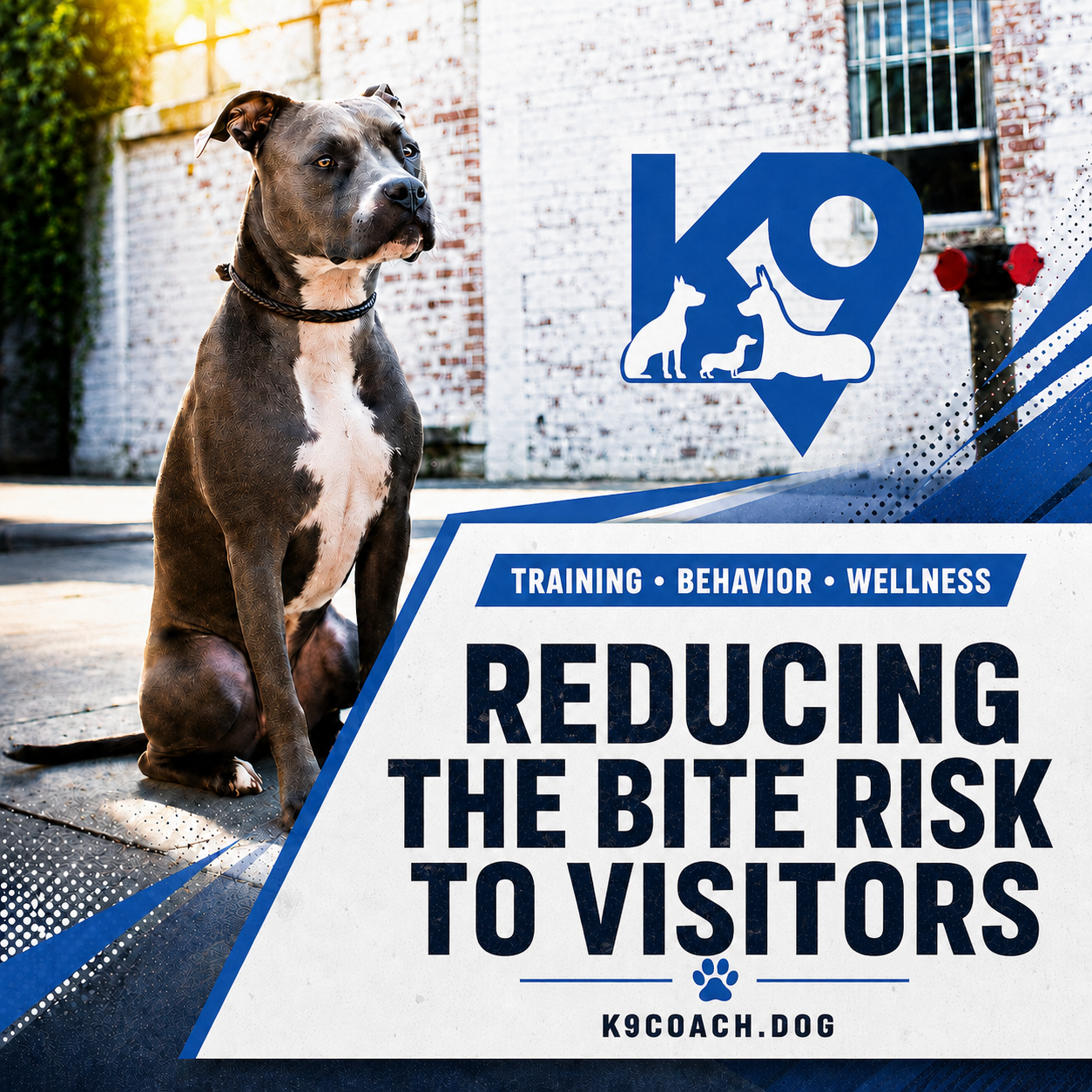
This downloadable guide helps pet parents understand where to start when a dog is showing reactive, guarding, or aggressive behavior around visitors — without relying on avoidance as the whole plan.
Because putting the dog in a crate, shutting them in a bedroom, or locking them outside may prevent a bite today… but it does not teach the dog what to do tomorrow.
Inside this guide, you’ll learn how to begin reducing bite risk by building practical foundation skills your dog can actually use when visitors arrive.
You’ll learn:
Why management is important — but not the same as training
Why dogs get better at the behaviors they are allowed to practice
How to reframe the problem and teach replacement skills
How to use Place training, doorbell work, long down, and “come away” cues
Why visitors should not pet, reach, stare, hand-feed, or “try to win the dog over”
How to use treat tossing safely as training progresses
When muzzles, gates, leashes, and wall tethers may be helpful safety tools
Common mistakes pet parents make when trying to manage aggressive behavior
Why neutrality matters more than forcing your dog to be “friendly”
When to seek professional help
This is not a “quick fix” guide. It is a starting roadmap for pet parents who need more structure, safer visitor routines, and a better understanding of how to stop rehearsing the problem while teaching the dog what to do instead.
Does your dog bark, lunge, guard the door, react at the window, or struggle when visitors come into your home?
This downloadable guide helps pet parents understand where to start when a dog is showing reactive, guarding, or aggressive behavior around visitors — without relying on avoidance as the whole plan.
Because putting the dog in a crate, shutting them in a bedroom, or locking them outside may prevent a bite today… but it does not teach the dog what to do tomorrow.
Inside this guide, you’ll learn how to begin reducing bite risk by building practical foundation skills your dog can actually use when visitors arrive.
You’ll learn:
Why management is important — but not the same as training
Why dogs get better at the behaviors they are allowed to practice
How to reframe the problem and teach replacement skills
How to use Place training, doorbell work, long down, and “come away” cues
Why visitors should not pet, reach, stare, hand-feed, or “try to win the dog over”
How to use treat tossing safely as training progresses
When muzzles, gates, leashes, and wall tethers may be helpful safety tools
Common mistakes pet parents make when trying to manage aggressive behavior
Why neutrality matters more than forcing your dog to be “friendly”
When to seek professional help
This is not a “quick fix” guide. It is a starting roadmap for pet parents who need more structure, safer visitor routines, and a better understanding of how to stop rehearsing the problem while teaching the dog what to do instead.