Stop Making Concessions for Your Dog: When They Know the Command
Follow-Through • Known Commands • Distraction • Accountability • Real Life
There is a point in dog training where you have to stop doing so much of the work for the dog.
The dog knows Heel, but drifts six feet toward a bush and you follow. The dog knows Place, but gets up to scratch and you decide the exercise must be over. You ask for Sit, the dog begins sniffing the ground instead, and you reposition yourself three times trying to regain attention. The dog breaks the Down because something interesting happened across the street, and suddenly you are renegotiating a command the dog already understands.
Sometimes there is a legitimate reason to change what you are asking. Your dog may be confused, physically uncomfortable, frightened, over threshold or genuinely need a potty break.
But sometimes the dog knows exactly what to do, would simply prefer to do something else, and the human starts making concessions until the original expectation has disappeared completely.
That is the concession stand I want you to close.
If I Sent You This Article
You May Be Helping Your Dog Out of the Very Skill We're Trying to Build
I am not asking you to ignore your dog's physical or emotional needs. I am asking you to notice how often you automatically change the assignment every time the dog hesitates, wanders, scratches, sniffs, marks, looks away or seems mildly inconvenienced.
Once the dog genuinely knows the command, part of training is learning that the command still applies when there is something else the dog would rather do.
Your dog does not have to love every expectation. They do need to learn that familiar skills do not disappear the second life becomes more interesting.
First Question: Does the Dog Actually Know the Command?
Before I call anything resistance, stalling or refusal, I need to know whether we have fairly taught the skill.
A dog who can Sit in the kitchen for cheese has not automatically learned to Sit outside while another dog walks past. A dog who can remain on Place for fifteen seconds while you stand beside them may not understand how to remain there for thirty minutes while the household moves around.
Dogs need skills proofed through different environments, duration, distance and distraction.
If the dog has never successfully performed the behavior under conditions anything like the ones you are asking for now, we may have a training gap rather than a dog deliberately blowing you off.
That distinction is covered in greater detail in Resistance From Your Dog During Training .
Once the Dog Knows It, Stop Rewriting the Assignment
Now we get to the point of this article.
You know your dog can Heel. You have practiced it successfully. The dog understands the position. You stop beside the sidewalk and the dog steps ahead because a shrub smells interesting.
Do not take another three steps simply because the dog did.
You stopped. The dog needs to return to the position you asked for.
If you call your dog and halfway back they detour to sniff something, the recall is not complete because the dog started moving generally in your direction. If Place means remain on Place until released, stepping off and wandering around because the dog got bored is not Place.
Words need to retain their meaning.
Your Dog Will Notice Every Time You Adjust to Them
Dogs are very good at figuring out which behaviors change human behavior. They do not need a complicated plot.
If stepping ahead causes you to move your body into a new position, that worked. If sniffing makes you stop walking, sniffing worked. If whining on Place eventually causes release, whining worked. If repeatedly breaking a Down causes the exercise to end, persistence worked.
We sometimes call this manipulation because it certainly feels that way when you are standing on the other end of the leash, but the learning principle is simpler: the dog tries something and the environment changes in a useful way.
That is why your response matters.
The Scratching Dog
This was one of my examples in the original version of this article because it happens all the time.
You cue Heel. Your dog suddenly stops to scratch.
Obviously, if your dog has fleas, allergies, irritated skin, an ear problem or something causing genuine discomfort, deal with the physical problem. I am not asking an itchy dog to pretend not to itch so we can prove a training point.
But dogs can also discover that scratching creates a pause. If the dog routinely develops a sudden itch when asked to do something they would rather avoid—and appears perfectly comfortable during everything they chose to do themselves—I notice the pattern.
If there is no reason to believe the dog is physically uncomfortable and the dog knows Heel, move. The dog can scratch when released.
You do not need to stop the entire exercise every time the dog invents a different activity.
The Dog Who Suddenly Has to Sniff Everything
Sniffing is good for dogs. I want dogs to sniff. I use scent work. I encourage appropriate exploration and I do not believe every walk should be a rigid obedience march.
That is very different from allowing the dog to decide that Heel ends whenever an interesting smell appears.
Give your dog sniff time. Release them to explore. Use a cue that means they have freedom to investigate.
Then, when you ask for structured walking again, the dog needs to return to the structured walk.
Freedom is much easier for dogs to understand when freedom and structure are both clear.
“But He Has to Pee”
Maybe he does.
If your dog genuinely needs a potty break, release the command and give the dog a potty break.
What I do not want is the dog learning to break Heel, drag you six feet toward every mailbox and mark twenty-seven shrubs while you explain that he simply had to go.
There is a difference between elimination and recreational marking.
You can absolutely allow marking during appropriate free-sniff portions of the walk. You can also have portions where your dog walks with you instead of stopping the entire group every twelve feet.
Decide which activity you are doing and communicate it clearly.
“He's Distracted”
Of course he is.
The real world contains distractions. Eventually that is exactly why we train in it.
Distraction can absolutely make a behavior harder, and we need to increase difficulty intelligently. I do not take a dog who learned Down yesterday into the middle of a festival and become offended when the command falls apart.
But once a familiar command has been appropriately proofed, the presence of a distraction is not automatically a reason to abandon the expectation.
That is one of the differences between a command the dog has seen and a skill the dog can actually use.
“He's Nervous” Requires More Thought
Nervousness is where I want more judgment, because not every uncomfortable dog needs exactly the same response.
If I bring a dog into a new environment and the dog is uncertain but still capable of hearing me, I may deliberately ask for one simple, familiar behavior. Heel with me through the doorway. Sit beside me. Touch. Place on something easy.
Familiar work can give the dog an answer when the environment feels uncertain.
I keep the request simple enough that success is realistic, complete it, praise the dog and move on.
That is different from dragging a terrified dog through a situation they cannot process. If the dog is panicking, shutting down or incapable of performing a skill they normally know well, I need to change the picture, create distance or leave.
Respect the dog's response without automatically teaching that mild uncertainty erases every expectation.
Know the Difference
A Real Problem Is Not a Concession
This article is not permission to explain away pain, fear, panic or physical need as “the dog manipulating you.”
If your dog suddenly refuses something they have done easily for months, take that information seriously. A dog who will not Sit may have pain in the hips, knees or back. A dog suddenly resisting the car may be physically uncomfortable getting in. A dog stopping repeatedly to scratch may actually be itchy. A dog who appears unable to hear you in a frightening environment may be far beyond a useful training threshold.
The skill is learning to tell the difference between “my dog cannot reasonably do this right now” and “my dog knows how to do this and would simply rather not.”
If a familiar behavior changes suddenly or the dog's overall behavior seems different, start with Why Did My Dog's Behavior Suddenly Change? .
Stop Adding Five Extra Cues Before the Cue
Humans make concessions verbally too.
You say the dog's name. No response. You snap your fingers. Nothing. You pat your leg. You lean into the dog's field of vision. You repeat the name louder. Finally you say the actual command.
By then the dog has learned that the first several pieces of information are background noise.
If you use your dog's name as a courtesy to let them know information is coming, fine. But if the dog does not turn and look, that does not mean the command itself now disappears.
Give the command clearly and follow through appropriately.
We want the dog's attention to improve, but we do not need to spend thirty seconds begging for permission to communicate.
Do Not Move Yourself to Fix the Dog's Position
This is one of the easiest concessions to miss.
You stop walking and ask the dog to Sit beside you. The dog sits two feet in front of you, so you step forward and sideways until technically the dog is now beside you.
The dog did not fix the position.
You did.
If position matters in the exercise, put the dog where the dog belongs instead of moving yourself around until the incorrect position becomes correct by accident.
That small handling habit is a perfect example of the human doing more and the dog learning less.
Little Dogs Do Not Get an Automatic Exemption
Small dogs are particularly easy to help out of everything because we can.
The dog hesitates, so we pick them up. The dog will not walk past something, so we carry them. The dog refuses the stairs, resists the leash or jumps at another dog and the easiest solution is simply to scoop the whole problem into our arms.
Sometimes carrying is completely appropriate. Safety, physical limitation, recovery, environmental hazards and genuine fear can all justify it.
But size alone is not a reason for the dog to avoid learning ordinary skills.
Your ten-pound dog still benefits from leash manners, recall, waiting at doors, holding a position and moving through manageable challenges with you.
Stop Letting Your Dog Steer the Walk
During a structured portion of the walk, where you stop, you stop. Where you turn, you turn.
The dog should not repeatedly pull you three steps toward a smell, cross in front of you and change your path, or decide that every interesting object requires the entire walk to reorganize around it.
That does not mean your dog never gets choices on a walk. I like walks that include sniffing, freedom and opportunities to explore.
It means I want you to be able to switch between those things.
Structured walking is structured walking. Release to sniff is release to sniff. Your dog can learn both.
For the actual leash progression, use How to Stop a Dog From Pulling on the Leash .
Place Is Where Concessions Become Very Obvious
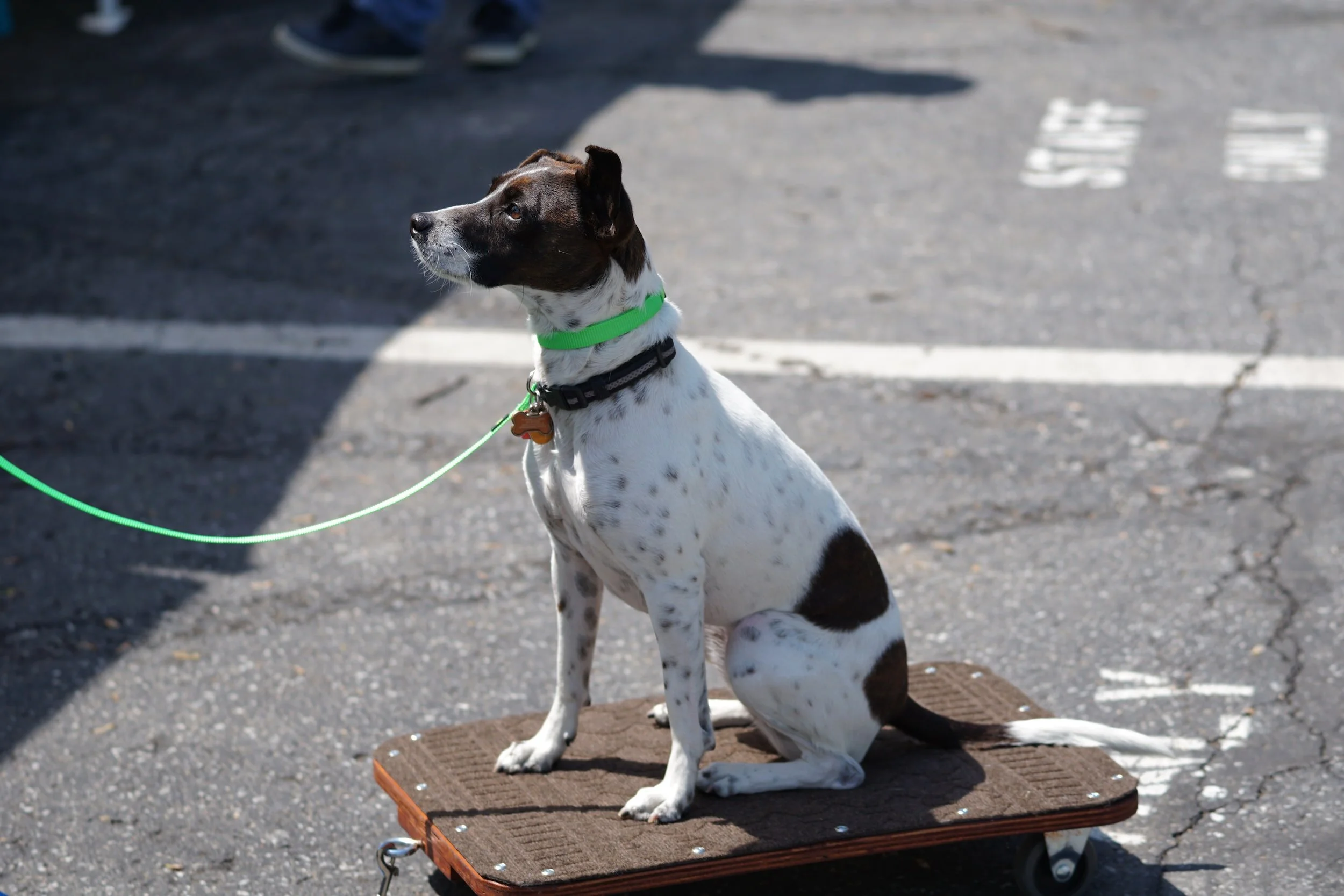
Place is simple: remain on the defined Place until released.
Then the dog begins experimenting.
One paw slides off. The body stretches farther and farther until most of the dog is on the floor. The dog stands up to investigate a sound. The dog leaves for a drink they ignored for the previous hour. The dog suddenly needs to check where you went.
If the dog needs water, release them for water. If the dog physically needs to change position, Place should allow comfortable position changes unless you have specifically asked for another behavior.
What I do not want is an understood boundary becoming meaningless because the dog discovered fifteen increasingly creative ways to leave without hearing a release cue.
Put the dog back.
Calmly.
You do not need a speech.
Duration Is Where the Negotiating Often Starts
Most dogs can hold a position for a few seconds. The interesting part begins when the dog realizes we are not immediately releasing them.
That is when we see fidgeting, repositioning, attempts to leave, staring at the human, whining and a variety of creative ideas designed to determine whether the exercise really needs to continue.
This is one of the reasons I care so much about Duration Work .
The extra time gives the dog opportunities to discover that mild frustration does not automatically change the expectation.
Following Through Does Not Require a Fight
People sometimes imagine follow-through as a confrontation.
It usually does not need to be one.
The dog leaves Place. Return the dog to Place. The dog drifts out of Heel. Put the dog back where the dog belongs. The dog breaks Wait at the door. Close the opportunity and reset it.
The calmer you can make the correction of the picture, the less drama the dog gets from experimenting with another answer.
Your job is not to become angrier than your dog is stubborn.
Your job is to make the expectation clear enough and consistent enough that the dog eventually stops wasting effort on answers that do not work.
This Is Leadership in a Very Practical Form
Leadership can sound like an enormous philosophical concept until you look at moments like these.
You stop walking and remain where you stopped. You give the command once instead of six times. You put the dog back on Place instead of explaining why leaving was disappointing. You distinguish between a legitimate need and a stall without becoming emotionally invested in either one.
You become predictable.
That is why this article belongs beside Dog Leadership: When Your Dog Knows the Commands but Still Won't Listen .
And This Is Where Consistency Becomes Everything
If leaving Place works once out of every four attempts, the dog has a reason to keep trying. If ignoring the first recall occasionally results in the human giving up, delayed response remains worth testing. If pulling toward a smell sometimes moves you five feet closer, pulling remains part of the dog's strategy.
Intermittent success can make behavior remarkably persistent.
The cleaner your response becomes, the less confusing the game becomes for the dog.
You are not trying to catch your dog being wrong. You are making the correct answer easier to understand because the wrong answer stops producing useful concessions.
Do Not Confuse Compassion With Removing Every Expectation
I can respect a dog who is nervous without allowing nervousness to become a lifetime exemption from every skill. I can recognize that a dog is tired without deciding that Come only applies when the dog feels energetic. I can care deeply about physical comfort while still expecting a physically sound dog to remain on Place after the first dramatic sigh.
Compassion and accountability are not opposites.
The art is knowing when the dog needs support, when the environment needs to change and when the dog is completely capable of doing the familiar thing you already asked.
What Dog Parents Are Searching
Why Does My Dog Ignore Commands They Already Know?
Why does my dog know a command but ignore me?
First make sure the behavior is genuinely learned in that environment and at that level of distraction. If the dog clearly understands the command, inconsistent follow-through can teach that responding is optional or that another behavior may eventually cause the human to abandon the request.
Why does my dog only listen sometimes?
Context, distraction, incomplete training and inconsistent expectations can all contribute. A dog may perform reliably in the kitchen and struggle outside, or may have learned that certain family members follow through while others eventually give up.
Why does my dog keep breaking Stay or Place?
The dog may need more gradual duration and distraction practice, or the dog may have discovered that repeatedly leaving eventually ends the exercise. Make sure the skill is fair and well taught, then calmly return the dog to the expected position rather than automatically releasing because the dog left.
Should I repeat a command if my dog ignores me?
Repeating a familiar cue over and over can teach the dog that the first cue carries very little meaning. Give a clear cue, allow a reasonable moment to respond and then follow through appropriately rather than turning one command into a string of increasingly louder requests.
Why does my dog listen inside but not outside?
Dogs do not automatically generalize a behavior to every environment. Outdoor smells, animals, people and movement add distraction. Build the skill progressively outside instead of assuming a command learned in the living room is already ready for the busiest environment.
Should I let my dog stop and sniff during a structured walk?
Dogs benefit from sniffing, but structured walking and free-sniff time can be separate parts of the same walk. Release the dog to explore when appropriate, then return to the structured walk when you ask for it.
Is my dog manipulating me when they suddenly scratch or sniff?
Dogs can learn that certain behaviors cause humans to pause, adjust or release them, whether or not we assign human-style intent to it. First rule out genuine physical discomfort or need. Then pay attention to whether the behavior repeatedly appears when the dog is asked to do something they already know.
What if my dog suddenly refuses a command they normally perform?
A sudden change deserves a closer look. Pain, illness, mobility changes, fear, hearing or vision changes and other physical issues can alter performance. Do not automatically label a new refusal as stubbornness when something about the dog may have changed.
Does following through mean I have to be harsh?
No. Follow-through can be calm and unemotional. Reset the position, remove the opportunity that followed the broken command or help the dog complete a known behavior. The goal is clarity and consistency, not a battle.
I Want You to Know When to Help — and When to Get Out of the Way
Early in training, you may need to help quite a bit. You teach the dog what the cue means, show them where to go and create enough successful repetitions that the behavior becomes familiar.
As the dog learns, your job begins to change.
You stop luring every Sit. You stop moving your body around to manufacture Heel position. You stop releasing Place because the dog has begun lobbying for another outcome. You stop providing six extra cues before expecting a response to the first one.
Teach the dog well enough that the dog can succeed.
Then let the dog be responsible for doing the part they already know how to do.
Not Sure Whether It's Resistance?
Learn how I separate an unfinished skill, genuine difficulty and a dog who understands the expectation but is pushing back on the new rule.
Understand ResistanceBuild Better Follow-Through
Leadership gives the dog predictable direction and teaches that the meaning of familiar commands does not change according to convenience.
Read About LeadershipDog Keeps Breaking the Exercise?
Longer duration exposes the moments where dogs begin negotiating and gives you opportunities to build genuine patience and reliability.
Build DurationDid the Behavior Suddenly Change?
A new refusal, sensitivity or reluctance can be information about pain, stress or physical health rather than a training problem.
Check the Whole PictureClose the Concession Stand
Stop Doing Your Dog's Half of the Training
I want you to help when your dog does not understand. I want you to adjust when the environment is unfair. I want you to notice fear, pain, physical limitation and genuine need.
Once those things are accounted for, I also want you to recognize when the dog knows exactly what you asked and is simply experimenting with a different answer.
Do not move because your dog moved. Do not abandon the command because the dog became mildly inconvenienced. Do not repeat yourself until your words become background noise. Do not automatically convert every sniff, scratch, wiggle or dramatic sigh into permission to stop.
Ask fairly. Teach clearly. Know your dog well enough to recognize a real problem. Then follow through calmly on the skills the dog already knows.
That is not being unfair to your dog.
It is finally letting your dog do their part.
Work With Dana on Your Dog's BehaviorIn the absence of real danger to your dog -- it doesn't matter. If you are asking your dog to do a skill that he knows how to do, expect him to do it.
Where you stop, you stop. Don't take 5 extra steps across the sidewalk because your dog wants to sniff the flowers. Don't let him step in front of you if he should be sitting beside you, move him back to the right spot. And certainly don't turn and change directions because he steered you or changed your pace & direction.
Don't let your dog break a command to pee -- if he really has to go release his command and give him a potty break -- but don't let it be a stall or marking tactic.
If you call your dog's name (as a courtesy) to give him a heads up that a command is coming -- and he blows you off -- give the command anyway and follow-through if he doesn't hear you. Snapping your fingers, tapping his head, adjusting your body position in front of him isn't going to help - and just gives him more time not to listen.
Don't let him stall by deciding he needs to scratch -- in the absence of fleas (surely you don't have this issue) or skin issues, when you say heel -- he moves with you and doesn't linger around scratching. When you are ready to go - move. Whether he's scratching or sniffing. If you believe he has a real problem -- deal with it but most often it's manipulation.
If you are taking your dog to a new environment, yes he may be nervous. But your goal is to stick to a very simple command your dog knows to dog how to perform, stick with that and get to done. Relief will come as the reward for doing something you ask him. Of course don't overwhelm him. It might be just a quick walk through the door of the pet store and u-turn your way out -- but that walk should be a good heel.
Use obedience skills, consistent language and can give your dog something he knows how to do and be sure he completes it. Don't let him take the lead by steering you, getting you to adjust to him, or letting him off the hook.
Your leadership matters. Leverage it.
Need Help? Sometimes you need a coach and experienced pro to put the plan together for you Let me help you figure out what to do next. Behavior * Nutrition * Training * Natural Wellness * Recovery
Complete the Questionnaire For A Callback →