
Is Your Dog Getting Enough Exercise? Breed Instincts, Lifestyle & Behavior
Exercise • Breed • Instinct • Lifestyle • Enrichment • Behavior
If your dog is pacing the house, destroying things, barking at every sound, pestering you constantly, chasing movement, roughhousing with the other dog until somebody finally gets mad or simply seems incapable of settling, I am going to look at the training.
I am also going to ask a question that sometimes makes people a little uncomfortable: does the life your dog is living actually match the dog you brought home?
A sedentary lifestyle and a dog genetically built to run for miles can be a terrible mismatch. So can bringing home a dog developed to search, hunt, herd, retrieve, guard, pull, track or work beside humans and then expecting a short leash walk around the neighborhood to satisfy everything happening inside that dog's brain and body.
Training cannot erase genetics, and obedience cannot manufacture an appropriate lifestyle. If your dog needs significantly more physical movement, mental engagement or opportunity to use natural drives than your current routine provides, that unmet need can become one of the roots feeding the behavior you eventually call me about.
That does not mean every reactive, anxious or destructive dog simply needs to be run harder. Some dogs need less arousal, better sleep, duration work, clearer boundaries, medical evaluation or an entirely different behavior plan.
The point is to stop asking only, “How do I make my dog stop doing this?” and start asking whether the dog has enough appropriate ways to use the body and brain they were born with.
A Question Worth Asking
If Your Life Is Sedentary and Your Dog Is a Runner, Something Has to Give
You do not have to become a marathon runner because you fell in love with a German Shorthaired Pointer, Husky, Vizsla or another athletic dog. You do, however, need a realistic solution for the fact that your dog may have considerably greater physical needs than you do.
That solution may be a dog treadmill, a trained running partner, safe off-leash running in an appropriate fenced area, hiking, swimming, canicross, structured retrieving, a dog walker who can actually move at your dog's pace or another activity that meets the need without requiring you to personally become the athlete.
For an appropriately conditioned, physically sound dog and a skilled handler, running alongside a bicycle or rollerblades may also be an option. It needs training, control and a safe environment first. One squirrel should not result in you and your dog being launched into traffic.
The solution can be creative. Pretending the mismatch does not exist is usually less successful.
Before We Call Your Dog Hyper, Ask Whether the Dog Is Under-Exercised
I hear “my dog is hyper” all the time. Sometimes the dog truly struggles with over-arousal and has no off-switch. Sometimes the family has a perfectly normal high-energy dog who simply is not getting enough appropriate physical activity.
Those are not the same problem.
A young athletic dog who spends nine hours waiting for the humans to come home, goes outside to potty, takes a twenty-minute leash walk and then begins racing through the house at 8:00 PM may not need a calming supplement as the first intervention. The dog may need a better day.
Lack of appropriate activity may show up as destructive chewing, digging, stealing objects, excessive barking, attention-seeking, pacing, restless behavior, rough play, pulling on leash and a dog who seems to manufacture trouble every time the humans stop entertaining them.
The behavior still needs guidance, but if the dog has a full tank of physical and mental energy every single day, training while ignoring that piece can become unnecessarily difficult.
The Backyard Is Not an Exercise Program
A fenced yard is wonderful to have, but access to a yard is not the same thing as meaningful exercise. Many dogs go outside, sniff the same corners, patrol the fence, bark at the neighbor and then stand at the door waiting to come back inside.
If two compatible dogs truly run, chase and play together, they may get a substantial amount of activity in the yard. If your dog spends twenty minutes staring at the back door, however, the fact that you own a quarter acre does not mean the dog's exercise needs have been met.
I want to know what the dog is actually doing, not simply where the dog has access.
A Walk Is Valuable, But Walking and Exercise Are Not Always the Same Thing
I love walks. They can provide movement, sniffing, environmental information, training opportunities and important time with you.
But we have to be realistic about what kind of activity the walk provides. A leisurely twenty-minute neighborhood stroll may be plenty for one dog and barely register as physical activity for another.
If you own an athletic dog whose body was developed for endurance, a traditional leash walk may still be part of the day without being the entire exercise plan.
On the other hand, a senior dog, brachycephalic dog, puppy with developing joints or dog with orthopedic, cardiac or respiratory limitations may need a completely different approach.
This is why “How much exercise does my dog need?” cannot be answered by one universal number. Breed, age, conditioning, health, environment and the individual dog all matter.
Think About What Your Dog Was Actually Built to Do
Humans deliberately developed dogs for jobs. We selected for endurance, persistence, prey drive, environmental awareness, scenting ability, retrieving, guarding, digging, pulling, problem solving and the ability to work independently or in close partnership with us.
Those tendencies did not disappear when dogs became family members.
A German Shorthaired Pointer may be intensely driven to move, search and hunt. A Border Collie may notice every moving object in the environment. A Husky may have considerably more endurance than the person who brought the adorable puppy home. A Labrador may find carrying and retrieving deeply satisfying. A scent hound can become completely absorbed in an odor trail. A livestock guardian may be far more interested in monitoring the environment than greeting every stranger who enters it.
Breed does not tell us everything about an individual dog, but it gives us useful information about what that dog may find naturally rewarding and what needs could become difficult to ignore if the lifestyle provides no appropriate outlet.
For the broader picture, read What Shapes Your Dog's Behavior? .
What a Lifestyle Mismatch Can Look Like
The Runner Living a Couch-Potato Life
Your young athletic dog spends most of the day sleeping while you work, gets a short evening walk and then becomes frantic, destructive or impossible to settle at night. The training may need work, but the physical mismatch deserves attention too.
The Herding Dog Managing the Household
The dog stalks the children, chases running feet, controls the other pets, follows everyone from room to room and reacts intensely to bicycles or motion outside. Movement itself may be enormously reinforcing to this dog.
The Hunting Dog Who Cannot Stop Searching
Every walk is nose down, pulling toward scent, scanning fields and ignoring the human when something interesting appears. The dog needs recall and leash skills, but also appropriate opportunities to search and use the nose.
The Retriever Who Is Always Carrying Something
Shoes, socks, towels and children's toys become fair game because carrying objects is deeply rewarding. Rather than spending the dog's entire life saying “drop that,” structured retrieves can give the dog a legal version of something they naturally enjoy.
The Guardian Watching Every Window
The dog spends hours monitoring the property, reacting to deliveries and deciding that every unfamiliar sound deserves investigation. Training and household boundaries matter, but so does understanding why environmental monitoring comes so naturally.
The Terrier Redesigning Your Yard
Digging, chasing, investigating holes and pursuing small movement are not random hobbies for many terriers and earth dogs. Give those drives an appropriate outlet while also teaching where those behaviors are and are not allowed.
The Working Dog Creating a Job
If nobody gives the dog something useful to do, the dog may appoint themselves head of security, household movement supervisor, fence patrol officer or professional furniture disassembler.
The Small Dog Everyone Underestimates
Dachshunds, terriers and other small working breeds may be physically small while carrying enormous persistence, drive and need for engagement. Being portable does not make a dog decorative.
Sometimes the Root of the Behavior Is That the Dog Needs More Appropriate Exercise
I am comfortable saying that because I have seen it. There are cases where we can teach more obedience, correct more behavior and add more household rules, but the dog is still living every day with an enormous amount of unused physical energy.
That does not mean exercise fixes every behavior issue, but it can change the entire starting point. A dog whose body has had an appropriate outlet may be more capable of concentrating, sleeping, tolerating quiet time and participating in the training plan.
If your lifestyle is sedentary and your dog's natural activity level is extremely high, you need a plan for closing that gap. You may not personally enjoy running, but the dog still has the body you brought home.
That is where treadmills, structured running, dog walkers, swimming, hiking, safe fenced running areas, canicross, retrieving and other options become useful. The answer is not necessarily that you perform every mile with the dog. The answer is that somebody needs to solve the dog's legitimate need for movement.
Dog Treadmills Can Be Extremely Useful
A properly introduced dog treadmill can be a useful tool for households where weather, work schedules, human mobility or the dog's exercise needs make outdoor activity difficult to provide consistently.
It should be taught rather than simply turned on underneath a frightened dog. Start slowly, build confidence and condition the dog progressively. The dog should be supervised, physically appropriate for the activity and able to stop safely.
A treadmill also should not become the dog's entire world. Moving the body on a treadmill does not provide sniffing, exploration, changing terrain or the relationship benefits of doing things together. It is a tool for solving one part of the exercise puzzle.
Running, Bikes and Rollerblades Can Help the Right Dog
For healthy, appropriately conditioned adult dogs who genuinely enjoy running, faster-moving exercise can be a practical way to meet needs that a slow human walking pace simply cannot.
Some families run with their dogs, use canicross equipment, cycle with a trained dog or allow the dog to move alongside rollerblades. Those options require considerably more control than an ordinary walk. The dog needs reliable leash skills, the handler needs enough skill to stay upright, and the environment needs to be safe.
Build conditioning gradually. Consider pavement temperature, weather, joints, paws, age and the dog's physical health. Puppies, senior dogs and dogs with orthopedic, cardiac or respiratory concerns need an exercise plan appropriate to the body they have.
Hunting and Sporting Dogs Often Need Opportunities to Search
Exercise does not have to mean simply running until the dog is tired. Hunting and sporting dogs may be deeply satisfied by searching, locating, retrieving and using the nose along with physical movement.
Hide toys or food and send the dog to find them. Build scent searches through the house, yard or safe outdoor spaces. Teach named-object retrievals. Hide yourself and let the dog locate you. Give the dog access to appropriate trails, fields or natural areas on a long line where sniffing and investigation are actually allowed.
If you need an easy place to begin, use How to Teach Scent Games .
Herding Dogs Need More Than “Stop Chasing”
Herding breeds can be extraordinarily tuned into movement. Running children, bicycles, other dogs, wildlife and even people moving through the house may become fascinating.
The dog still needs rules. Chasing and nipping children is not acceptable because it is instinctive. At the same time, if we spend the dog's entire life correcting movement-related behavior without providing any productive way to use focus, direction, problem solving and physical control, we are ignoring a large part of the dog.
Structured movement games, appropriate herding-related sports, agility, searching, directed retrieves and other work that combines the brain and body can help provide an outlet while impulse control teaches the dog when movement is none of their business.
Terriers and Dachshunds Need Jobs Too
Small dogs are easy to underestimate because humans can simply pick them up when life becomes inconvenient. That does not change the dog living inside the small package.
Terriers and Dachshunds were developed to pursue, investigate, dig, problem-solve and go into places most sensible humans would avoid completely. They may enjoy sniffing games, digging areas, tunnels, food searches, appropriate chase games and exploration that allows them to use some of those natural tendencies.
A small dog can have a very large need for purposeful activity.
Guarding Breeds Need Thoughtful Work, Not Forced Sociability
Some dogs were developed to remain aware of their surroundings, monitor property and make decisions about unfamiliar activity. They may naturally be more environmentally alert than a dog developed primarily for companionship.
Appropriate exercise and engagement can help, but I also want strong duration work, household boundaries, visitor protocols and the ability to observe ordinary activity without believing every person or sound requires intervention.
I am not trying to turn a guardian into a Golden Retriever. I am teaching the guardian how to live appropriately in the family we actually have.
Prey Drive Needs an Outlet and Rules
Chasing is enormously reinforcing for many dogs. Squirrels, rabbits, cats, bicycles and anything running away can trigger a powerful response.
Flirt poles, structured chase games, lure coursing and other appropriate activities may give some dogs a legal outlet for that drive, but I still want a Start, a Stop, an OUT and enough impulse control that the game does not simply make an already frantic dog more frantic.
Understanding prey drive does not mean surrendering to it. It helps us create better training around something the dog finds naturally rewarding.
This Is the Other Half of the Lesson
Do Not Try to Exhaust Your Dog Into Good Behavior
Once people realize the dog needs more activity, it is easy to swing too far in the other direction. Every problem becomes “he needs more exercise,” the walks get longer, fetch goes on forever and the family tries to create a dog who is simply too tired to make bad decisions.
That can create an incredibly fit dog who still has no off-switch.
Exercise is not a replacement for duration, boundaries, training, sleep and recovery. A dog should be able to run, work, play and use the body, then come back into the house and settle. If the dog requires three hours of frantic activity before being remotely tolerable, I want to look at the rest of the picture too.
This is why I pair appropriate exercise and instinctive outlets with Duration Work . The dog needs an accelerator and brakes.
If your dog receives appropriate exercise and still seems incapable of turning off, read Why Won't My Dog Relax? Over-Arousal, Hypervigilance & Learning to Settle .
Mental Stimulation Does Not Replace Physical Exercise — and Vice Versa
This is another place where advice gets oversimplified. People are told a ten-minute training session is equivalent to an hour of exercise, or that three puzzle toys will solve the needs of a dog bred to run.
Mental work is valuable. Scent work, problem solving, obedience, searching, tracking and learning new skills can be deeply satisfying and often tire a dog in a way repetitive physical activity does not.
It still does not mean an athletic dog no longer needs appropriate movement. Likewise, five miles of running does not guarantee the dog has learned impulse control, frustration tolerance or how to use the brain.
Most dogs need some combination of both, adjusted for the individual dog.
Exercise Needs Change With Age and Health
The activity plan that fits a healthy three-year-old athlete may be completely inappropriate at ten. Puppies need movement and exploration but should not simply be pushed through adult endurance work while their bodies are developing. Seniors still need movement, but intensity and recovery may need to change.
Orthopedic disease, IVDD risk, heart disease, respiratory limitations, pain, obesity and other health concerns can also change what exercise is safe and productive.
This is why I want breed awareness to include both behavior and health.
Know the Breed's Health Risks Too
If I want you to understand what your dog was genetically designed to do, I also want you to understand what that breed may be more physically vulnerable to over a lifetime.
Genetics do not guarantee disease any more than breed guarantees behavior, but predisposition gives us information we can use proactively. A Dachshund parent should know why spinal health and IVDD deserve attention before there is a crisis. German Shepherd families should at least know what EPI is. Depending on the breed, thyroid disease, cardiac concerns, orthopedic problems, certain cancers, neurological disease, skin and immune problems or other inherited vulnerabilities may deserve additional awareness.
That knowledge can change the exercise plan too. The answer for a dog who needs more activity is not automatically more running, more jumping or more repetitive impact. We still have to support the body the dog has.
The Behavior Side Meets the Health Side
Your Dog's Genetics Give Us Clues — Not a Destiny
I would rather understand a breed's vulnerabilities before there is a crisis so we can make smarter decisions about exercise, weight, nutrition, mobility, prevention and what changes deserve attention.
That deeper conversation belongs at The Well Oiled K9 Holistic Dog Health Library , where I go much deeper into health conditions, nutrition, mobility, chronic disease and proactive whole-dog wellness.
An Instinct Is Not an Excuse
Understanding why your dog does something does not mean allowing the dog to do whatever comes naturally.
“He's a herding breed” does not make chasing children acceptable. “She's a guardian” does not mean she gets to threaten everyone who enters the house. “He's a hunting dog” does not mean recall becomes optional when a squirrel appears.
Understanding instinct tells us what we are working with. Training teaches the dog how those drives may be expressed safely in the life they actually live.
Give the Instinct a Start Button and a Stop Button
I want your dog to know when the activity is available, what the rules are while it is happening and when it is over. The scent search begins on cue. The flirt pole has rules. The retrieve includes an OUT. The running session ends. The equipment goes away. Then the dog transitions back into ordinary household life.
That structure lets us honor the dog without letting the drive run the household.
Sometimes Your Dog Needs a Better Life Before We Need More Training
I have probably cost myself training work over the years by telling families that another formal lesson was not the only thing the dog needed. Sometimes the dog needed more appropriate movement, more engagement, a different routine, better outlets or simply a lifestyle that made more sense for the animal they had chosen.
That does not mean exercise magically resolves aggression, scent games cure anxiety or a treadmill fixes reactivity. Serious behavior problems still need an appropriate behavior plan.
But if a dog's entire day asks them to suppress everything they were built to do, while providing very little physical activity and no meaningful outlet, I cannot honestly tell you that another obedience command is going to resolve the entire problem.
Sometimes a better behavior plan starts with giving the dog a better way to live.
What Dog Moms Are Actually Searching
Exercise, Breed Needs & Behavior Questions
How do I know if my dog is getting enough exercise?
Look at the individual dog rather than a universal number of minutes. Breed, age, health and conditioning matter. A dog who is chronically restless, destructive, demanding, barking excessively or constantly creating activities may need more appropriate physical or mental engagement, although those behaviors can have other causes too.
Can lack of exercise cause behavior problems in dogs?
Too little appropriate physical and mental activity can contribute to boredom, frustration, destructive behavior, restlessness, excessive barking and attention-seeking. It is not the cause of every behavior problem, but it is one of the first lifestyle questions worth asking.
Why is my dog so hyper even after a walk?
The walk may not be enough physical activity for that particular dog, or the dog may need more mental engagement. Some dogs are also over-aroused rather than under-exercised and need help with recovery, duration and settling rather than simply adding more miles.
Why is my dog destructive when I leave or while I'm working?
Destruction can involve boredom and unmet activity needs, but it may also be related to separation anxiety, frustration, stress or learned behavior. Look at when the destruction happens and what the dog's daily physical and mental routine actually includes.
How much exercise does my dog need every day?
There is no single correct amount for every dog. Breed, age, physical health, conditioning, activity type and individual temperament all matter. A slow walk and an hour of running are also very different workloads, even when both last sixty minutes.
Does my working dog need a job?
Many working dogs benefit from meaningful activity that engages both body and brain. A job does not have to recreate the historical work literally. Searching, retrieving, scenting, problem solving, carrying, structured running and other purposeful tasks may provide appropriate outlets.
Is a backyard enough exercise for a dog?
Not necessarily. What matters is what the dog actually does while outside. A dog who runs, explores and plays may get meaningful activity, while a dog who stands at the door or patrols the fence may receive very little useful exercise despite having a large yard.
Can I use a treadmill to exercise my dog?
A properly introduced dog treadmill can be a useful exercise tool, particularly when weather, schedule or human mobility creates limitations. It should be taught gradually, supervised and used as one part of a larger activity plan rather than replacing outdoor movement, sniffing, exploration and engagement.
Can my dog run beside a bike or rollerblades?
Some healthy, conditioned adult dogs can enjoy faster structured exercise, but safety and training come first. The dog needs appropriate physical conditioning and reliable control, and the handler needs a safe route and the skill to manage the activity. Age, joints, heart, respiratory health, paws and weather all matter.
Why won't my dog settle even after lots of exercise?
More exercise is not always the answer. A dog who receives appropriate physical activity but still remains constantly on alert may need duration work, better recovery, improved sleep, anxiety support or a broader look at pain, physical health and the whole-dog behavior picture.
Can mental stimulation replace physical exercise?
Mental work is important, but it does not completely replace movement for a physically active dog. Likewise, running alone does not replace training, problem solving or opportunities to use the brain. Most dogs need an appropriate balance of both.
Does my dog's breed really affect how much exercise they need?
Breed tendencies can give useful clues about endurance, drive, preferred activities and natural behavior, but the individual dog's age, health and temperament still matter. Breed is a starting point, not a complete prescription.
If You Are Choosing a Dog, Be Honest About Your Lifestyle Before You Bring the Dog Home
This conversation is considerably easier before the dog arrives.
If you hate exercise, work twelve-hour days and want a dog who is happiest curled beside you most of the evening, do not select a high-endurance working dog because the puppy is beautiful and assume everybody will adjust later.
Likewise, if you want a dog who hikes, runs and spends weekends outdoors, choose with those goals in mind.
There are individual exceptions in every breed, but lifestyle fit is one of the most important things you can consider before adoption or purchase.
I go into that decision in much more detail in Selecting a Dog for Your Lifestyle .
Give the Nose a Job
Scent games are easy to adapt for puppies, seniors, active dogs and dogs whose physical exercise is temporarily restricted.
Teach Scent GamesThen Teach the Off-Switch
Exercise and enrichment should be balanced with the ability to stop, settle and remain calm when ordinary life becomes boring.
Understand Duration WorkKnow the Health Side of Your Breed
Breed knowledge can also help you recognize health vulnerabilities earlier and make smarter decisions about exercise, mobility, nutrition and prevention.
Explore the Well Oiled K9 Health LibraryDog Still Doesn't Add Up?
Exercise and instinct are only pieces of the larger behavior picture. Learning, stress, relationships, pain, sleep and physical health can influence behavior too.
See What Shapes BehaviorWork With the Dog You Actually Have
Your Dog Cannot Change Their Genetics to Fit Your Schedule
I want your dog to have manners, impulse control, a reliable recall and the ability to settle. I also want us to be realistic about the dog standing in front of us. If you have a runner, that body needs an appropriate opportunity to move. If you have a searcher, give the nose something useful to do. If you have a dog bred to work, provide meaningful engagement instead of expecting obedience alone to fill the entire day.
Then teach the other half of the skill set. The dog also needs to know how to stop, recover, tolerate boredom and live peacefully in the house. Exercise without an off-switch can create a fitter version of the same problem, while an off-switch without enough legitimate activity can ask the dog to live every day with needs that are never really being met.
Good behavior work lives in the middle. We train the dog, respect the dog's genetics, meet reasonable physical and mental needs, account for health limitations and create a lifestyle where success is actually possible.
Sometimes the behavior problem is complicated. Sometimes the first clue is much simpler: the dog you chose and the life you live are not quite matching yet.
That mismatch can be solved, but first we have to be willing to see it.
Browse Behavior Guides & ProtocolsWe often think that because we have a big backyard or acreage for the dogs to run on that our dogs are getting what they need to be fulfilled.
Many of us think that a walk while you chit chat on the phone-- which is more like a leisurely stroll to pee and poop is satisfying to the dog. For many working breed dogs and athletes, it’s not enough. For these dogs, we may turn to back-packs and weight pulls.
If we consider what the breed was designed to do, we need to embrace that deeply and richly. It turns out to be a lot of fun for you too if you'll set aside a little time and effort to do it. After all engagement WITH your dog is the whole point.
Hunters -- we need to simulate hunting and flushing -- these dogs love to find things and are extremely proud to show off their treasures.
Working dogs need to use their noses, bodies and their minds. Daily. No food bowls are necessary -- let them forage for their food through game play. Hide -- and let them find you. Simulate jumping, climbing, and running with urban agility. Simulate prey drive with a flirt pole.
Don't let a little dog fool you -- he's wicked smart too and has a nose on him that loves to forage, root around and crawl through things -- setup game play outside or in -- but do it.
And for the injured -- food puzzles, "find it" with cups and bowls, teach them to count, teach them anything that occupies their minds while they heal. Look to food puzzles, lick mats, snuffle mats, etc (See my link tree)
You and your dog with be far more fulfilled and with far fewer issues if you do.
Scent games are fun for every dog -- and do not tell me your dog isn't food motivated. First of all, if they aren't you' aren't doing it right -- something is off in their nutrition. Secondly, find a toy or YOU as the reward. If motivation to their natural instinct is lacking -- short of a medical issue -- it's your issue.
.
I'm sure over the years I have cost myself many clients by telling them to just go game-play with their dog to reduce some of their behavioral challenges.
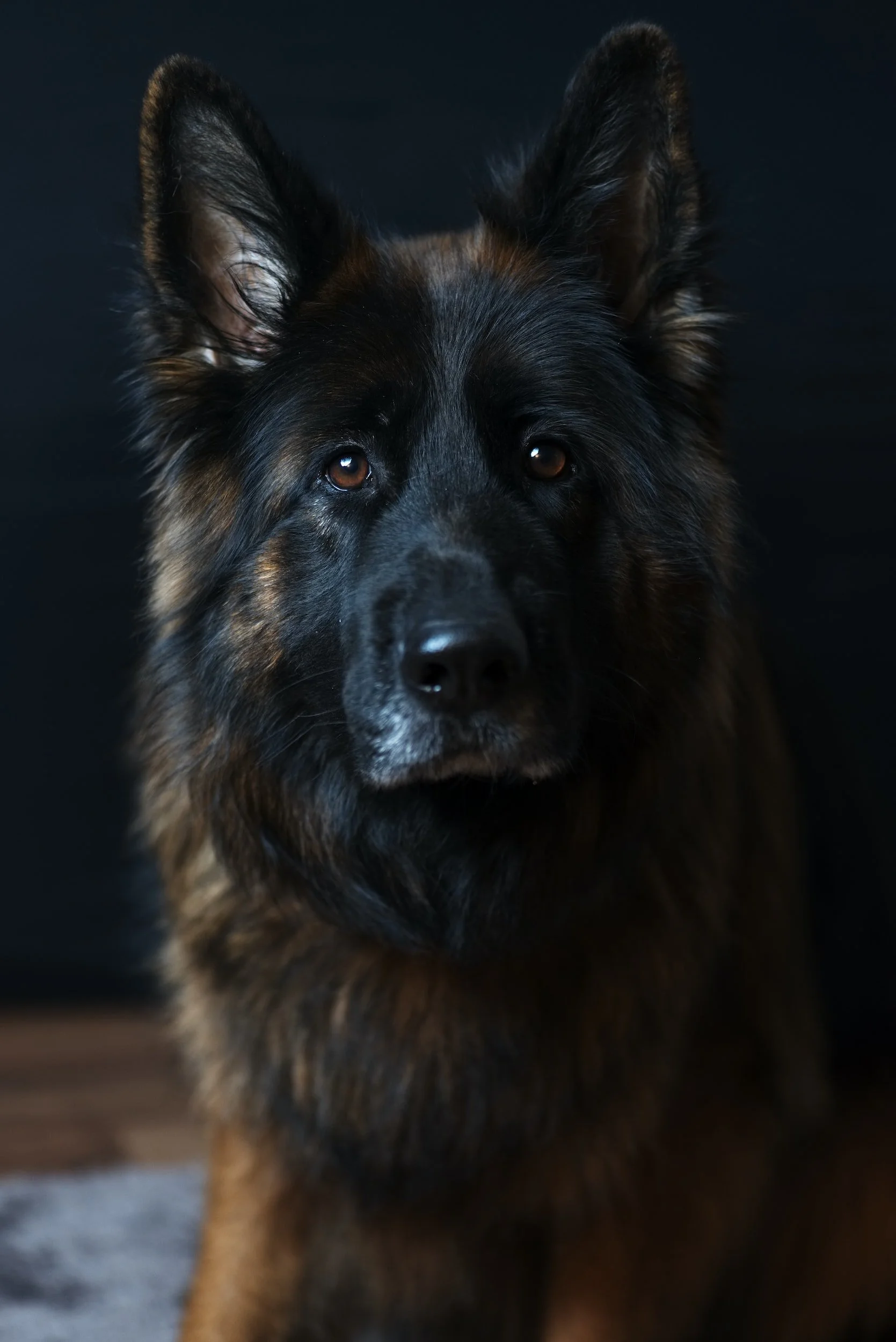
This dog needs a job. He will not be happily fulfilled with a daily stroll through the neighborhood.
Need Help? Sometimes you need a coach and experienced pro to put the plan together for you Let me help you figure out what to do next. Behavior * Nutrition * Training * Natural Wellness * Recovery
Complete the Questionnaire For A Callback →