

How to Prepare Your Dog for a New Baby
Pregnancy • New Baby • Dog Training • Safety • Household Prep
The baby is coming, you already have the dog, and somewhere between the nursery, the appointments and everything else on your list, you have started wondering what life is going to look like when those two worlds come together.
Maybe your dog sleeps in your bed, follows you everywhere, jumps when people come through the door, pulls hard on leash or has never spent much time behind a gate because there was never a reason to. None of that means your dog cannot adjust, but now is the time to start changing anything that will need to be different once the baby arrives.
I would much rather teach the dog the new normal during pregnancy than have the baby come home and suddenly change the dog's sleeping arrangements, access to you, walking routine, furniture privileges and household boundaries all at once.
The Goal
Prepare the Dog Before Your Hands Are Full
Preparing your dog for a baby is not primarily about baby sounds or bringing home a blanket from the hospital. The real work is building a dog who already understands household rules, can settle when asked, tolerates gates and separation, walks well enough that a stroller does not create chaos and can handle the fact that your attention will not always be available on demand.
Then when the baby arrives, the dog is not learning an entirely new way of life at the exact same time you are.
Start by Looking Honestly at the Dog You Have
Pregnancy is not the time to pretend an existing behavior issue will somehow disappear once the baby arrives. I want you to look at the dog you actually live with now, not the dog you hope will magically appear when the baby comes home.
Ask yourself whether your dog currently:
- jumps on people or rushes doors;
- pulls hard on leash;
- guards food, toys, furniture or you;
- barks, lunges or loses control around visitors;
- panics or becomes frantic behind a gate;
- follows you from room to room and struggles to settle without touching you;
- becomes wildly over-aroused when the doorbell rings;
- ignores Leave It or Out;
- cannot remain on Place with meaningful duration; or
- has a history of growling, snapping or biting.
Those are the behaviors I want addressed now, while you still have time to practice and adjust the plan.
Do Not Wait Until 38 Weeks to Fix a Behavior Problem
If your dog already has aggression, resource guarding, serious reactivity, bite history, severe separation issues or poor control around visitors, start working on it during pregnancy. You need time to teach, repeat, observe what improves and decide what management may still be necessary even after training.
Waiting until the baby is home creates pressure on everyone. If aggression or bite risk is already part of the picture, start with Living With an Aggressive Dog .
Decide What the Rules Will Be After the Baby Arrives
Then start living by those rules now. I do not want the baby to arrive and suddenly become associated with the dog losing access, routines and privileges all at once.
Think through:
- Will the dog still sleep in your bed?
- Will the nursery be off limits?
- Will furniture rules change?
- Will the dog need to stay behind gates at certain times?
- Will another adult take over more walks, feeding or training?
- Will the dog need more crate time or independent rest?
- Will visitor routines change?
If the answer to any of those is yes, begin making the change during pregnancy instead of on the day you bring the baby home.
One of the Biggest Mistakes
Do Not Change the Dog's Entire Life on the Day You Bring the Baby Home
Imagine the dog sleeps with you every night, follows you everywhere, has unrestricted furniture access and receives most of your attention. Then one day you disappear, return with a newborn and suddenly the bedroom door closes, the dog is behind gates, walks are different, visitors are everywhere and nobody has time for the old routine.
That is a tremendous amount of change to ask the dog to process at once. Make predictable changes before delivery whenever you can.
Build the Skills You Will Actually Use With a Baby in the House
You do not need fifty obedience commands. You need a handful of useful skills that work when your hands are full, the doorbell rings and life is happening around you.
Place
The dog should be able to go to a designated bed or mat and remain there while you move around, answer the door, feed the baby or sit on the floor.
Duration
The dog needs to stay with the answer instead of popping up every few seconds because something more interesting is happening.
Leave It & Out
Bottles, pacifiers, burp cloths, baby toys and eventually dropped food all make these commands extremely useful.
Gate Tolerance
The dog should be able to remain behind a baby gate without screaming, scratching, jumping or panicking.
Crate Comfort
A crate gives you another safe option for visitors, protected rest and times when you cannot actively supervise.
Leash Manners
You need control before you add a stroller, diaper bag and a baby to the equation.
Build Place and Duration Before the Baby Arrives
Place should be one of your most useful household skills. I want the dog able to go to a bed or mat and stay there while life continues around them. That means you move around, sit down, carry things, answer the door and eventually feed or change the baby while the dog remains settled nearby.
A dog who can remain in position for only ten seconds is not ready for real household life. If this is currently a weak point, read Duration Work for Dogs: Teaching Calm, Patience & an Off-Switch .
Practice Gates and Crates Before You Need Them
Baby gates are going to become normal household equipment, so do not wait until you urgently need one to discover that your dog becomes frantic behind it. Practice while nothing important is happening. Sometimes you are on the same side of the gate, sometimes on the other side, and sometimes the dog rests in another room.
Crate comfort gives you another option. Even if your dog does not routinely sleep in a crate, it can be valuable when visitors arrive, when the dog needs protected rest or later when a crawling child needs to be safely separated from the dog.
Your Dog Needs to Learn That You Can Be Busy
A dog who currently receives immediate attention every time they ask may struggle when your attention becomes divided. Start practicing a little independence now without turning it into emotional deprivation.
- Sit on the couch without continuously petting or entertaining the dog.
- Move through the house without the dog following every step.
- Have the dog settle nearby instead of always climbing into your lap.
- Let another trusted adult feed, walk and handle the dog.
- Practice short periods of quiet separation even when you are home.
Independence does not mean withholding affection. It means the dog can function normally without constant physical access to you.
Make Sure Another Adult Can Handle Your Dog
If you are currently the only person who walks, feeds, crates, corrects or settles the dog, begin sharing those responsibilities. There may be days after delivery when you simply cannot provide the dog's normal routine.
Your partner, family member, dog walker or another trusted person may need to step in. The dog should not be learning that person from scratch while you are exhausted and recovering.
Practice Walking With the Stroller Before There Is a Baby in It
If your dog currently pulls hard on leash, fix that first. You need control without wrapping the leash around your wrist, getting dragged across the sidewalk or trying to steer two moving objects in opposite directions.
Once basic leash skills are working, progress gradually:
- walk the empty stroller around the house;
- practice in the driveway;
- move to short neighborhood walks;
- teach the dog where to walk relative to the stroller; and
- practice stops, turns and direction changes before adding a baby.
Make the Baby Equipment Boring Before the Baby Arrives
The stroller, swing, bassinet, car seat, gates and new furniture do not need to appear mysteriously on the same day as the newborn. Let the dog see, smell and move around these items while they are simply ordinary household objects.
Baby sounds can also be introduced at a low level while the dog is relaxed. Crying, cooing and other normal baby noises do not need to become an artificial training production; the goal is simply for them not to be completely novel.
Visitors May Be a Bigger Dog Problem Than the Baby
New babies attract people: grandparents, friends, neighbors, delivery drivers and family members carrying food and gifts. If your dog currently loses control every time the doorbell rings, work on that before delivery.
Your visitor plan may include:
- Place;
- a leash;
- a crate or gate;
- a separate room; or
- no greeting at all for certain visitors.
Safety and calm are more important than everybody getting to say hello.
Leave It and Out Need to Mean Something
Babies bring an endless supply of interesting things to floor level. Bottles, pacifiers, burp cloths and toys come first; dropped food comes later. You need the ability to tell the dog not to take something or to release something already in their possession.
Resource Guarding Needs to Be Addressed Now
A dog who guards food, toys, furniture, beds or people requires a deliberate plan before a child enters the household. Toddlers are unpredictable. They reach, crawl, grab, drop food and enter spaces without understanding that the dog may be uncomfortable.
If resource guarding already exists, start with Resource Guarding in Dogs .
Plan for the Dog's Exercise Before You Are Sleep Deprived
Your dog's physical needs do not disappear because you had a baby. This is one of the most practical conversations to have during pregnancy, because the first weeks postpartum may look very different from your current routine.
Decide ahead of time:
- Who will walk the dog?
- What happens if you have a C-section?
- What happens when your partner returns to work?
- What is the backup plan during bad weather?
- Can a trusted family member help?
- Would a dog walker be useful?
- Would a mobile slat-mill or other structured exercise service be appropriate?
- Would your dog benefit from a structured day program?
- What purposeful exercise can be done at home?
Dog Walker
Establish the relationship before delivery so the walker is not a new stranger appearing during an already chaotic week.
Partner or Family
Shift some walks and care before the baby arrives so the dog is already comfortable with another handler.
Mobile Slat Mill
Where available, a properly supervised mobile slat-mill service can provide a useful outlet for an appropriate athletic dog.
Structured Day Program
Some dogs benefit from appropriate daycare or structured exercise. Others become overstimulated, so choose based on the dog.
Purposeful Home Exercise
Retrieving, scent work, treadmill work, training and other structured activities can help when outdoor time is limited.
Shorter, Better Sessions
Ten focused minutes of useful activity may be more realistic than waiting for a perfect hour-long window that never appears.
Also Plan for Rest
The house may become noisier, visitors may increase and sleep schedules may be unusual. Your dog still needs uninterrupted rest, so establish a protected sleeping area where the dog can truly disengage from household activity.
That becomes even more important later when the baby starts crawling.
Before Delivery, Decide Who Is Caring for the Dog
You may go into labor at 2:00 in the morning. Do not make the dog-care plan from a hospital room.
Make sure your backup person knows:
- how to get into the house;
- how to safely leash and handle the dog;
- the feeding routine;
- medications and supplements;
- crate or sleeping routines;
- door behavior;
- behavior around other dogs; and
- anything else that could affect safety.
Before Baby Comes Home
I Want These Pieces Working
- The dog can settle on Place with meaningful duration.
- The dog can tolerate a baby gate or other barrier.
- The dog can rest comfortably in a crate or designated safe area.
- The dog has functional leash manners.
- You have practiced walking with the stroller.
- Leave It and Out are reliable enough to be useful.
- The dog can settle without constant access to you.
- Another trusted adult can safely handle the dog.
- Visitor routines are established.
- Future furniture or bedroom rules are already in place.
- The dog's exercise backup plan is established.
- Resource guarding or aggression is already being addressed.
- You know who cares for the dog while you are at the hospital.
When the Baby Comes Home, Keep the Introduction Boring
I do not need a ceremonial meeting with everybody gathered around the dog while somebody holds the newborn down at nose level. You are not trying to manufacture a magical moment. You are beginning a new household routine.
Let the dog settle after you return home. Use the leash, gate, Place or other management appropriate for that dog. Reward calm behavior and allow the dog to observe without demanding interaction.
If the dog calmly investigates from an appropriate distance, fine. If the dog would rather lie down somewhere else, that is fine too.
Do Not Force the Dog to Sniff the Baby
There is no requirement that the dog's nose needs to be next to the newborn for the introduction to be successful. Some dogs will be curious, some will barely care and some may need more distance initially.
Calm coexistence is a perfectly good goal.
The Dog Still Needs Normal Dog Time
Your attention will understandably shift, but try not to create a pattern where the baby appears and every enjoyable part of the dog's life disappears.
- Keep some walks.
- Train for a few minutes.
- Provide appropriate affection.
- Let the dog sniff and move outside.
- Preserve enough normal routine that the dog still understands daily life.
Supervision Means You Are Actually Supervising
A dog lying beside the newborn while you scroll on your phone is not active supervision, and neither is being in the next room. If you cannot actively supervise, use a gate, crate, closed door or other physical separation.
Management is not an admission that your dog is bad. It is how you prevent a mistake from becoming a tragedy.
The Newborn Stage Is Often the Easy Part
A newborn generally stays where you put them. Then the baby begins to roll, sit, crawl, reach, grab, drop food and follow the dog. That is when the safety plan changes again.
As the baby becomes mobile, plan for:
- a dog bed or crate the child cannot access;
- food and high-value chews being managed carefully;
- gates between dog and child when active supervision is not possible;
- continued practice of Leave It, Out, Place and recall;
- teaching the child not to climb on, hug, chase or corner the dog; and
- making sure the dog always has a way to move away.
“Good With Kids” Does Not Mean “Anything Goes”
A tolerant dog is still a dog. No dog should have to tolerate being climbed on, cornered, poked, startled awake or repeatedly followed while trying to move away.
Children need rules too. As the child grows, teach respectful interaction while continuing to manage the environment.
Watch the Dog's Body Language
Do not wait for a growl to begin paying attention. Watch for earlier signs that the dog is uncomfortable or struggling.
- avoidance;
- turning the head away;
- repeatedly leaving;
- stiffening;
- freezing;
- hard staring;
- hovering around resources;
- becoming unusually clingy; or
- being unable to settle.
Those changes give you useful information before the situation escalates.
Do Not Punish a Growl Just Because It Scares You
A growl is information. I want to know what happened before it. Was the dog resting? Was the child approaching food? Was the dog cornered? Was somebody repeatedly ignoring attempts to move away?
You may still need to interrupt inappropriate behavior and change the situation, but I do not want the warning sound punished while the underlying problem remains.
For more on that, read Why Is My Dog Growling? What the Warning Means & What to Do Next .
Your Dog Does Not Need to Love the Baby
I do not need the dog obsessed with the baby, licking constantly or lying underneath the bassinet every second. I want calm, predictable, safe behavior.
Neutral can be excellent.
If Your Dog Becomes More Reactive or Restless After the Baby Arrives
Look at what changed before deciding the dog is jealous or suddenly difficult.
- Has exercise dropped dramatically?
- Is the dog sleeping less because visitors are constantly coming and going?
- Did household rules change overnight?
- Is the dog receiving attention mainly when misbehaving?
- Did the dog lose every predictable part of the old routine?
Sometimes the behavior is telling us that the transition plan needs adjustment.
If the Dog's Behavior Changes Suddenly, Look at the Whole Dog
Not every behavior change after a baby is purely emotional. Pain, digestive upset, itching, sleep disruption and other physical issues can reduce tolerance too.
If something feels dramatically different, read Why Did My Dog's Behavior Suddenly Change? .
When I Want Professional Help Before Delivery
Do Not DIY Serious Risk Around a Baby
Get qualified help during pregnancy if your dog has a bite history, serious resource guarding, aggression toward household members, intense guarding of you, severe visitor aggression, dog-to-dog fights in the home, extreme reactivity or behavior you already do not feel confident controlling.
A newborn dramatically reduces your margin for improvisation. The earlier we evaluate the behavior, the more time you have to build skills, change routines and decide what long-term management may be needed.
Questions Expecting Dog Moms Are Searching
Preparing Your Dog for a New Baby
When should I start preparing my dog for a new baby?
Start during pregnancy as early as possible. Any rules that will change after the baby arrives should ideally change beforehand, and skills such as Place, gates, leash manners, Leave It, Out and independent settling need time to become reliable.
How do I prepare my dog for a baby?
Work on household boundaries, Place and duration, leash manners, gate and crate comfort, independent settling, visitor routines, Leave It, Out and safe handling by another trusted adult. Practice stroller walks and establish backup exercise and care plans before delivery.
Should I change my dog's routine before the baby arrives?
Yes, if the routine will need to change later. Change sleeping arrangements, furniture rules, walking responsibilities and household access during pregnancy rather than changing everything the day the baby comes home.
Should my dog still sleep in my bed when I have a baby?
There is no universal rule that every dog must leave the bed. Decide what will realistically work for your household. If the rule will change after the baby arrives, make that change well before delivery.
How do I teach my dog to stay behind a baby gate?
Practice before you urgently need the barrier. Begin with short periods while the dog is calm and gradually build duration and distance so gates become an ordinary household boundary.
Should I play baby crying sounds for my dog?
Low-volume recordings can help make unfamiliar baby sounds more ordinary before the newborn arrives. Increase volume only while the dog remains relaxed.
How do I prepare my dog to walk with a stroller?
First establish functional leash manners without the stroller. Then practice with an empty stroller so the dog learns where to walk and how to stop, turn and change direction safely.
How should I introduce my dog to my newborn?
Keep the first interaction calm and controlled. Use the leash, gate, Place or other management appropriate for your dog and allow the dog to observe without forcing close contact or sniffing.
Should I bring a baby blanket home for my dog to smell?
You can, but it is not the most important part of preparation. Reliable household behavior, barrier tolerance and flexibility around changing routines are usually more useful.
What if my dog is jealous of the new baby?
What looks like jealousy may involve lost routines, attention-seeking, frustration, reduced exercise or difficulty adjusting to new boundaries. Look at the dog's whole daily pattern rather than assuming motive.
What if my dog growls at my baby?
Separate the dog and child safely and take the warning seriously. Do not punish the growl in isolation. Determine what triggered the response and seek qualified behavior help.
What if my dog guards me from my partner or baby?
Guarding a person is a serious concern when a new baby is coming. Begin behavior work before delivery and use management to prevent repeated guarding behavior.
How much exercise will my dog need after the baby comes?
Your dog's underlying exercise needs remain. Plan during pregnancy for who will provide walks or other appropriate outlets during recovery, sleep deprivation and schedule changes.
Is a newborn or toddler harder for a dog?
Many families find the mobile stage more challenging because toddlers crawl, grab, drop food, approach dog beds and follow dogs who are trying to move away.
Can I trust my dog alone with my baby if the dog has always been gentle?
Dogs and babies should not be left together unsupervised. If active supervision is not possible, use a physical barrier such as a gate, crate or closed door.
Dog Already Has Aggression or Bite Risk?
Pregnancy gives you time to address the behavior and create a realistic safety plan before the newborn arrives.
Start With Aggression SafetyResource Guarding Already Exists?
Food, toys, furniture and people can become much more complicated once a child is mobile.
Understand Resource GuardingDog Has Trouble Settling?
Build an off-switch before the household becomes noisier and your attention is divided.
Teach the Dog to SettleWant a Plan Before Delivery?
If you are worried about your dog's current behavior, review it while you still have time to train, practice and make adjustments.
Schedule a Behavior ConsultationDo the Work Before You Need It
The Best Time to Change the Dog's Routine Is Before the Baby Comes Home
You do not need a perfect dog before you have a baby, but you do need a plan. Decide what the household rules will be, build the skills the dog is missing, work on serious behavior problems now and make sure someone else can care for the dog when necessary.
Plan for exercise, rest, visitors, gates, stroller walks and the dog's normal daily life before you are exhausted and holding a newborn.
Then when the baby comes home, you are not asking the dog to learn a completely new life overnight. You are simply adding the baby to a structure the dog already understands.
Get a Baby-Prep Behavior Plan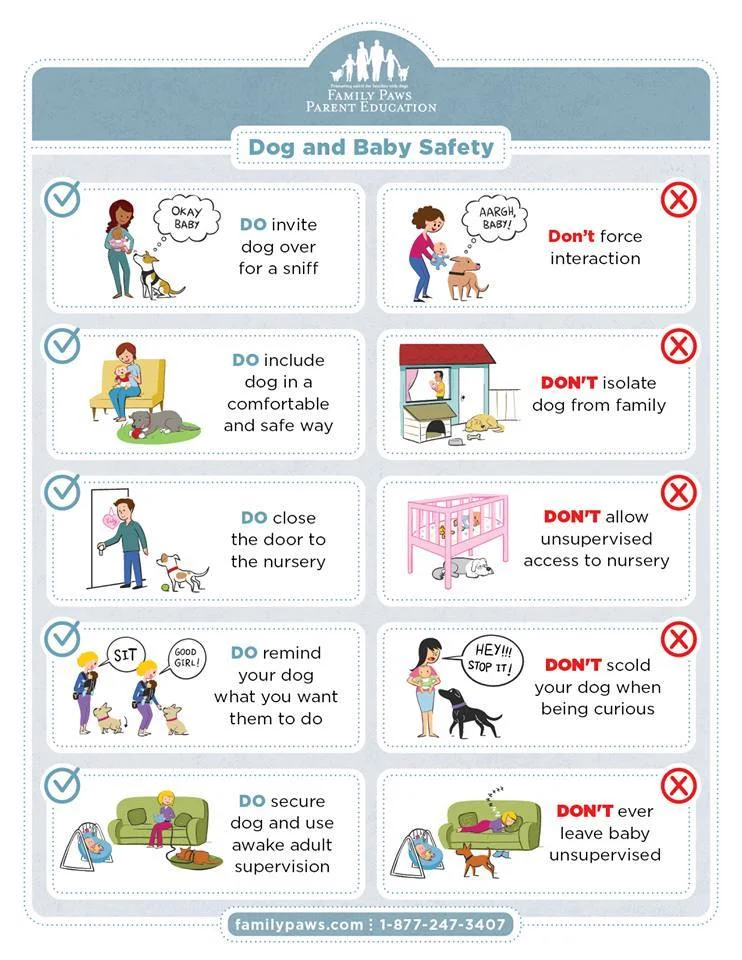
Need Help? Sometimes you need a coach and experienced pro to put the plan together for you Let me help you figure out what to do next. Behavior * Nutrition * Training * Natural Wellness * Recovery
Complete the Questionnaire For A Callback →